







Upholstered Coffee Table Ottoman
An upholstered coffee table ottoman combines the low profile of a table with the soft top of a stool, offering a versatile centrepiece for traditional rooms.
Upholstered Coffee Table Ottoman
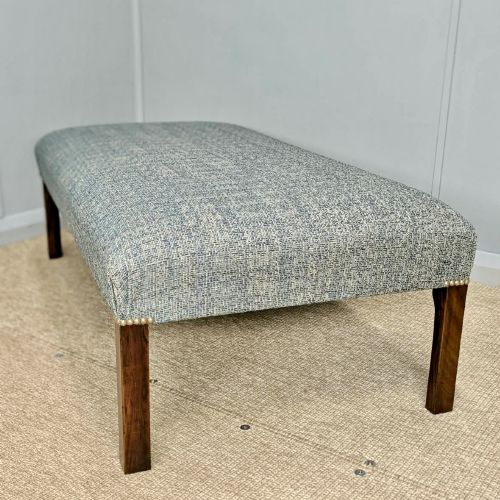
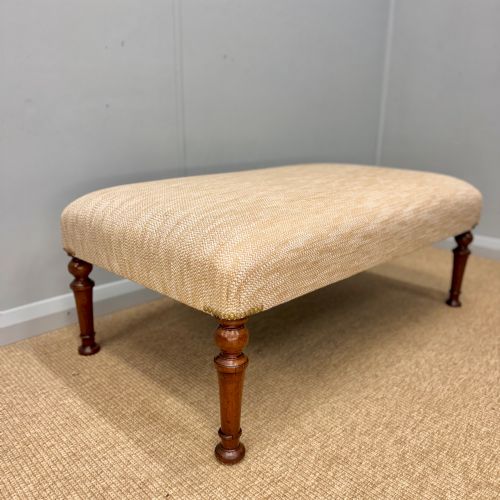
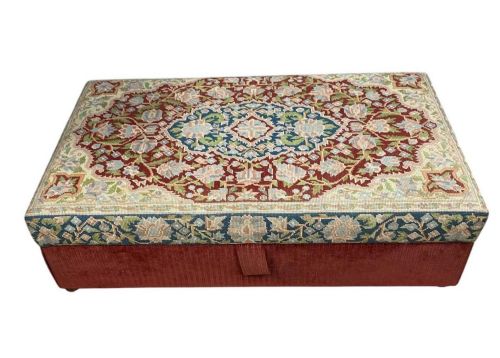
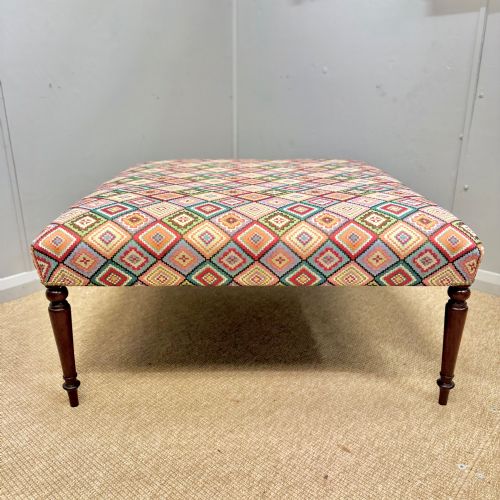
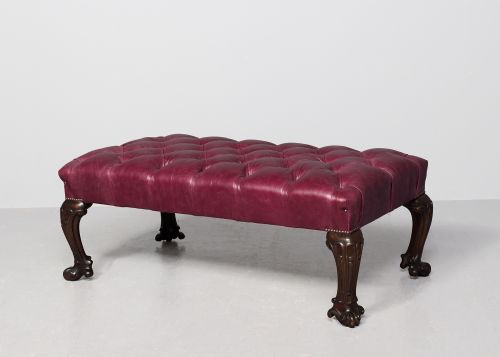
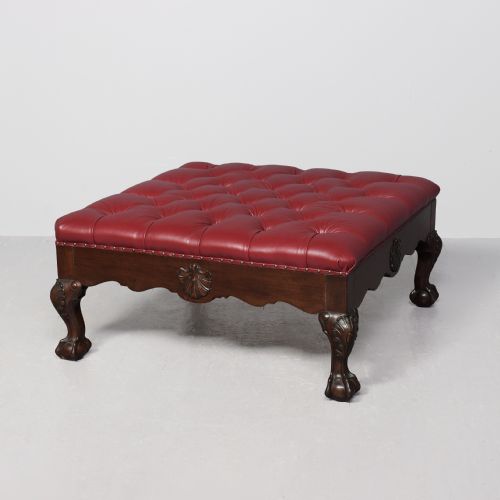
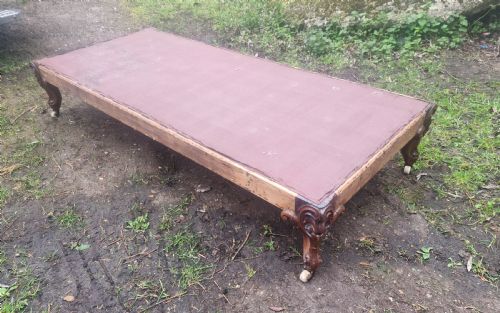
When you search for an upholstered coffee table ottoman, you encounter a variety of antique footstools, centre stools, and low ottomans originating from the nineteenth century onwards. These pieces bridge the gap between seating and surface, often taking a large, substantial scale suited to traditional English and country house interiors.
Materials and construction methods
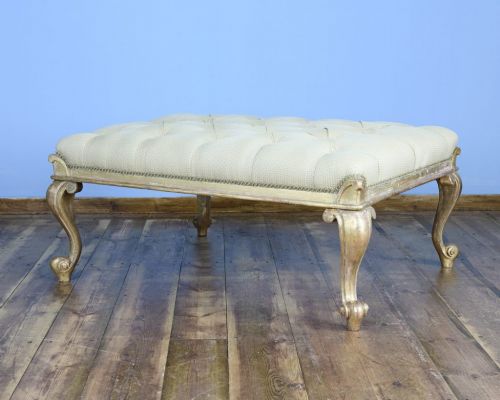
Frames are constructed from dense timbers such as mahogany, walnut, oak, and rosewood, frequently shaped with traditional joinery and supported by carved legs, square legs, or parcel gilding. These structural woods provide the necessary weight and stability for daily use as a table or seat.
Upper surfaces combine traditional upholstery techniques with durable coverings like hand-dyed leather, hide, velvet, chenille, and tapestry. Buttoning and heavy padding secure the upholstery to the wooden foundation, creating a firm yet cushioned top.
Upholstered Coffee Table Ottoman Retail Price Guide 2026
Typical asking prices for upholstered coffee table ottoman among the pieces listed under this phrase on Sellingantiques today, from the lower quarter to the upper quarter. They describe what is for sale here now, not the wider market.
Listings feature pieces spanning the nineteenth century, including Victorian walnut and mahogany frames alongside Georgian style interpretations.
Assessing construction and finish
The distinction between standard examples and exceptional pieces lies in the choice of timber and the precision of the frame carving. Finer versions utilise richly grained hardwoods like rosewood or figured mahogany, complemented by sophisticated decorative details such as parcel gilding.
Upholstery execution also dictates standard, with hand-dyed leathers, careful buttoning, and traditional fabric choices representing superior craftsmanship. The integrity of the underlying wooden frame ensures the piece remains steady when utilised for resting feet or serving items.
The Upholstered Coffee Table Ottoman Glossary
- Centre stool
- A large, freestanding stool designed to sit in the middle of a room rather than against a wall. These pieces often feature decorative frames and substantial upholstery.
- Buttoned leather
- An upholstery technique where leather is pulled tight and secured with deep buttons in a geometric pattern. This method creates a textured surface that adds traditional character.
- Parcel gilt
- A surface treatment where specific carved details of a wooden frame are partially covered in gold leaf. This technique highlights particular ornamental motifs against the dark timber.
- Chippendale style
- A decorative aesthetic drawing on eighteenth-century English furniture designs. Pieces in this style often display carved wooden frames and refined proportions.
Upholstered Coffee Table Ottoman: Frequently Asked Questions
How do I use an ottoman as a coffee table?
Place a sturdy tray on the upholstered surface to hold drinks, books, or decorative objects securely. This creates a flat area while keeping the soft edges accessible for resting feet.
Ensure the tray is large enough to remain stable on the padding. Choose a durable leather or tight fabric top if you plan to use the piece frequently for serving items.
What is the difference between an ottoman and a footstool?
Ottomans typically feature a larger, boxier scale designed to function as both a seat and a low surface. Footstools tend to be more compact and primarily serve as a rest for seated occupants.
Many antique pieces crossover between these definitions, functioning equally well as low tables, extra seats, or traditional footrests depending on their dimensions.
How do I clean antique leather upholstery?
Dust the leather surface regularly with a soft, dry cloth to prevent dirt accumulation. Avoid harsh chemical cleaners that can strip the natural finish from older hides.
Condition the leather periodically with a suitable balm to keep the material supple. Hand-dyed and antique hides require gentle maintenance to preserve their original patina.
Are these ottomans strong enough to sit on?
Most antique stools and ottomans possess solid hardwood frames built to withstand regular seating weight. The internal joinery provides the structural support needed for everyday domestic use.
Check that the frame remains rigid and the legs are secure before using the piece as a seat. Heavier Victorian and Georgian frames are typically the most robust.