
Upholstered Chaise Couch
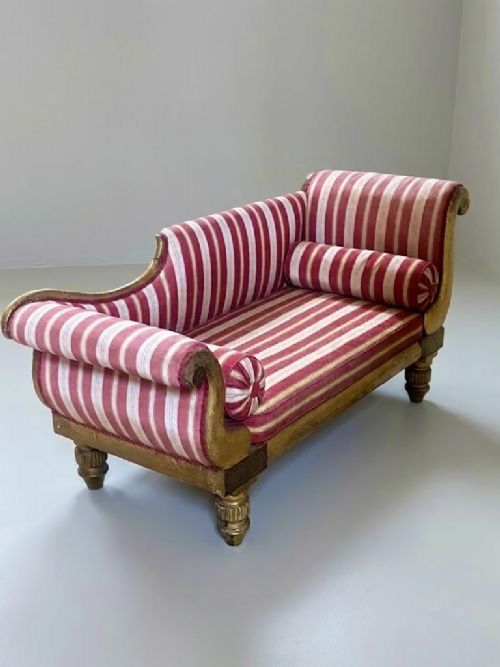
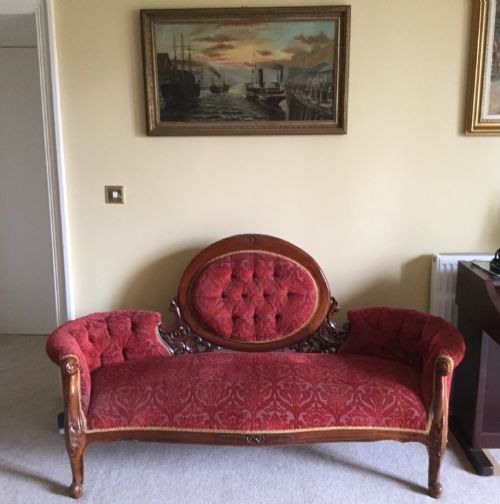
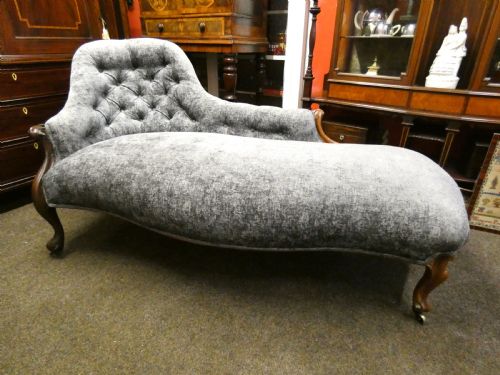
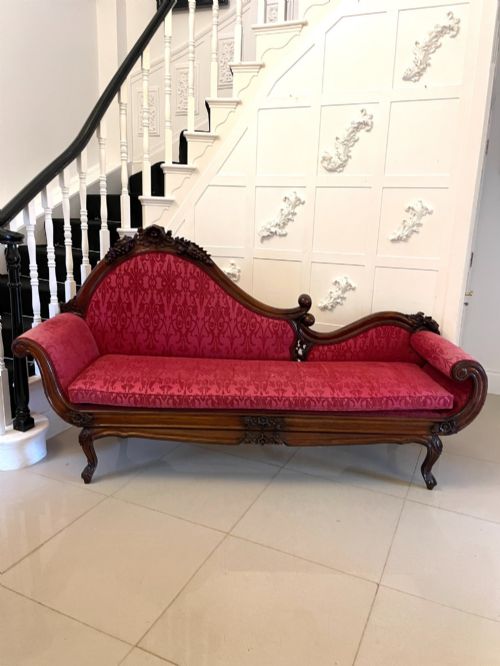
When you search for an upholstered chaise couch, you are looking at nineteenth-century daybeds and long seating designed for reclining in domestic parlours.
Upholstered Chaise Couch
An upholstered chaise couch combines the properties of a sofa and a bed into a single elongated seating form. These pieces emerge predominantly from nineteenth-century workshops, spanning Regency, William IV, Victorian and Edwardian periods.
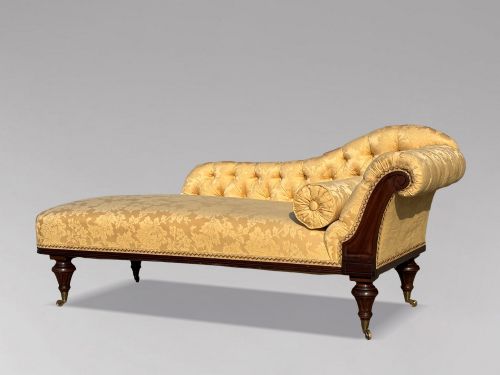
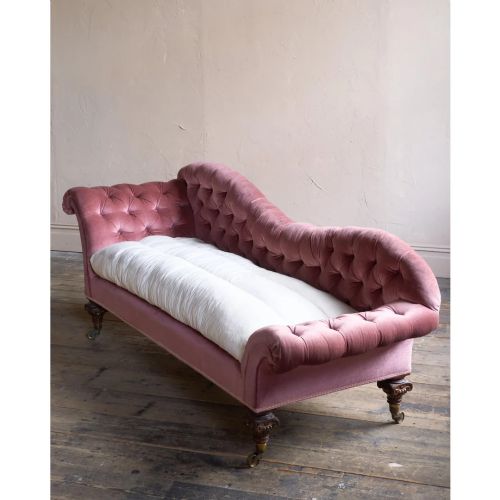
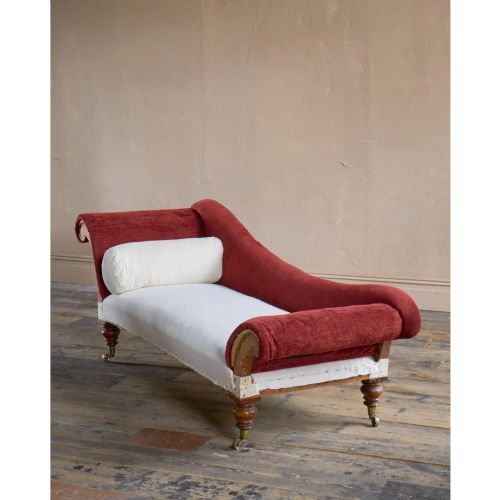
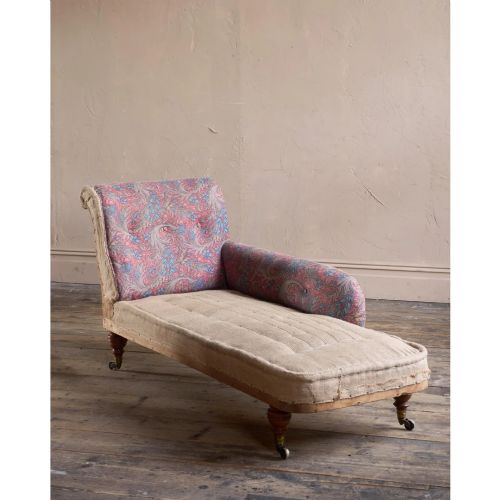
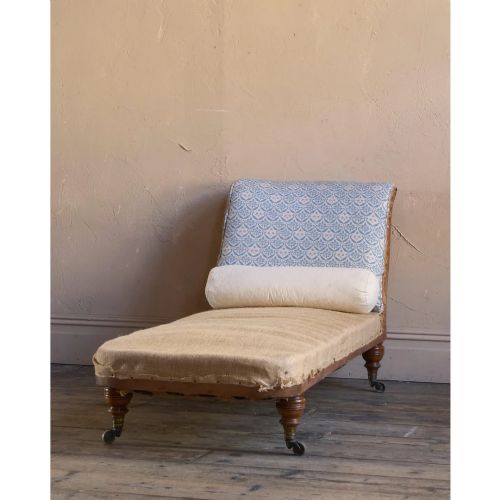
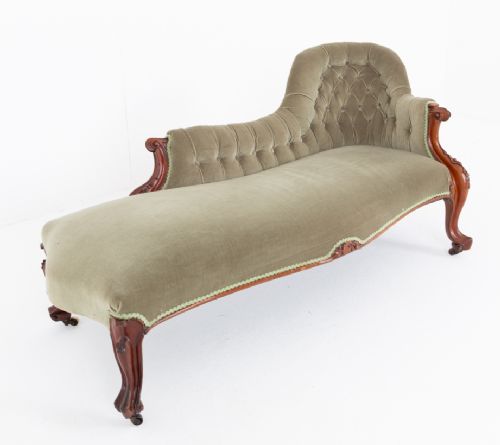
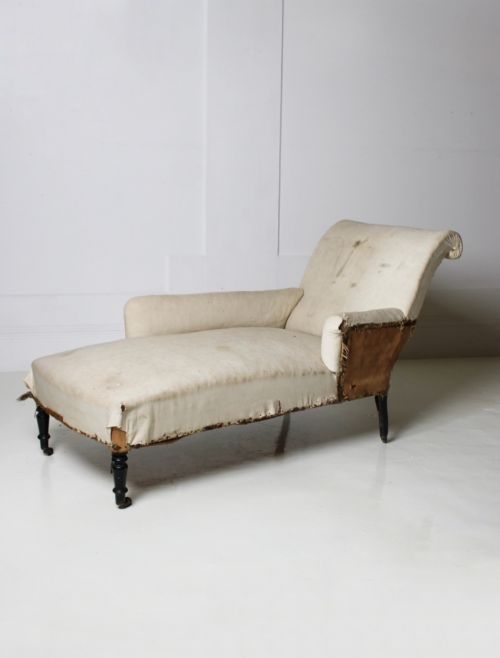
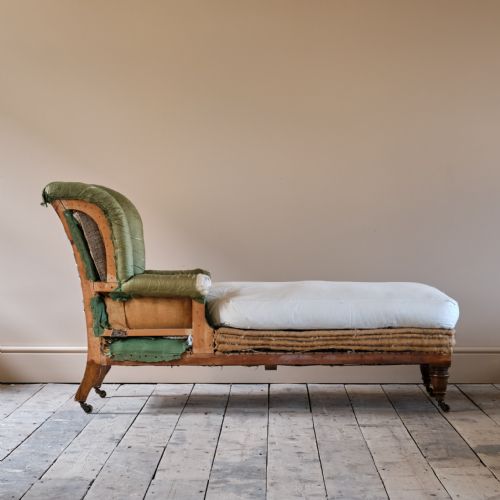
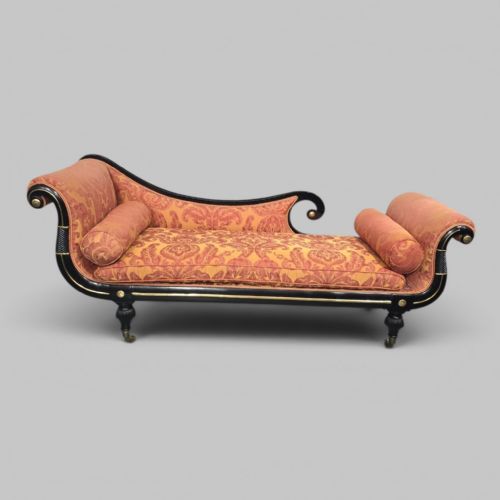
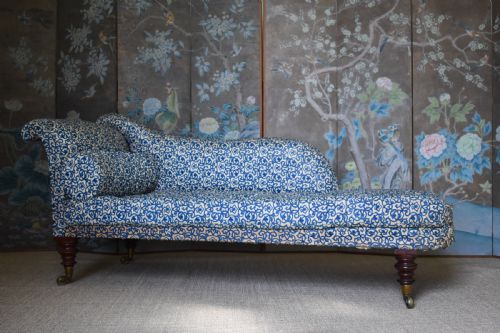
The version most commonly met on this page is the Victorian mahogany or rosewood chaise longue featuring a single raised scroll end and turned legs. Alongside these, buyers find daybeds, double-ended sofas and French-influenced styles such as Louis XVI Revival and Napoleon III.
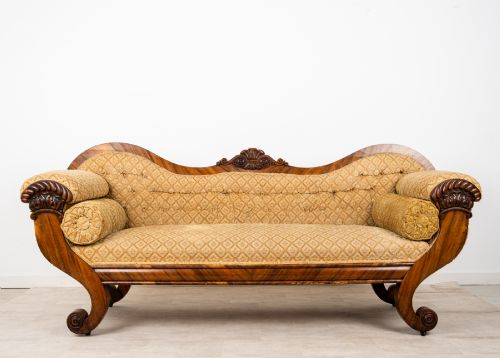
Originating in country houses and period town residences, these items served as sophisticated resting furniture for drawing rooms and boudoirs. Their varied silhouettes range from architectural ionic column supports to fluid carved walnut and giltwood frames.
How They Were Made
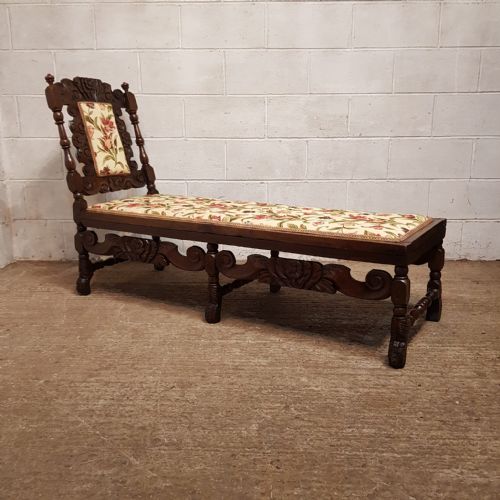
Framings rely on dense timbers such as mahogany, walnut, rosewood, oak and giltwood, shaped with carved scroll ends, piecrust edges and turned supports. Brass castors frequently finish the feet to allow movement across heavy carpets.
Upholstery techniques utilise traditional sprung bases paired with heavy textiles. Pieces are finished in silk, velvet, brocade, damask, wool or striped silk fabrics, secured with deep piling or traditional buttoning.
Some nineteenth-century models feature hidden castors, allowing tired Victorians to glide silently across the parlour floor.
What Varies In Quality
The refinement of the timber carving and the architectural integrity of the frame dictate the baseline quality of each piece. Superior examples display crisp hand-carved scrollwork, substantial rosewood or mahogany bodies, and balanced proportions without structural sagging.
The standard of upholstery materials and internal springing further distinguishes finer examples. Pieces associated with notable cabinet-making workshops carry superior joinery and more ambitious decorative flourishes than standard commercial output.
Howard and Sons·Holland and Sons·H. Goodall and Sons·Gillows·Thomas Hope
The Upholstered Chaise Couch Glossary
- Chaise longue
- A long reclining chair or daybed designed for one person to stretch out. The form merges a chair back with an extended seat.
- Giltwood
- Timber that has been coated with a thin layer of gold leaf. This finish appears frequently on grander decorative salon pieces.
- Double ended sofa
- A couch featuring matching raised ends at both sides. This symmetrical form allows reclining from either direction.
- Daybed
- An elongated piece of furniture utilised for daytime resting or lounging. It shares functional similarities with the chaise longue.
- Scroll end
- A decorative curved terminal shaping the arm or back of the seating frame. It defines the silhouette of many nineteenth-century couches.
Upholstered Chaise Couch: Frequently Asked Questions
Where did people put a chaise couch?
These pieces traditionally occupied principal reception rooms, drawing rooms and private dressing chambers within period houses. They provided a comfortable place for daytime rest without requiring residents to retire to a bedroom.
Today, they function well in similar domestic settings, fitting neatly into large living areas, studies or expansive bedroom suites as statement seating.
How do I identify a Victorian chaise?
Victorian examples typically feature dark timber frames such as mahogany or rosewood with distinct carved scroll ends. They often rest on short turned legs fitted with brass castors for manoeuvrability.
Later Victorian pieces introduce walnut frames and varied upholstery styles, while retaining the characteristic single raised backrest designed for reclining.
How do I care for antique upholstery?
Maintenance involves gentle surface cleaning appropriate to the specific textile, whether silk, velvet, damask or wool. Protecting the fabric from direct sunlight prevents fading of historical colours.
For structural stability, periodic checking of the wooden frame and underlying sprung base helps preserve the integrity of the seating.