
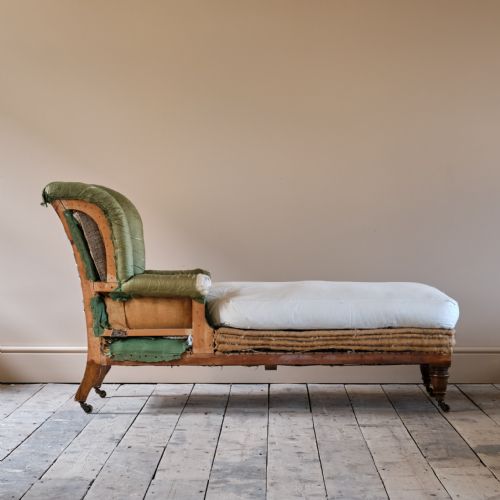
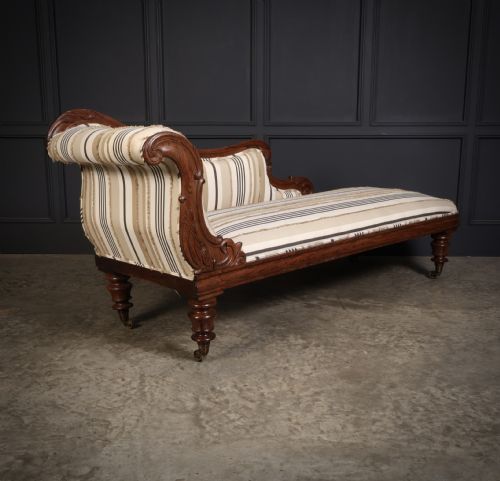


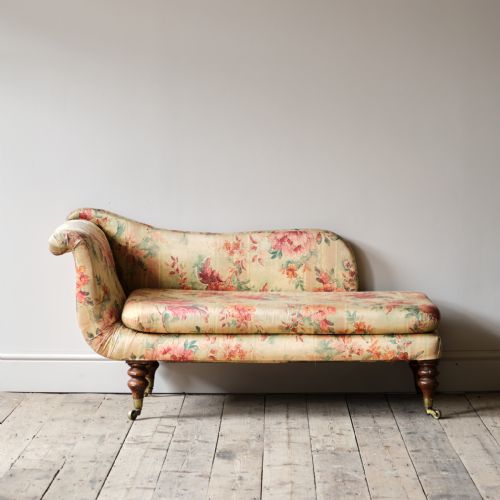


Vintage Upholstered Chaise Longue
A vintage upholstered chaise longue offers a comfortable spot for reclining, merging the support of a sofa with the relaxed stretch of a bed.
Vintage Upholstered Chaise Longue
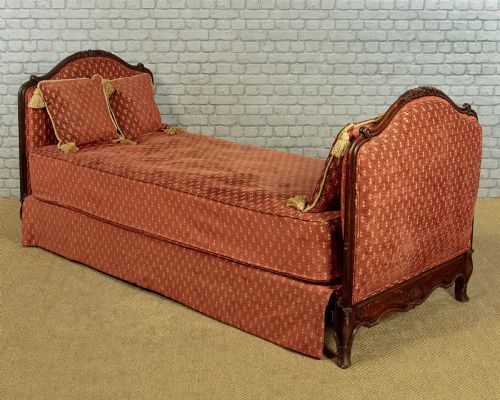
When you search for a vintage upholstered chaise longue, you encounter nineteenth-century and early twentieth-century daybeds and reclining seats designed for afternoon rest. These pieces range from substantial Victorian rosewood and mahogany frames to Edwardian oak structures and French provincial designs.
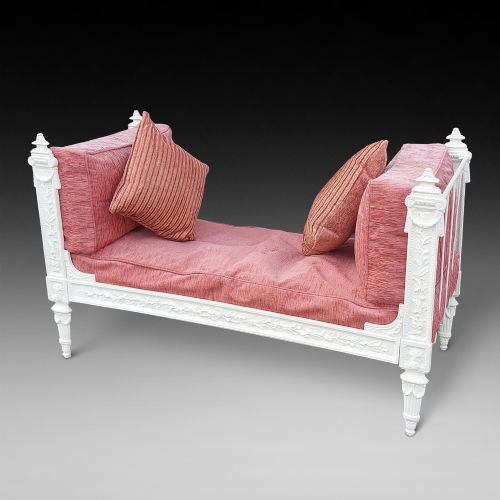
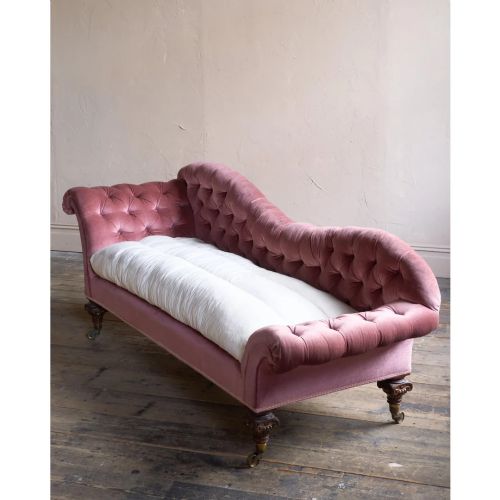
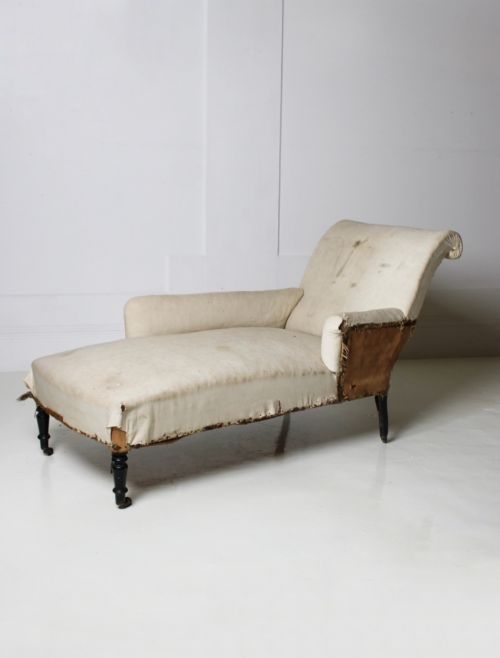
You are most likely to meet nineteenth-century examples upholstered in velvet, calico, or modern upholstery fabric, often resting on turned legs with castors or featuring decorative carved woodwork. The selection includes styles influenced by Regency, William IV, and Louis XVI revivals, alongside distinctive maker-attributed pieces.
The form functions equally well as a window seat, a daybed, or a long armchair, providing a singular silhouette that anchors a room. Each variation reflects the domestic comforts and aesthetic preferences of its specific period, from ornate buttoned velvet to simpler wooden frames.
How they were made
Makers constructed the structural frames of these pieces using solid timbers such as mahogany, rosewood, oak, and other hardwoods, occasionally incorporating cast iron or brass components. These foundations supported sprung or padded interiors designed to hold heavy upholstery securely over decades of use.
Textiles played a primary role in finishing the surfaces, utilising materials like velvet, calico, and various heavy woven fabrics to cover the padding. Details such as buttoning, gilt decoration, and turned wooden legs completed the construction process, combining structural joinery with soft furnishing techniques.
Some nineteenth-century daybeds cleverly conceal a reversible box ottoman beneath the cushion, hiding domestic storage in plain sight.
What varies in quality
The distinction between standard production and exceptional craftsmanship lies in the selection of primary timbers and the sophistication of the frame carving. Finer examples display dense rosewood or richly figured mahogany, paired with intricate detailing like ionic column legs or precise gilt decoration.
Structural integrity also separates the output of notable firms from anonymous workshop pieces, visible in the joinery of the wooden frame and the original hardware used. The weight of the timber and the precision of the turning on legs and supports indicate the level of care invested in the piece.
Howard & Sons·Jas Shoolbred·William Birch·Hampton & Sons·Gillows
The Vintage Upholstered Chaise Longue Glossary
- Chaise Longue
- A long reclining chair or daybed designed for one person to stretch out. The form combines the backrest of a sofa with an elongated seat.
- Rosewood
- A heavy, durable timber with a rich grain often used in fine nineteenth-century cabinetmaking. It provides a dark, polished finish on formal seating frames.
- Castor
- A small wheel mounted on a swivel attached to the bottom of a leg. It allows heavy furniture to be moved across floors with ease.
- Buttoning
- An upholstery technique where indentations are created across the padded surface using secured buttons. This method keeps the internal stuffing firmly in place.
Vintage Upholstered Chaise Longue: Frequently Asked Questions
How do I style a chaise longue?
Place the piece against a prominent living room wall or near a large window to highlight its elongated silhouette.
Pair it with complementary occasional furniture to create a dedicated reading corner or a relaxed seating arrangement.
How do I identify a Victorian chaise longue?
Look for dense hardwoods like rosewood or mahogany, often accompanied by deep button upholstery and turned wooden legs with brass castors.
These pieces frequently display robust proportions and elaborate carved detailing characteristic of nineteenth-century manufacturing.
Can I use these pieces for everyday sleeping?
Most antique daybeds and chaises serve well for daytime rest and short periods of reclining.
Their narrow proportions and fixed backrests make them less suitable for full night-time sleeping compared to standard beds.