
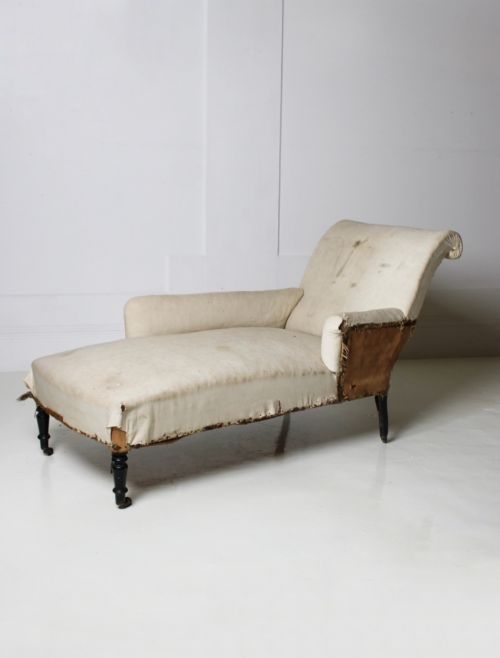
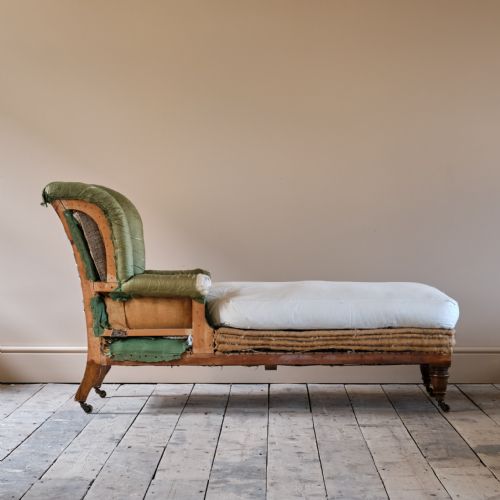


Scroll Back Daybed
Scroll back daybed pieces are generous lounging seats built with sweeping wooden or upholstered ends, offering an inviting spot to stretch out in a drawing room.
Scroll Back Daybed
When you search for scroll back daybed, you encounter nineteenth century furniture designed for daytime reclining and formal lounging in grand rooms. The pieces span Victorian, Regency and Anglo Indian styles, appearing as daybeds, benches and chaise longues.
You are most likely to meet Victorian and nineteenth century examples on this page, often upholstered in fabric or calico. The forms range from large country house daybeds to compact miniature furniture.
The defining feature across these forms is the characteristic rolled wooden or padded end support, paired with long seats designed for resting. Frames take various shapes, from simple daybed frames to elaborate reclining designs.
How they were made
Cabinetmakers constructed these frames using dense hardwoods like mahogany, rosewood and beech, often ebonising the timber for a dark, polished finish. Brass components appear frequently, particularly in the form of original castors supporting the legs.
Upholstery forms an essential part of the construction, utilising traditional fabrics and calico beneath top covers. Turned wooden legs provide sturdy support beneath the heavily padded or wooden scrolled structures.
Listings feature nineteenth century pieces constructed from rosewood, mahogany and beech, with styles ranging from Regency to Anglo Indian.
What varies in quality
The distinction between ordinary and exceptional pieces lies in the choice of timber and the sophistication of the frame carving. Rosewood and mahogany frames with crisp scrollwork and substantial proportions stand apart from simpler beech or country house versions.
Attribution to notable cabinetmakers elevates a piece, as seen in labeled works by established London firms. The integrity of the original turned legs and functioning brass castors also influences the standing of the furniture.
Holland & Sons·Miles & Edwards
The Scroll Back Daybed Glossary
- Scroll back
- A curving wooden or upholstered terminal that rolls outward at the end of a seat or daybed. This elegant profile defines the silhouette of nineteenth century reclining furniture.
- Chaise longue
- A long seat for reclining, combining a chair with a footstool in a single piece of furniture. These frames often feature a single raised end for the head.
- Castor
- A small wheel mounted on a swivel attached to the base of furniture legs. Original brass examples allow heavy daybeds to move smoothly across carpets and floors.
- Ebonised
- Wood treated with a dark stain or finish to imitate ebony. This technique was popular for creating sleek, dark surfaces on nineteenth century frames.
- Calico
- A plain woven cotton fabric traditionally used for the underlying upholstery layer. It provides a sturdy foundation before the decorative top fabric is applied.
Scroll Back Daybed: Frequently Asked Questions
What is a scroll back daybed?
A scroll back daybed is a nineteenth century reclining seat featuring a distinctive curving end designed for daytime resting. These pieces combine the functions of a sofa and a bed.
They appear in various woods and upholstered finishes, reflecting Victorian and Regency domestic tastes for comfortable lounging spaces.
Where were daybeds placed?
These pieces traditionally stood in drawing rooms, large parlours or country house chambers where family members relaxed during the day. Their decorative backs made them suitable for placement away from walls.
They provided a formal yet comfortable seating option for reading or receiving visitors without retiring to a bedroom.
How do I identify a Victorian daybed?
Victorian examples often feature rich timbers like mahogany or rosewood, combined with button tufting or upholstered covers. Turned wooden legs and brass castors frequently anchor the design.
Proportions tend to be generous, reflecting the spacious interiors of nineteenth century homes and country houses.
Are these daybeds comfortable?
The comfort depends on the original upholstery and the depth of the cushioned surface. Many feature sprung or padded bases designed for extended reclining.
Their elongated seats allow full extension of the legs, making them practical for daytime resting.