
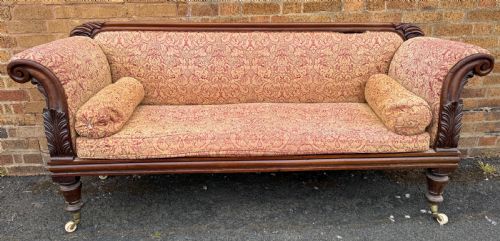


Regency Sofa Frame
A regency sofa frame provides the structural bones of early nineteenth-century seating, offering classic scroll ends and carved timber ready for new upholstery.
Regency Sofa Frame
A regency sofa frame represents the foundational woodwork of early nineteenth-century seating, designed for revival or display in period interiors. You will frequently encounter mahogany and rosewood structures alongside giltwood show frames that reveal the sculptural ambitions of the era.
The pieces on this page span the 19th Century and Regency periods, alongside William IV and French Empire examples. Forms range from double-ended settees and scroll-end sofas to daybeds and occasional seating.
Many items appear ready for upholstery or uncovered as bare wood skeletons, highlighting the underlying joinery and carving. Country house aesthetics and formal drawing-room designs dominate the available selection.
Assessing quality and craftsmanship
Quality rests in the crispness of the timber carving and the architectural proportion of the frame. Superior examples display deeply sculpted scroll ends, well-defined herms or dodo head details, and dense, figured mahogany or rosewood timbers rather than plain secondary woods.
The integrity of the structural joinery separates a durable piece from a compromised one. Original show wood frames that retain their crisp architectural lines and solid timber bracing command greater appreciation than heavily altered or reconstructed carcases.
The selection includes 19th Century and Regency periods, utilising materials such as mahogany, rosewood, giltwood, leather, and hessian across various sofa and daybed forms.
The Regency Sofa Frame Glossary
- Scroll end
- A characteristic nineteenth-century arm design that curves outward like a rolled scroll. This shape defines the silhouette of many early sofas.
- Show frame
- Exposed decorative woodwork on a piece of upholstered seating. It allows the polished mahogany or giltwood structure to remain visible.
- Giltwood
- Timber treated with gold leaf or gilt preparation to create a brilliant metallic surface. It appears frequently on grand saloon and drawing-room seating.
- Hessian
- A coarse woven fabric utilised as foundational support for traditional upholstery stuffing. It stretches across the interior frame before top covers are applied.
- Double ended
- A seating configuration featuring identical scrolled or raised ends at both sides. This symmetrical form allows a user to recline comfortably from either direction.
Regency Sofa Frame: Frequently Asked Questions
What is a regency sofa frame?
A regency sofa frame is the exposed or un-upholstered wooden skeleton of an early nineteenth-century settee. These pieces preserve the original carved mahogany, rosewood, or giltwood structure.
Buyers acquire them to restore with bespoke fabrics or to display as architectural woodwork. They showcase the classic scroll ends and symmetrical lines typical of the period.
How do I choose upholstery for these frames?
Selecting upholstery involves matching the historical weight of the frame with appropriate period textiles. Traditional materials like leather, heavy cottons, or patterned fabrics suit the formal character of these pieces.
Many frames arrive ready for webbing and stuffing, requiring professional restoration to ensure proper support. Consulting period references helps determine whether a simple show-wood border or full-body padding is appropriate.
How do I date a nineteenth-century sofa frame?
Dating relies on examining the timber species, the sharpness of the carved details, and the overall proportions of the piece. Regency and William IV examples often feature distinct scroll arms, simulated rosewood finishes, or specific carving motifs like herms.
Secondary woods and construction methods hidden beneath the frame also offer clues to the workshop's origin. Comparing the silhouette to documented nineteenth-century cabinetmaker designs helps narrow the decade of production.
Where should I place a daybed frame?
A daybed frame functions effectively in studies, garden rooms, or large drawing spaces as an occasional reclining seat. Its linear profile allows it to sit against a wall or float within an expansive room.
Because these frames often feature finished woodwork on all sides, they do not require strict placement against a wall. Proper clearance around the scroll ends ensures the carved details remain visible.