



Underglaze Blue Pottery Dish
These pieces of underglaze blue pottery dish transport centuries of global kiln tradition straight to your table.
Underglaze Blue Pottery Dish
An underglaze blue pottery dish encompasses a wide variety of serving vessels, decorative bowls, and platters spanning several centuries. You will frequently encounter English transferware alongside pieces originating from Chinese dynasties and Japanese kilns.
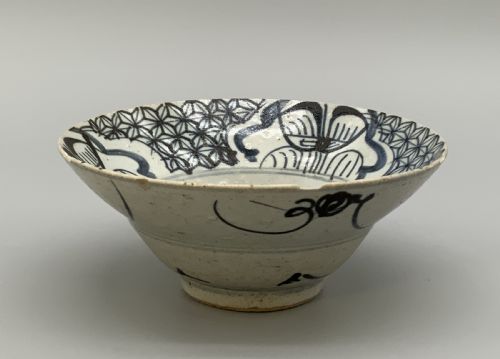
The selection ranges from early Georgian Staffordshire plates and pearlware comports to larger Chinese cargo bowls and Japanese Imari chargers. Each form serves both a practical dining function and a decorative purpose within a room.
What varies in quality
The crispness of the cobalt pigment transfer and the depth of the glaze dictate the visual impact of the design. Sharper lines and well-centred motifs generally separate standard production items from finer studio outputs.
The stability of the clay body during the kiln firing also determines the longevity and physical weight of the vessel.
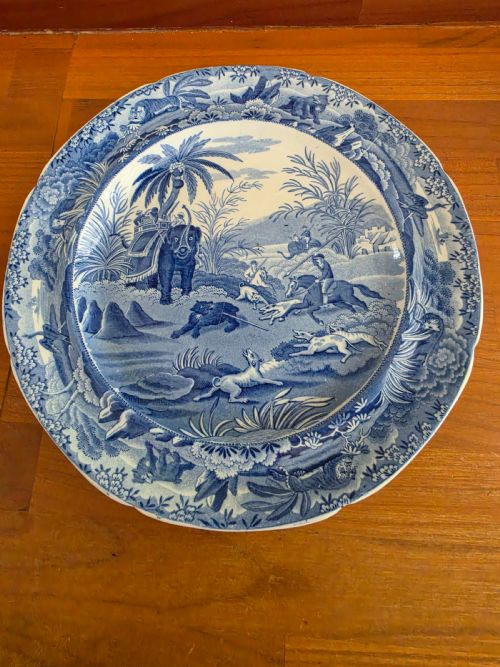
Certain nineteenth-century plates celebrate specific regional wildlife and literary scenes, including a lone goldfinch or a dramatic bear hunt.
Spode·Copeland and Garrett·John Davenport·John Rogers and Son·Elkin Knight and Bridgwood
The Underglaze Blue Pottery Dish Glossary
- Pearlware
- A refined earthenware developed in England featuring a slightly bluish glaze that enhanced the whiteness of the ceramic body. It became immensely popular for blue and white transfer-printed tableware.
- Underglaze
- A decoration method where pigments are applied to the raw pottery before glazing and firing. This ensures the design remains protected beneath the glass layer.
- Transferware
- A pottery decoration technique where an engraved copper plate transfers a printed design onto tissue paper, which is then pressed onto the ceramic. It revolutionised mass production in English potteries.
- Comport
- A raised serving dish or pedestal bowl used for displaying fruit or sweets at the table. They frequently appear in pearlware and earthenware bodies.
- Imari
- A style of Japanese porcelain decorated in underglaze blue, iron red, and gold. These pieces were widely exported to Europe.
Underglaze Blue Pottery Dish: Frequently Asked Questions
How do I date an early dish?
Examine the base, the glaze characteristics, and the style of the blue transfer pattern. Pottery markers often rely on kiln marks and changes in clay composition over the centuries.
English pearlware typically points towards the transition from the eighteenth to the nineteenth century, whereas Chinese cargo pieces often align with specific dynasty periods.
Can I use these dishes for dining?
Many of these pieces were originally created as serving platters, bread stands, or dining plates for daily Georgian and Victorian use. Their robust earthenware and porcelain bodies remain durable.
However, collectors often prefer to display delicate antique chargers and early bowls as decorative wall or cabinet pieces to preserve their condition.
What is the difference between porcelain and pearlware?
Porcelain is a dense, vitrified ceramic made from kaolin that rings when struck and does not absorb water. It forms the basis of many fine Chinese and Japanese items.
Pearlware is a refined earthenware containing flint and ball clay, coated with a tinted glaze designed to mimic Chinese porcelain.