

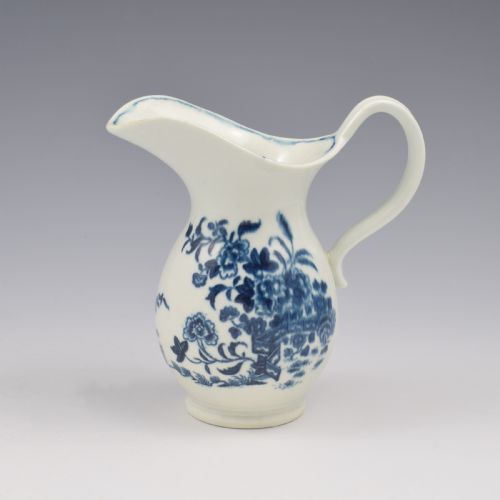

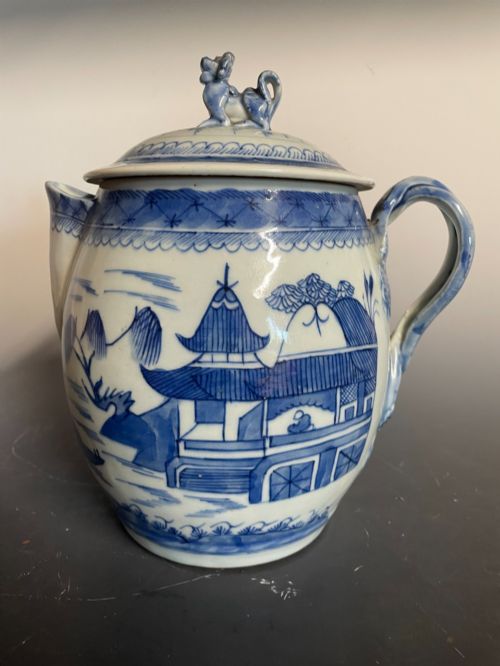


Underglaze Blue Porcelain Jug
An underglaze blue porcelain jug brings cobalt decoration beneath a transparent glassy coating, offering collectors historical ceramic artistry across centuries.
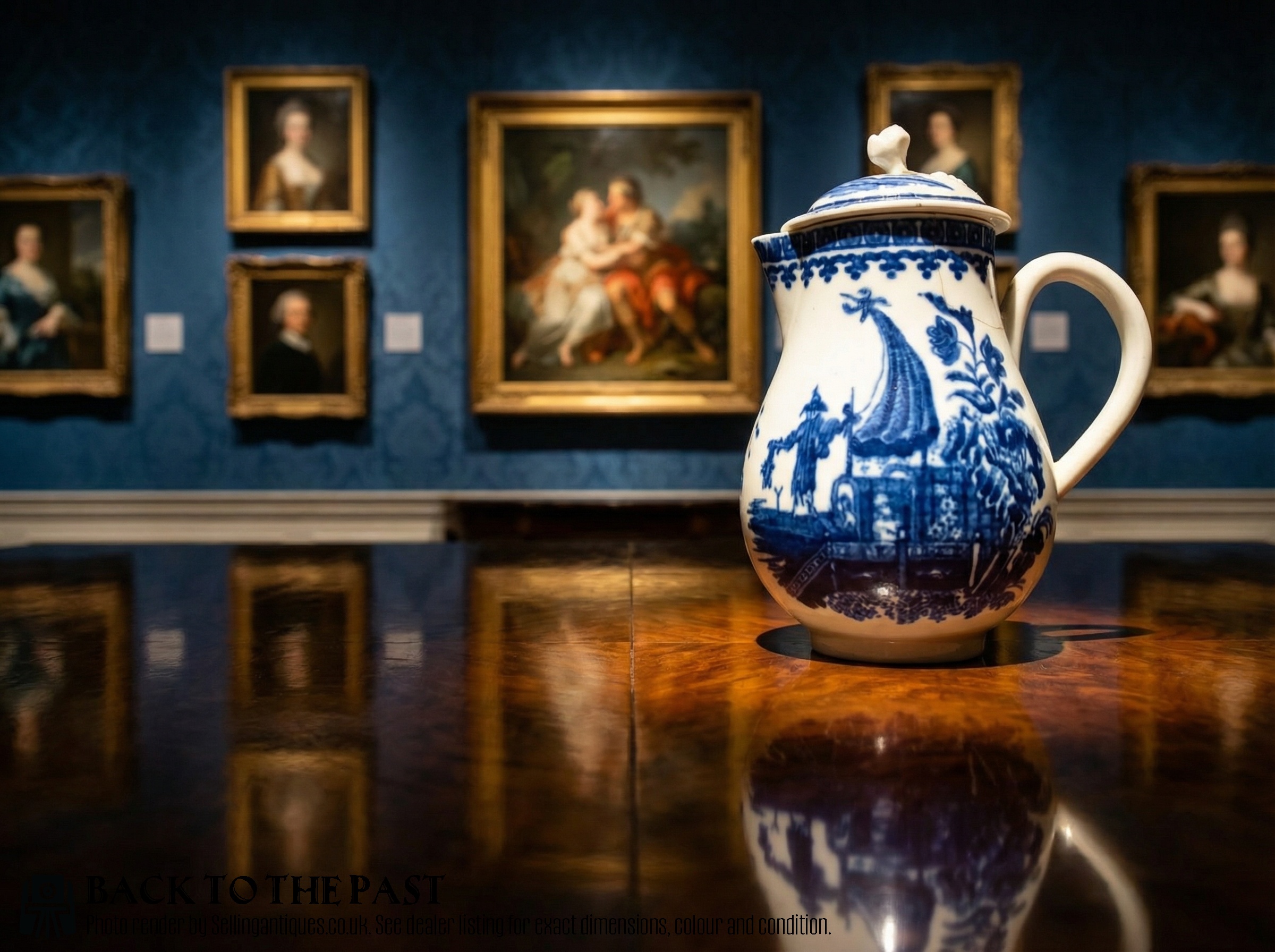
Underglaze Blue Porcelain Jug
An underglaze blue porcelain jug is a ceramic vessel decorated with cobalt pigment before firing and glazing, spanning periods from the seventeenth and eighteenth centuries alongside eighteen-eighty pieces. These vessels take various forms including milk jugs, sauce boats, wine ewers, and kendis.
The selections on this page include pieces from English factories like First Period Worcester alongside Chinese Qing Dynasty exports, Persian Safavid pottery, and Japanese Edo period Arita wares. Buyers meet milk jugs, pitchers, and ceramic vessels reflecting Georgian tastes and Asian export traditions.
Makers and origins range from Worcester porcelain works to Kangxi period kilns, showing diverse regional interpretations of blue and white ceramic design. Each piece demonstrates specific period aesthetics through painted cobalt motifs beneath the glaze.
Materials and construction
Porcelain and soft-paste porcelain form the primary body of these vessels, sometimes complemented by fritware or pottery in Persian and Asian examples. Cobalt glaze or cobalt underglaze is applied directly to the body before the application of a transparent glassy coat and firing.
Gold leaf appears on select eighteenth-century English pieces, adding metallic detail over the fired glaze. Kiln techniques determine whether the cobalt achieves a bright sapphire tone or a soft grey-blue beneath the surface.
Underglaze Blue Porcelain Jug Retail Price Guide 2026
Typical asking prices for underglaze blue porcelain jug among the pieces listed under this phrase on Sellingantiques today, from the lower quarter to the upper quarter. They describe what is for sale here now, not the wider market.
Parrots pecking fruit watch over tea tables from seventeenth-century porcelain jugs.
Distinctions in quality
Quality separates through the crispness of the cobalt painting beneath the glaze, where finer examples show controlled brushwork and deep colour saturation. The purity of the porcelain body and the smoothness of the glaze application also distinguish high-grade items.
Intricacy of form, such as mask spouts or moulded sparrow beak profiles, separates standard production vessels from exceptional factory outputs. The precision of firing without warping defines superior survival from the seventeenth and eighteenth centuries.
The Underglaze Blue Porcelain Jug Glossary
- Underglaze
- Decoration applied to pottery before the final glaze coating is fired. This technique protects the pigment beneath a glassy layer.
- Soft-paste porcelain
- A ceramic material composed of clay and glass frit, fired at lower temperatures than hard-paste. It was common in eighteenth-century English factories.
- Kendi
- A spouted drinking vessel of Asian origin, often used for pouring liquids. These pots lack a traditional handle and feature a central spout.
- Sparrow beak
- A small eighteenth-century English milk jug form with a pinched spout resembling a bird's beak. These items frequently display delicate underglaze blue patterns.
Underglaze Blue Porcelain Jug: Frequently Asked Questions
What is an underglaze blue porcelain jug?
An underglaze blue porcelain jug is a ceramic vessel decorated with cobalt oxide beneath a clear glaze before firing. These pieces encompass milk jugs, ewers, and pitchers from European and Asian traditions.
Examples range from eighteenth-century English Worcester porcelain to seventeenth-century Chinese export wares and Persian pottery.
How do I identify a First Period Worcester jug?
First Period Worcester pieces date from the eighteenth century and often feature characteristic sparrow beak profiles or mask spouts. Look for fine soft-paste porcelain bodies and underglaze blue patterns like the fisherman design.
Factory marks, when present, also help identify these English factory productions.
What is a kendi?
A kendi is a traditional drinking vessel featuring a globular body and a spouted neck without a handle. These forms appear in Persian Safavid pottery and seventeenth-century Chinese export porcelain.
They were produced for regional use and international trade during the seventeenth century.
How should I care for antique porcelain jugs?
Antique porcelain and pottery vessels require gentle hand washing in warm water with mild soap when cleaning is necessary. Avoid harsh abrasives or immersion in hot water to protect the glaze and any gold leaf details.
Display them away from direct sunlight and sudden temperature shifts.
What is the difference between porcelain and pottery?
Porcelain is a vitrified ceramic fired at high temperatures until non-porous and translucent. Pottery and fritware utilise different clay bodies and often fire at lower temperatures.
Underglaze blue decoration appears across both mediums depending on the regional tradition.