
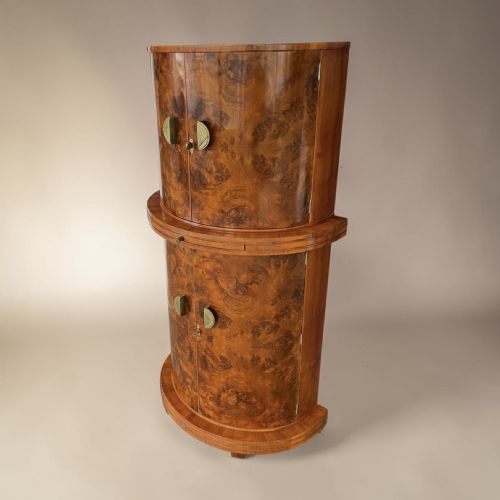


Two Tier Walnut Cabinet
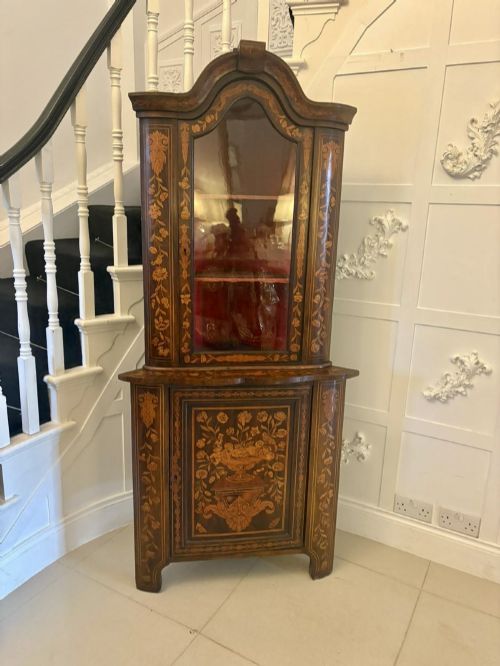
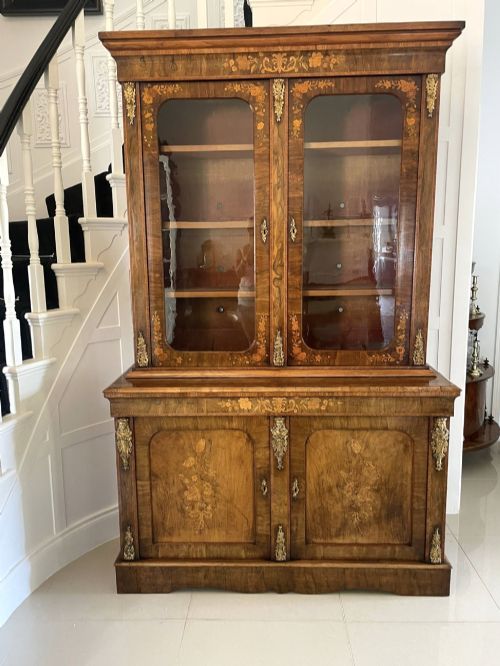
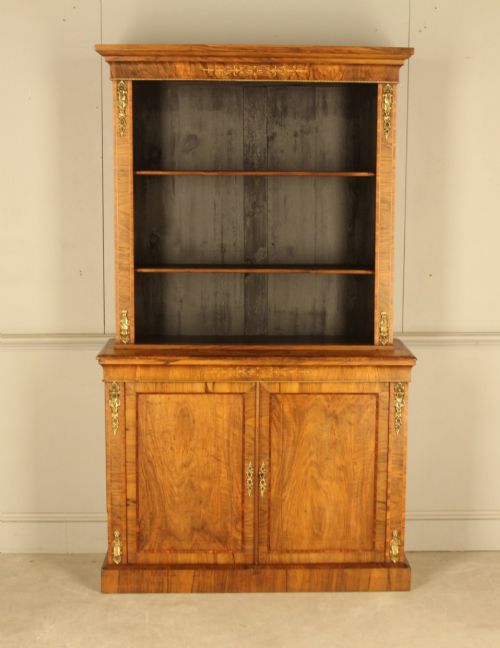
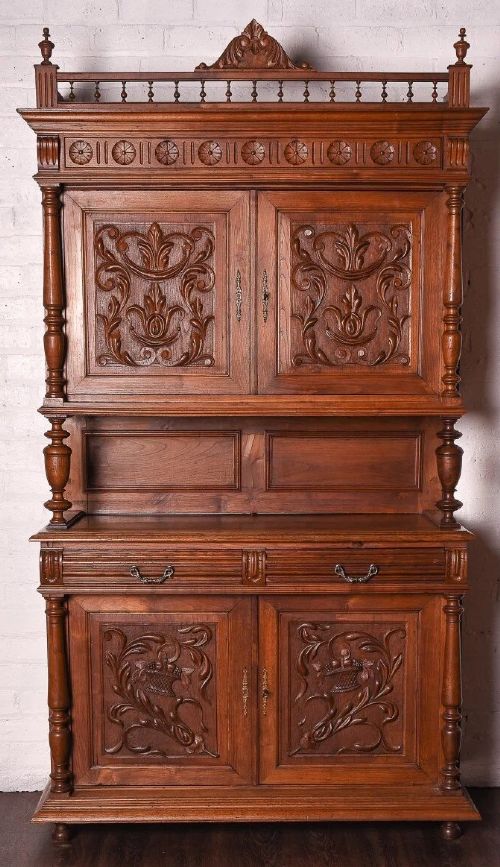
These two tier walnut cabinet pieces range from Victorian bookcases to Art Deco cocktail bars, offering practical storage with distinct timber grain.
Two Tier Walnut Cabinet
A two tier walnut cabinet brings structured storage across two distinct levels, appearing in forms such as bookcases, corner units, and buffet cabinets. These pieces span centuries of design, reflecting changing domestic habits from formal libraries to modern entertaining spaces.
The selection on this page demonstrates considerable variety in period and style, stretching from eighteenth-century French cupboards to nineteen-thirties Art Deco cocktail bars. Walnut and burr walnut dominate the construction, often enhanced by marquetry inlay or contrasting veneers.
Buyers encounter numerous regional variations, including Dutch serpentine shapes, Italian carved woodwork, and English Victorian glazed bookcases. Each configuration serves a specific domestic function, whether displaying porcelain or housing drinks.
Materials and construction methods
Makers utilised solid walnut and walnut veneer, frequently selecting burr walnut sections for highly figured surfaces with complex grain patterns. Supporting elements such as mounts incorporate brass, gilt details, and ormolu.
Structural joinery aligns with the period of manufacture, ranging from traditional eighteenth-century framing to twentieth-century veneering techniques over secondary timbers. Glass doors, fabric linings, and iron hardware appear where function requires them.
Listings feature walnut, burr walnut, and sycamore timbers combined with brass, glass, and ormolu mounts across multiple centuries.
Assessing quality and craftsmanship
Quality rests upon the selection of timber grain and the precision of the cabinetmaker's joinery, particularly where veneers meet solid borders. The integration of decorative elements like marquetry inlay or ormolu mounts dictates the sophistication of the piece.
Proportion and structural integrity separate standard utility furniture from finer examples, especially in multi-tiered or glazed items. The preservation of original surface finishes and hardware directly influences the character of each cabinet.
Holland and Sons·Gordovil Spain
The Two Tier Walnut Cabinet Glossary
- Burr walnut
- A wood harvested from the abnormal growth of a walnut tree, producing swirling, intricate grain patterns prized for decorative veneer. Cabinetmakers use these figured sections on primary display surfaces.
- Marquetry
- The art of applying small pieces of veneer to a structure to form decorative patterns or pictures. Craftsmen combine different woods to create detailed pictorial designs on cabinet doors.
- Ormolu
- Gilded bronze used for decorative mounts, feet, and handles on fine furniture. This technique adds metallic highlights against dark walnut timber.
- Buffet deux corps
- A tall two-part cupboard or sideboard featuring a lower cabinet section surmounted by a smaller upper cabinet. French makers built these substantial storage pieces in oak and walnut.
Two Tier Walnut Cabinet: Frequently Asked Questions
How do I date a walnut cabinet?
Dating relies on observing construction methods, timber preparation, and stylistic markers characteristic of specific periods like the Victorian era or Art Deco years.
Secondary woods, hardware types, and joinery details provide further evidence for narrowing down the decade of manufacture.
Are these cabinets suitable for modern homes?
These pieces integrate easily into contemporary interiors by offering practical shelving and enclosed storage for books, glassware, or modern media.
Their varied footprints, from corner units to wall shelves, allow them to fit into spaces where floor area is limited.
What is the difference between walnut and burr walnut?
Standard walnut timber displays a straight, uniform grain with deep brown tones, making it suitable for solid structural parts and frames.
Burr walnut comes from tree growths that create chaotic, beautiful patterns, utilised primarily as high-status veneer on visible door panels.
How should I care for walnut furniture?
Maintaining walnut furniture involves keeping pieces away from direct sunlight and fluctuating radiator heat to prevent timber splitting and veneer lifting.
Applying appropriate wax polishes occasionally helps nourish the grain and preserve the historic surface finish.