




French Buffet Deux Corps
A French buffet deux corps is a commanding two-tiered storage piece that anchors a room with serious presence and practical depth.
French Buffet Deux Corps
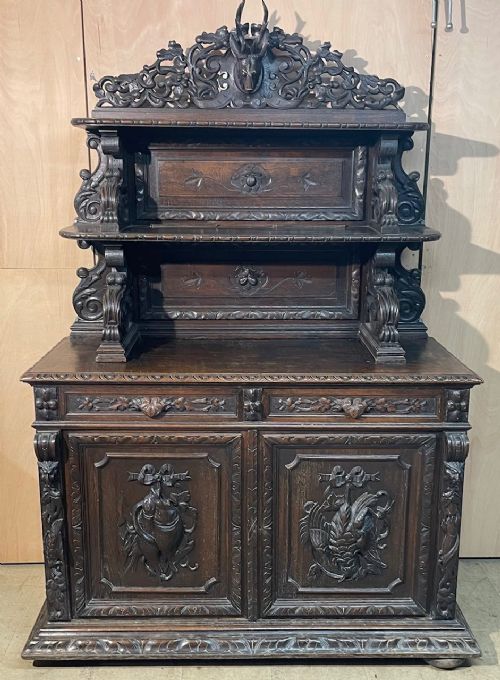
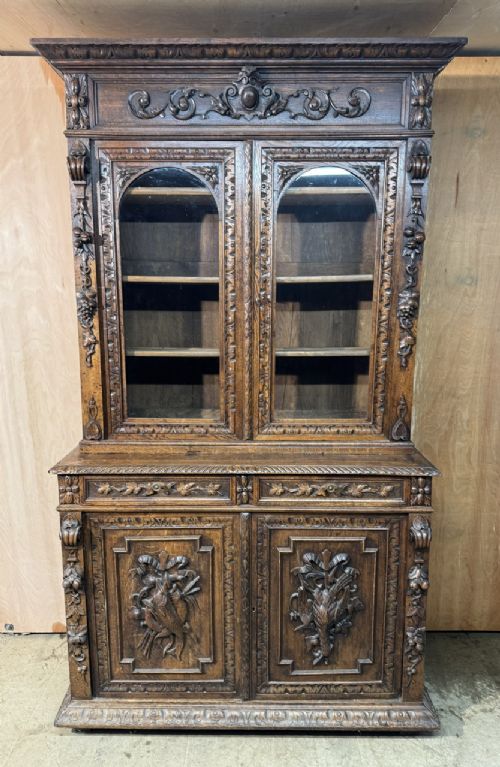
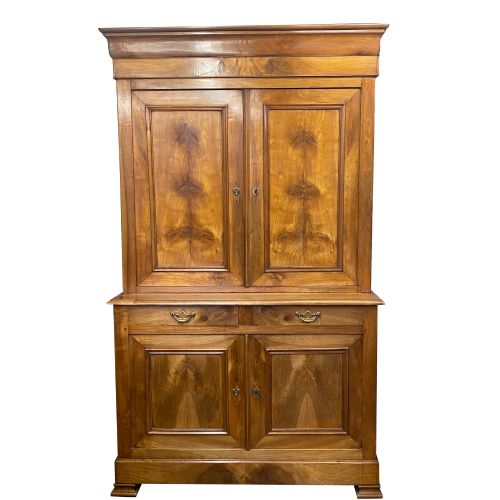
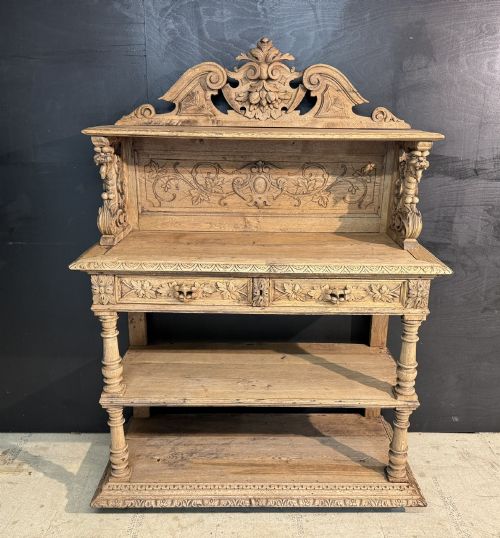
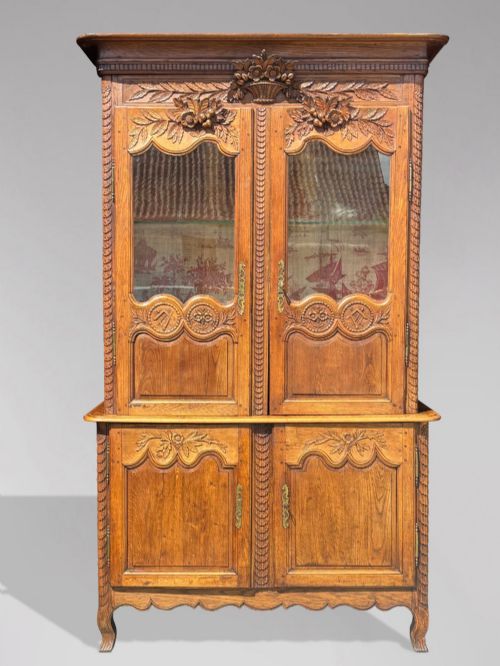
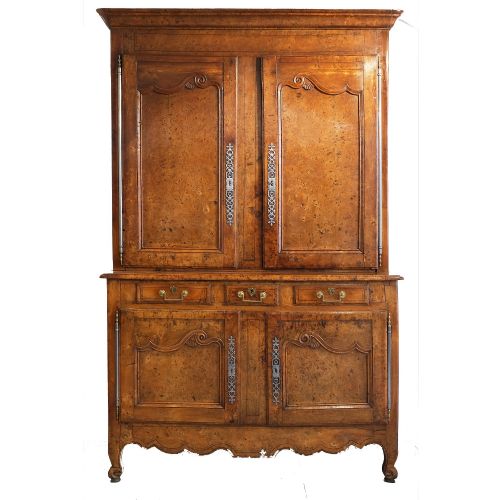
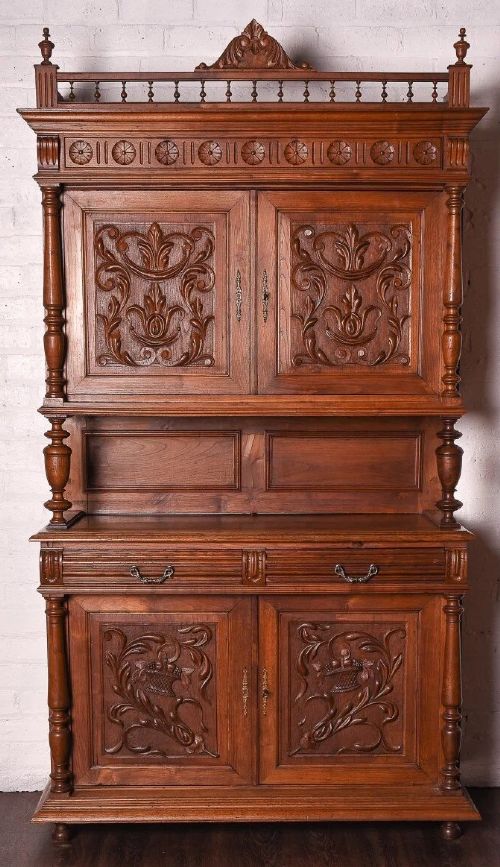
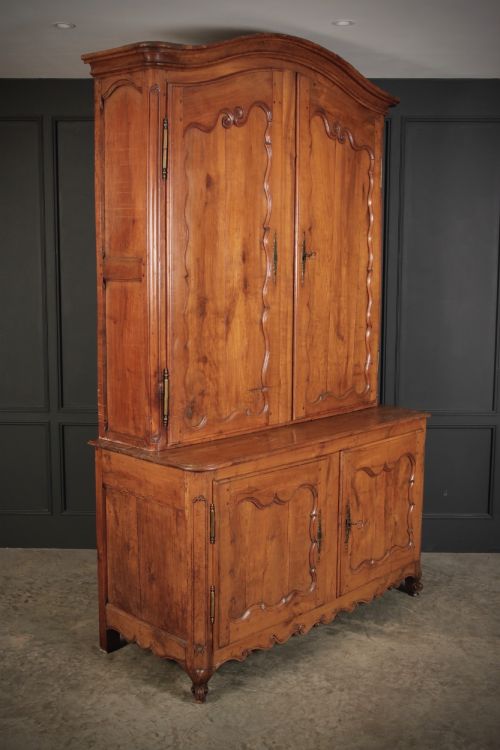
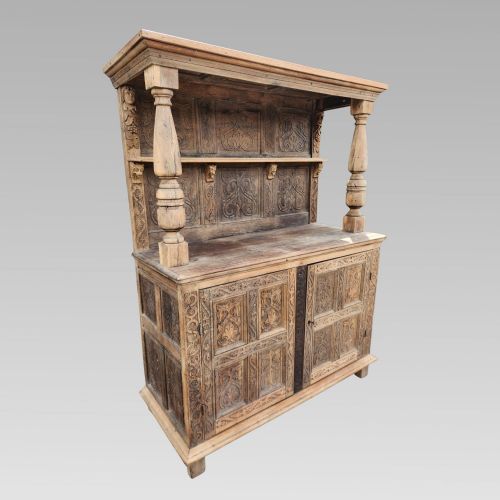
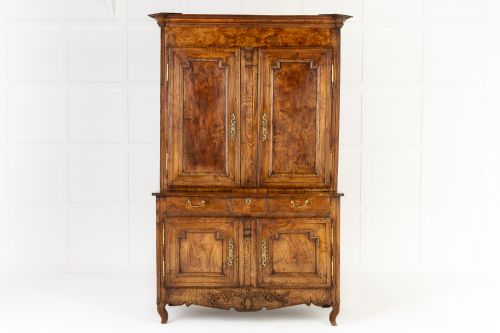
A French buffet deux corps is a substantial two-part storage cabinet stacked with a deeper lower section beneath a slightly narrower upper cupboard. This page centres on regional examples originating from the eighteenth and nineteenth centuries, including robust housekeeper's cupboards and carved hunting cabinets.
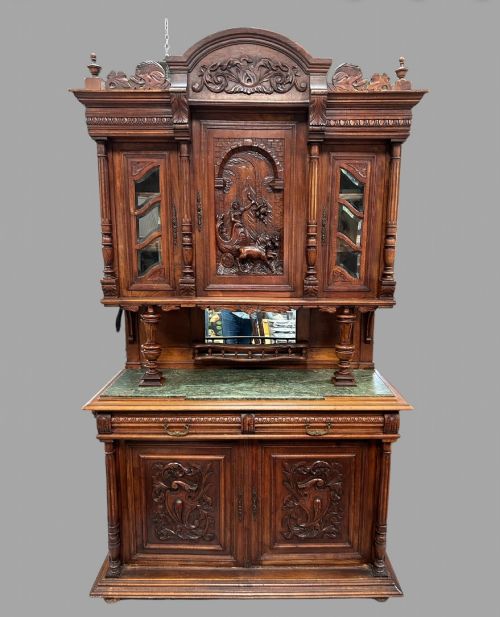
The most common versions met here are constructed from solid oak, walnut, cherry or ash, displaying traditional joinery and panelled doors. Buyers encounter styles ranging from plain provincial forms to ornate French Renaissance revival and Louis XV pieces.
These architectural case pieces served historically for storing household linens, provisions or tableware in substantial homes. Today they function as statement storage units in kitchens, dining rooms and hallways.
How they were made
Woodworkers built these two-part cabinets predominantly from solid timbers such as oak, walnut, cherry, ash, elm and pitch pine, occasionally applying paint to the exterior surfaces. Structural strength relied on pegged mortise and tenon joints combined with heavy fielded panels.
Metalwork played a functional and decorative role through forged iron hinges, steel straps and brass handles or escutcheons. Glazed doors appeared on select upper sections alongside intricate hand-carved motifs depicting foliage, game or provincial symbols.
Some hunting cabinets feature hand-carved woodland game peering out from the doors to keep watch over the dining room.
What varies in quality
The distinction between ordinary and exceptional examples rests on the quality of the timber selection and the depth of the carving. Finely figured walnut or dense old-growth oak with crisp, hand-chiselled relief work sits far above plain utilitarian utility pieces.
Proportion and structural integrity define the upper tier of quality in these tall case pieces. Items retaining original brass hardware, uncompromised pegged joints and untouched patinated surfaces represent the height of provincial craftsmanship.
The French Buffet Deux Corps Glossary
- Buffet deux corps
- A traditional two-tiered French storage cabinet featuring a large lower base and a separate upper cupboard. These towering pieces dominate a wall and provide extensive dual-level storage.
- Louis XV
- An eighteenth-century French design style characterised by curved lines, asymmetry and naturalistic carved ornamentation. Pieces from this era display flowing transitions and lighter proportions than earlier work.
- French Provincial
- Furniture made in the regions outside Paris during the eighteenth and nineteenth centuries, combining local practicality with refined urban styles. The construction uses native regional timbers like cherry and ash.
- Fielded panel
- A central wooden panel with bevelled edges designed to fit tightly within a frame while allowing the timber to expand and contract naturally. This technique prevents warping in large cupboard doors.
- Escutcheon
- A protective plate surrounding a keyhole, often fashioned from brass or forged iron. It prevents the wood around the lock from splitting during daily use.
French Buffet Deux Corps: Frequently Asked Questions
What is a french buffet deux corps?
A french buffet deux corps is a tall, two-part storage cabinet built with a large lower buffet base and a matching upper cupboard section.
Historically used for storing household provisions and linens, these substantial pieces provide massive vertical storage capacity for modern homes.
How do I date an 18th century piece?
Dating an eighteenth-century example relies on examining the timber grain, hand-cut joinery marks, and the style of the hand-carved panels. Earlier pieces typically feature pegged construction and native hardwoods without modern fasteners.
The regional vernacular and tool marks left by the cabinetmaker offer further clues to the decade of origin.
Can I separate the two sections?
The upper cupboard rests directly upon the lower buffet base as two distinct stacked components designed to ease transport and placement. While they separate physically for moving, they function structurally and visually as a single unified piece.
Buyers should measure ceiling heights carefully before installation because these double-bodied cupboards stand remarkably tall.
What woods were used?
Cabinetmakers constructed these cupboards from regional hardwoods including solid oak, walnut, cherry, ash, elm, yew and pitch pine. Painted wood surfaces also appear on specific provincial examples.
The choice of timber usually reflects the local forests surrounding the workshop where the piece was built.