
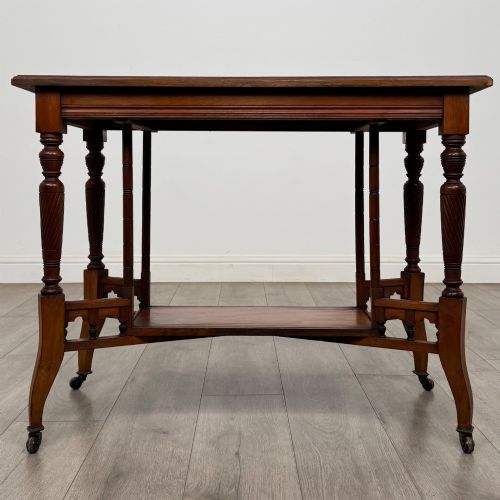
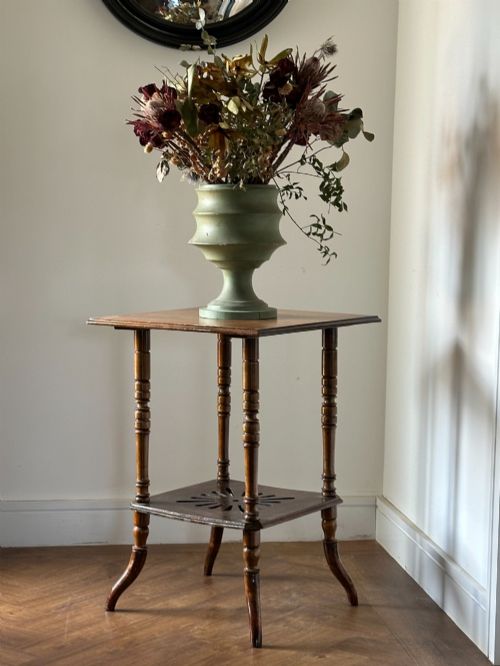
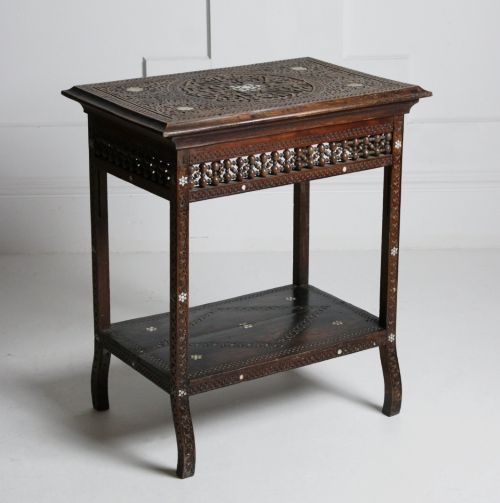
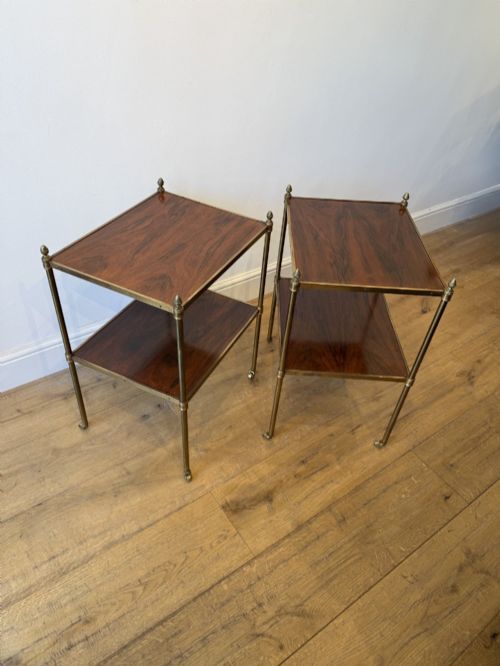
Two Tier End Table
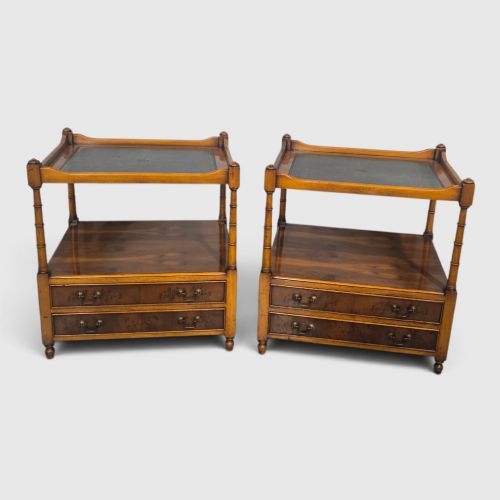
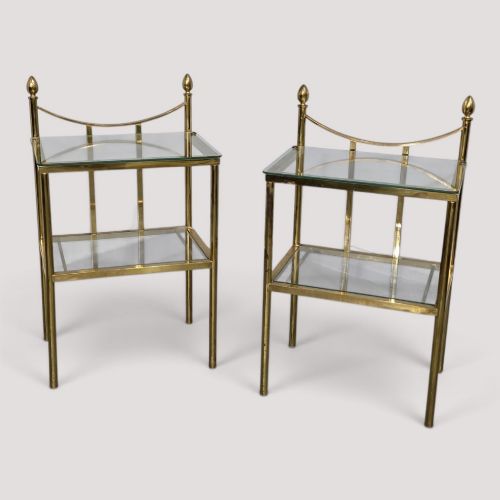
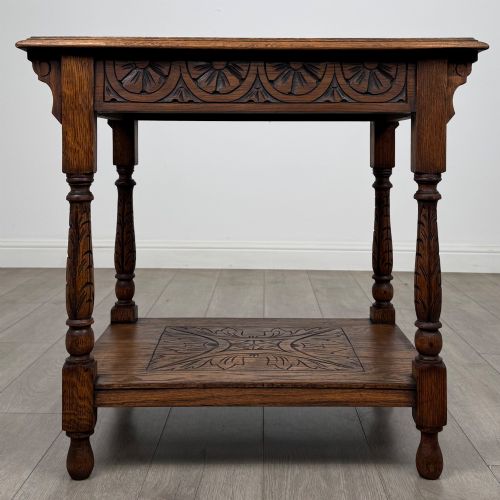
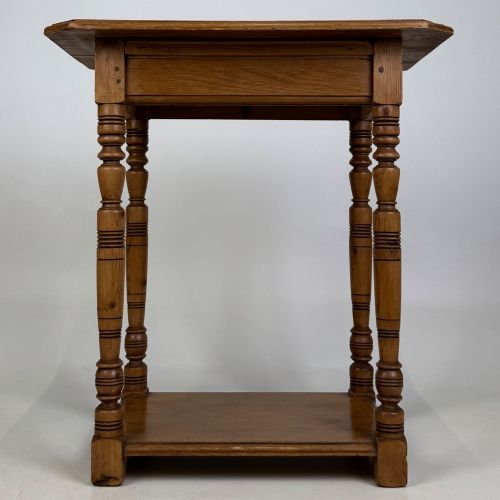
A two tier end table offers dual surfaces for lamps or books, spanning Victorian, Edwardian, and Art Deco designs.
Two Tier End Table
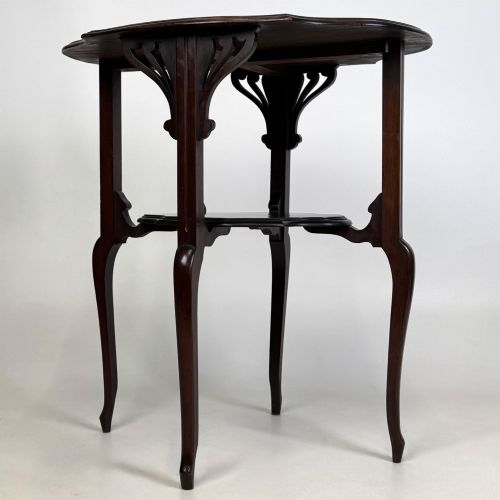
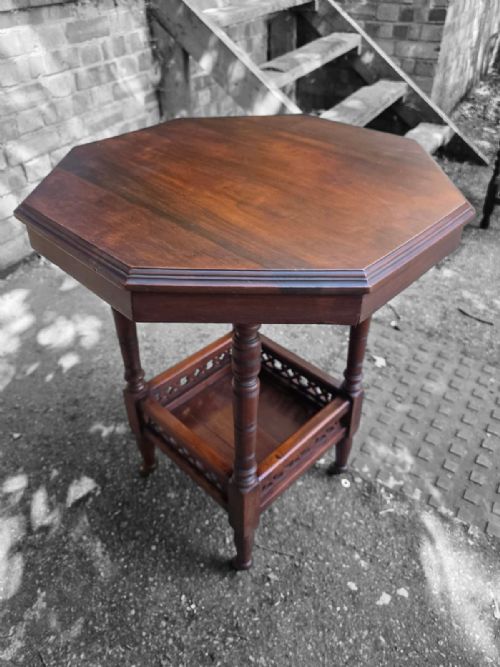
A two tier end table provides compact surface space on two distinct levels, functioning as an occasional, lamp, or side table in various domestic settings. These items emerge primarily from the Victorian, Edwardian, and Art Deco periods, alongside pieces spanning the nineteenth and twentieth centuries.
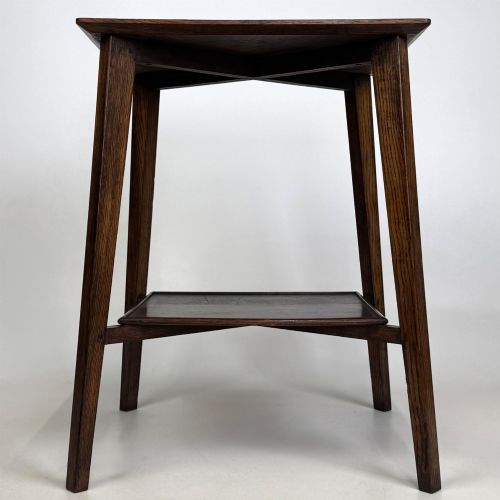
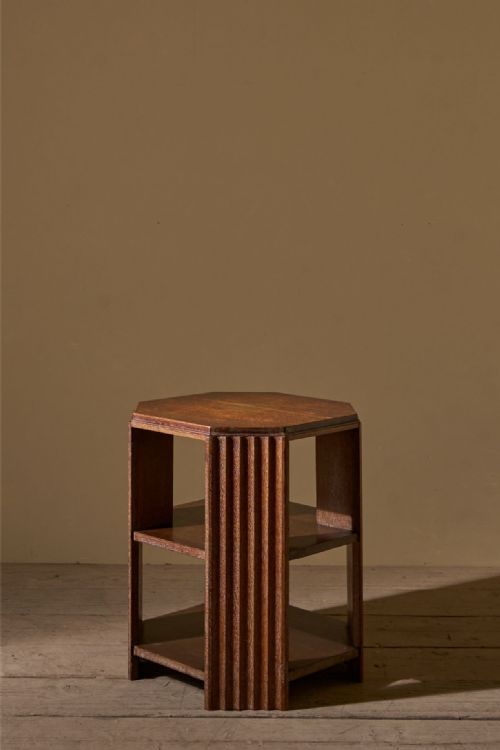
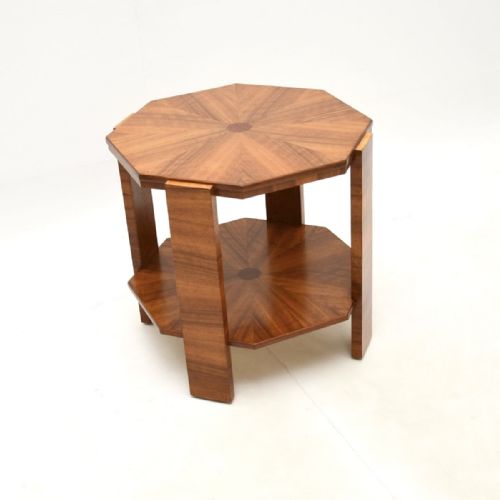
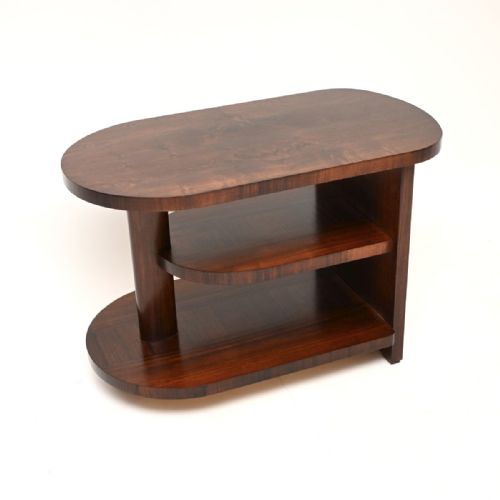
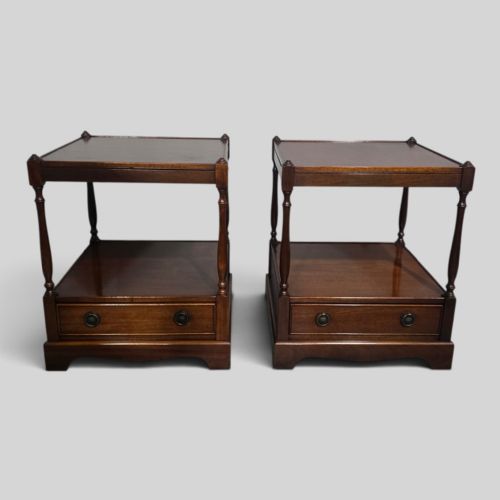
The selection here includes walnut, mahogany, and oak tables configured with dual platforms. Buyers frequently encounter Edwardian inlaid mahogany models and Art Deco walnut designs alongside Arts and Crafts oak pieces.
Materials and Technique
Construction relies upon timbers such as mahogany, walnut, oak, yew, and rosewood, frequently enhanced with brass, glass, chrome, or intricate inlay work. Artisans shape these materials into sturdy frames supporting secondary shelves or galleries.
Techniques range from hand-carved Edwardian woodwork to geometric Art Deco veneering and ebonised finishes. Structural integrity depends upon secure joinery connecting the primary top to the lower tier.
Some tables offer two tiers just so a very small cat can supervise your reading from the lower shelf.
Quality and Distinction
Distinction in a two tier end table rests on timber selection, such as figured golden oak or rich rosewood, and the precision of inlaid details. Superior examples exhibit balanced proportions between the upper and lower surfaces.
Execution of decorative elements, from carved oak motifs to chrome accents on Art Deco items, defines the upper tier of craftsmanship. Finer pieces maintain structural harmony and material integrity across both tiers.
Liberty of London·Gilbert Rohde·Mallett·E.W Godwin
The Two Tier End Table Glossary
- Etagere
- A piece of furniture consisting of a set of open shelves for displaying small objects. These multi-tiered units often serve as refined side tables.
- Inlay
- A technique of ornamenting a surface by embedding pieces of contrasting material such as wood or brass. This method decorates many Edwardian and Victorian tabletops.
- Ebonised
- Wood finished to resemble ebony through dark staining or painting. This treatment appears on specific nineteenth-century occasional tables.
- Gallery
- A low rail or raised edge surrounding the top of a shelf or table. This feature prevents items placed on the upper or lower tier from sliding off.
Two Tier End Table: Frequently Asked Questions
What is a two tier end table used for?
These tables provide a primary surface for lamps or drinks while reserving the lower shelf for books or decorative objects. They fit easily beside sofas or chairs in compact rooms.
Their dual-level design maximises vertical space without enlarging the furniture footprint. This configuration suits both traditional and modern interior arrangements.
How do I identify an Edwardian two tier end table?
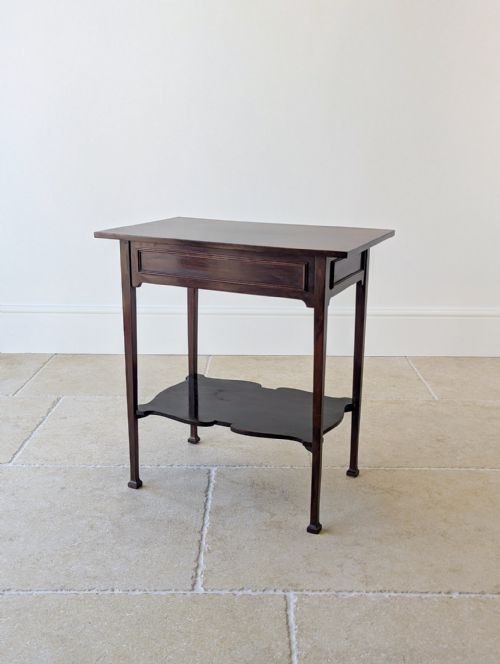
Edwardian examples often feature light mahogany timbers combined with delicate stringing or floral inlay. Carved oak versions from this era also appear frequently in domestic settings.
Construction from the early twentieth century typically emphasises domestic utility paired with refined surface decoration. Look for tapered legs and subtle gallery rails.
Are Art Deco two tier end tables different?
Art Deco pieces favor bold walnut and maple veneers, sometimes incorporating chrome or glass elements. Their silhouettes embrace geometric lines and contrasting wood grains.
These tables reflect the modern design shifts of the nineteen-thirties. They prioritize sleek horizontal planes and striking material pairings over traditional carving.
How do I care for antique wood tables?
Maintain finished wood surfaces by keeping them away from direct heat sources and strong sunlight. Regular dusting with a soft cloth preserves the original polish.
Avoid excessive moisture during cleaning to protect delicate veneers and inlay work. Gentle conditioning maintains the natural lustre of walnut and mahogany.