

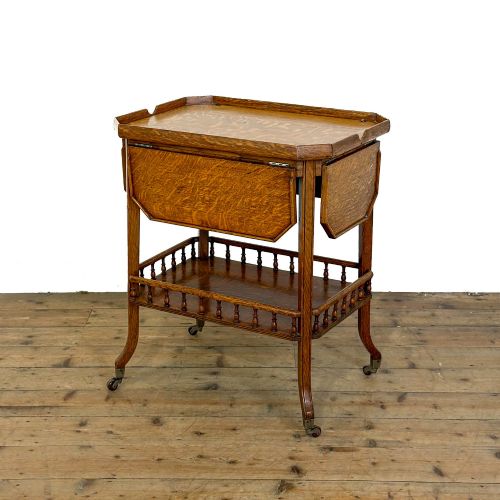
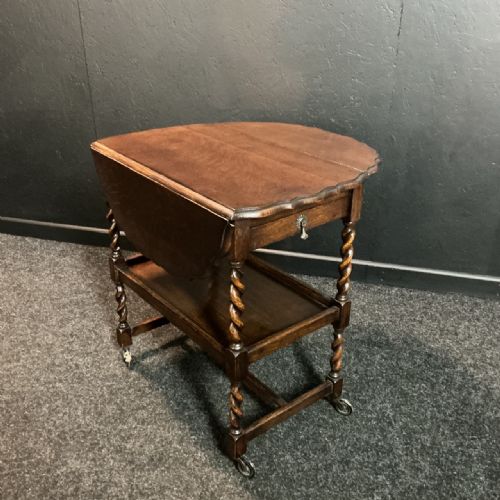


Two Tier Drop Leaf Table
A two tier drop leaf table offers folding tiers and versatile shelving, bringing compact utility and period character to any room.
Two Tier Drop Leaf Table
When you search for a two tier drop leaf table, you are looking at multi-surface furniture designed to expand when needed and fold away to save floor space. These items appear across several historic eras, ranging from Georgian and Regency examples to Victorian, Edwardian, and 1920s pieces.
The forms on this page include tea trolleys, drinks carts, occasional tables, side tables, and dumb waiters. You are most likely to meet mahogany or oak versions equipped with drop leaves or folding tiers, serving utility functions such as afternoon tea service or side storage.
Originating from periods that valued adaptable interior arrangements, these tables combine stacking tiers with hinged leaves. The dual functionality separates them from standard static furniture, offering practical surfaces that adjust to the dimensions of the room.
Materials and construction
Cabinetmakers constructed these pieces primarily using dense hardwoods such as mahogany, oak, walnut, and burr walnut, occasionally incorporating satinwood for lighter decorative contrast. Metal elements like brass castors and iron fixings provided mobility and structural support for moving tiers.
Joinery methods focused on stability for folding leaves and multi-tiered frameworks, utilising drop-leaf hinges and folding brackets. Decorative techniques ranged from plain timber surfaces to inlaid details and turned supports such as barley twist legs.
Two Tier Drop Leaf Table Retail Price Guide 2026
Typical asking prices for two tier drop leaf table among the pieces listed under this phrase on Sellingantiques today, from the lower quarter to the upper quarter. They describe what is for sale here now, not the wider market.
The listings here span the Georgian, Regency, Victorian, Edwardian, and 1920s periods, using woods like mahogany, oak, walnut, and satinwood.
Assessing quality
Quality in these items rests upon the choice of timber and the precision of the folding mechanisms. Dense grain mahogany or figured walnut indicates superior material selection compared to standard utility woods.
The engineering of the drop leaves and tiers dictates how smoothly the table transitions between extended and folded states. Solid joints, well-fitted brass hardware, and balanced proportions distinguish finer workshop production from simpler domestic items.
Morison of Edinburgh
The Two Tier Drop Leaf Table Glossary
- Drop leaf
- A table with a fixed centre section and hinged flaps that fold down when not in use. This design allows the footprint of the furniture to be reduced significantly.
- Tiered
- Having multiple levels or shelves arranged vertically above one another. It maximises surface area without increasing floor space.
- Dumb waiter
- A multi-tiered serving piece, often circular or folding, used to hold dishes or drinks without requiring a servant present. Georgian and 19th-century examples frequently feature revolving or folding tiers.
- Sutherland table
- A narrow table with exceptionally wide drop leaves supported by swing legs. When folded, it occupies very little depth.
- Castor
- A small wheel fitted to the legs of furniture to aid movement. Brass fittings are common on period trolleys and serving stands.
Two Tier Drop Leaf Table: Frequently Asked Questions
What is a two tier drop leaf table used for?
These tables served primarily for serving tea, holding drinks, or providing extra surface space during social gatherings. The folding leaves allowed them to sit flat against a wall when not in use.
Today, they function well as flexible side tables or drinks carts in living spaces where floor area is at a premium.
How do I identify a Georgian dumb waiter?
Georgian dumb waiters feature multiple graduated tiers supported by a central column and tripod base. Many incorporate folding sides or revolving trays designed for formal dining.
Earlier examples from the 18th century display rich mahogany grain and traditional joinery distinct from later Victorian or Edwardian reproductions.
How do I care for antique mahogany and walnut surfaces?
Protect the wood from direct sunlight and excessive temperature changes to prevent timber splitting or fading. Regular dusting with a soft cloth maintains the natural finish.
Apply occasional appropriate wax polish to nourish the grain without building up a heavy residue.