
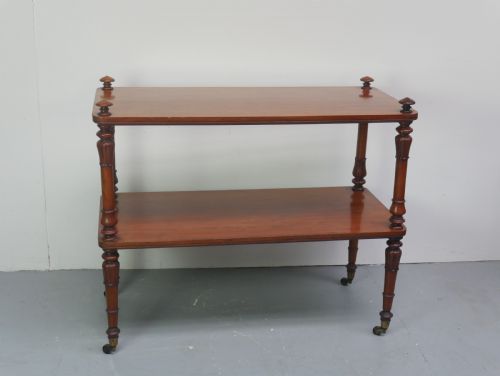
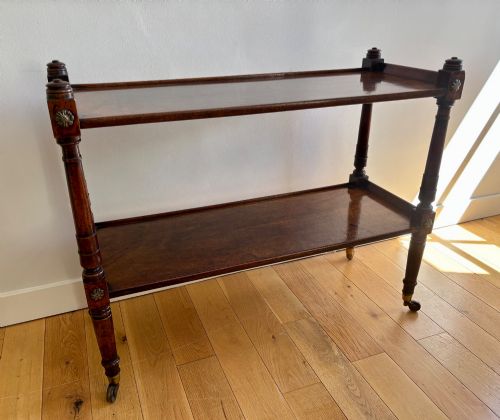


Two Tier Buffet
When you handle a two tier buffet, you notice how the stacked tiers turn simple dining room storage into practical staging space.
Two Tier Buffet
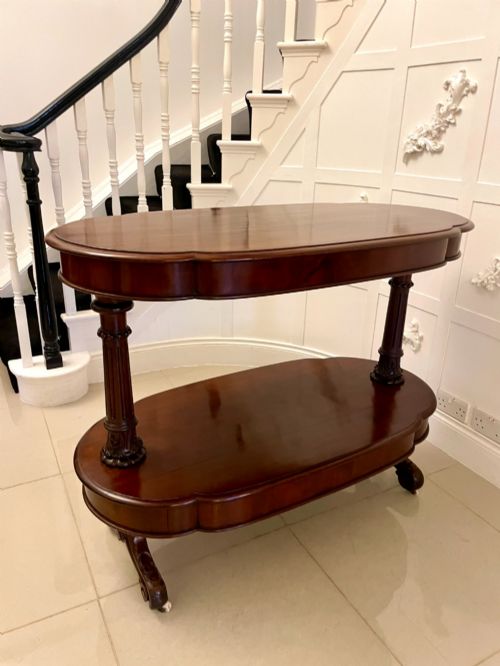
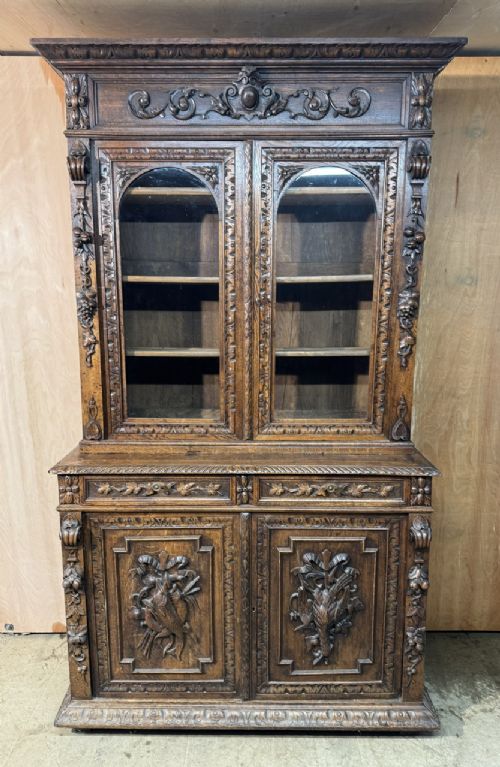
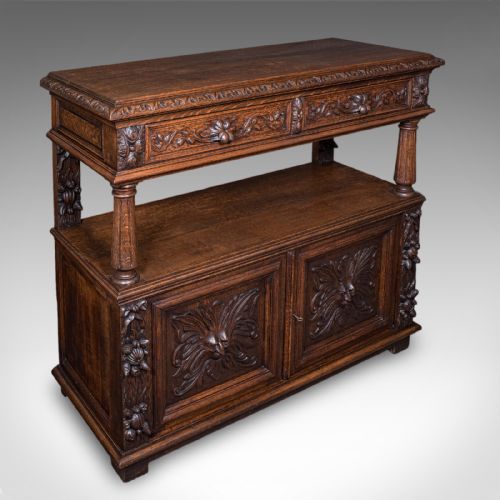
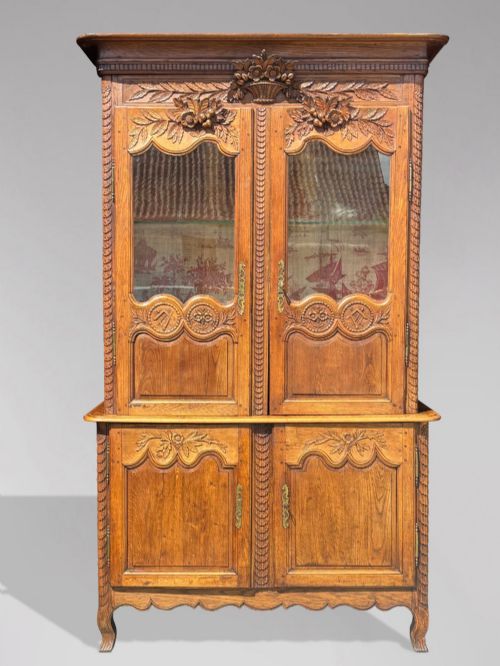
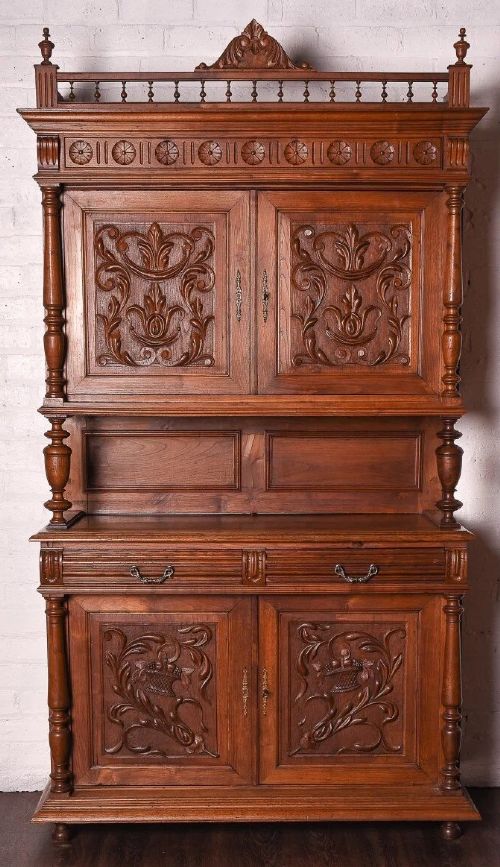
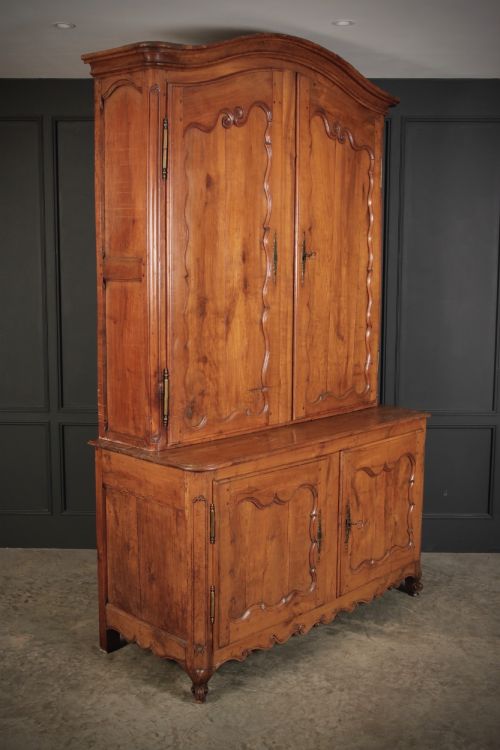
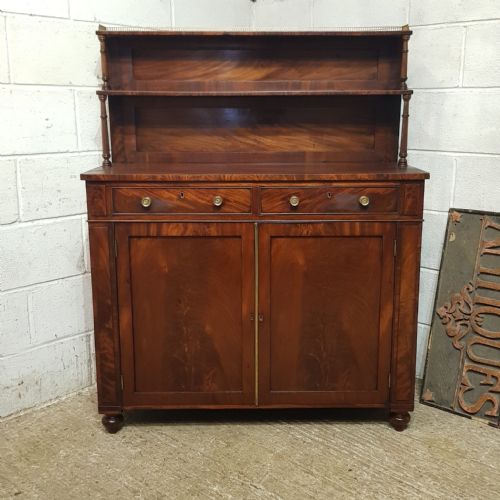
A two tier buffet provides double the surface area for serving food, displaying silver, or holding dining room accessories, combining the height of a sideboard with the accessibility of open shelving. These pieces appear in various forms, from Georgian and Regency serving tables to Victorian trolleys and substantial oak cupboards.
The versions most common in these listings span the eighteenth and nineteenth centuries, executed in rich woods like mahogany and oak. Many incorporate practical tiers supported by turned columns, pedestals, or castors, designed originally to assist with hospitality and service in grand dining rooms.
How They Were Made
Cabinetmakers relied heavily on dense hardwoods, predominantly mahogany and oak, alongside walnut, ash, and pollard oak for decorative grain patterns. These timbers were selected for both structural integrity and the capacity to take a fine polish or intricate carving.
Construction techniques involve traditional joinery, turning for columns and pedestals, and occasionally the integration of brass hardware and castors for mobility. Surfaces frequently display hand-carved details, notably in Victorian interpretations, or rely on the natural figure of the timber in Georgian designs.
Listings feature oak, mahogany, and walnut across Georgian, Regency, and Victorian periods.
What Varies in Quality
Quality rests on the selection of timber and the crispness of the joinery and carving. Superior examples exhibit tightly figured mahogany or richly patinated oak with precise, hand-carved mouldings rather than mechanical uniformity.
Proportion and stability define the better pieces, where stacked tiers are balanced securely on well-turned columns or robust tripod bases. Finer pieces often feature subtle architectural details and high-grade secondary timbers that remain hidden from casual view.
Holland and Sons·Edwards and Roberts·Jas Shoolbred·Maple and Co
The Two Tier Buffet Glossary
- Buffet
- A side table or sideboard used for serving food and displaying plate. It evolved through various tiered and shelved forms to suit dining room hospitality.
- Dumb waiter
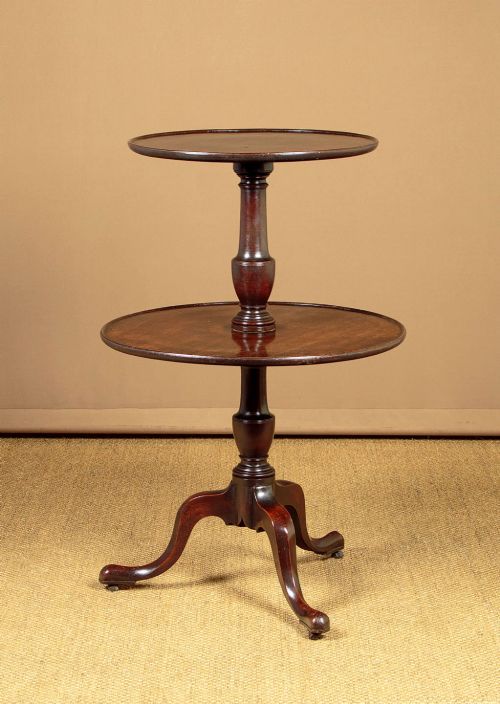
- A tiered stand or revolving serving table placed beside a dining table to hold dishes without servant assistance. They typically feature graduated circular trays on a central column.
- Pollard oak
- Oak timber taken from trees that have been pollarded, producing a dense, highly figured burl grain prized for Victorian decorative furniture. It creates striking patterns across large flat surfaces.
- Castor
- A small wheel mounted on a swivel attached to the legs of furniture. These allowed heavy sideboards and serving trolleys to be moved easily across dining room floors.
- Chiffonier
- A low sideboard or cabinet developed during the Regency period, often featuring shelves or tiers above a closed cupboard base.
Two Tier Buffet: Frequently Asked Questions
What is a two tier buffet used for?
These pieces served primarily as auxiliary furniture in dining rooms, holding dishes, serving platters, and glassware during large meals. The dual levels allowed hosts to keep everyday items close at hand while maintaining an orderly surface.
Today, they function well in modern interiors as serving stations, console tables, or display units for collections. Their vertical layout provides generous surface space without demanding excessive floor area.
How do I date a mahogany buffet?
Dating relies on examining the timber characteristics, construction methods, and prevailing style of the period. Earlier eighteenth-century examples tend to feature clean lines and solid mahogany construction, while Victorian pieces often incorporate heavier carvings, decorative veneers, and castors.
Secondary woods inside drawers and the style of the turning on columns offer further clues. Cabinetmakers altered their joinery techniques over the decades, helping to narrow down the decade of production.
Are these pieces suitable for small dining rooms?
The vertical arrangement of two tiers makes these buffets surprisingly space-efficient compared to wide, single-level sideboards. They offer double the display and storage footprint while occupying a modest floor area.
Their open or semi-open construction also prevents them from visually crowding a room. Placing one against a wall or in a corner creates useful staging space without overwhelming the surrounding layout.
What is the difference between a buffet and a dumb waiter?
A buffet generally provides broad rectangular or bow-fronted tiers designed for serving food and displaying tablewares against a wall. They often include cupboards or drawers beneath the primary surfaces.
Dumb waiters traditionally feature revolving circular tiers stacked on a central tripod base, meant to stand beside a dining table. While both offer multiple levels, their original functions and floor footprints differ significantly.