


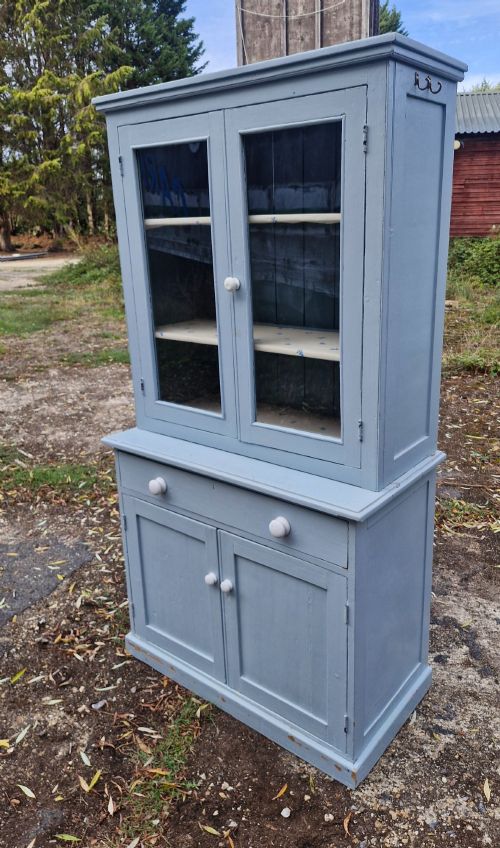


Two Part Kitchen Dresser
A two part kitchen dresser offers generous domestic storage, combining a display rack or upper cabinet with a substantial lower base.
Two Part Kitchen Dresser
When you search for a two part kitchen dresser, you are looking at substantial storage furniture built in two separable sections for easier transport and placement in the home. These pieces traditionally combine an open plate rack or glazed cabinet top with a heavy base fitted with drawers and cupboards.
The versions most likely to meet you on this page span the seventeenth, eighteenth, and nineteenth centuries, reflecting English, Welsh, and French country traditions. You will encounter regional forms ranging from West Country and Welsh oak designs to French provincial buffets and painted pine cupboards.
Makers constructed these large pieces to serve as the hardworking heart of the domestic kitchen or dining room, using local timbers to hold heavy ceramics, pewter, and daily provisions. The separation into upper and lower tiers remains the defining structural feature across all these regional variations.
How they were made
Cabinet makers built these dressers primarily using solid native timbers such as oak, pine, pitch pine, and walnut, selecting each wood for its local availability and structural strength. They joined heavy carcases using traditional methods like mortise and tenon joinery to ensure the lower base could safely support the upper tier.
Iron and brass hardware, including hinges, pulls, and escutcheons, were fitted by hand to secure doors and drawers during heavy daily use. Many surfaces received early coats of paint or finish to protect the timber against kitchen moisture and grease.
Two Part Kitchen Dresser Retail Price Guide 2026
Typical asking prices for two part kitchen dresser among the pieces listed under this phrase on Sellingantiques today, from the lower quarter to the upper quarter. They describe what is for sale here now, not the wider market.
Listings on this page span the seventeenth century through to the early twentieth century, utilising oak, pine, pitch pine, and walnut.
What varies in quality
The distinction between standard utility pieces and finer examples rests upon the selection of timber and the sophistication of the regional joinery. Superior dressers display careful proportioning between the upper display section and the deep lower cupboards, with timber boards chosen for harmonious grain or smooth painted finishes.
The survival of original hardware, glass panes, and untouched surface patinas elevates certain pieces above those altered or stripped during later centuries of domestic life.
The Two Part Kitchen Dresser Glossary
- Buffet deux corps
- A traditional French two-part cupboard featuring an upper cabinet set upon a matching lower base. This term commonly describes continental forms seen alongside British dressers.
- Plate rack
- The open shelving superstructure attached to the upper section of a dresser. It is designed to display ceramics upright against a backing board.
- Pitch pine
- A resinous North American and European pine species utilised for heavy furniture construction. It provides durable surfaces with prominent grain patterns.
- Escutcheon
- A protective plate surrounding a keyhole on a cabinet door or drawer front. These are frequently cast in brass or forged iron.
- Cornice
- The ornamental moulding running around the topmost edge of the upper dresser section. It crowns the silhouette of the entire piece.
Two Part Kitchen Dresser: Frequently Asked Questions
How are the two sections joined?
The upper display rack or cabinet simply rests upon the top of the lower base cabinet, secured by its own weight and sometimes dowels or small brackets.
This modular construction allowed historical craftsmen to move these heavy items through narrow doorways and up staircases with greater ease.
What is a Welsh dresser?
A Welsh dresser is a traditional regional variant characterised by open shelving above a base fitted with multiple drawers and lower cupboards.
These pieces were traditionally utilised in rural kitchens to display family pewter and ceramic collections while keeping provisions stored securely below.
How do I care for antique timber?
Keep wooden dressers away from direct heat sources and rapid humidity changes to prevent the solid timbers from splitting or warping.
Regular dusting with a dry cloth and occasional application of appropriate wax will maintain the historic surface patina.
Are all dressers made of oak?
While early pieces frequently utilise sturdy oak, many regional and later examples employ pine, pitch pine, or walnut depending on local availability.
Painted finishes were also commonly applied to softer woods like pine during the nineteenth century.