


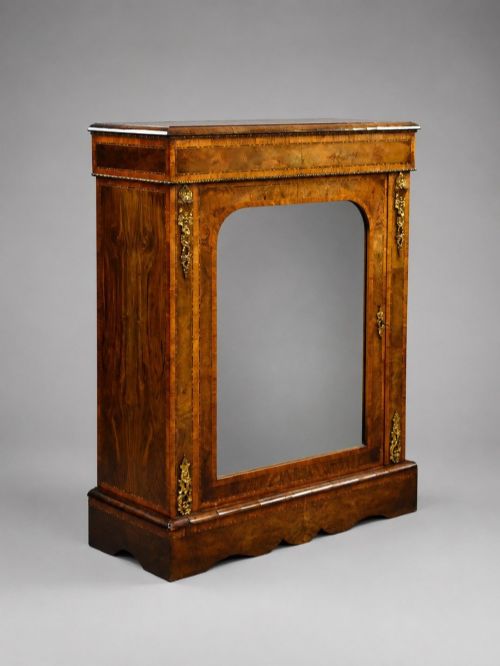


Glass Fronted Sideboard
A glass fronted sideboard brings together practical storage and display, appearing chiefly as a nineteenth-century credenza or cabinet.
Glass Fronted Sideboard
When you search for a glass fronted sideboard, you are looking at substantial nineteenth-century furniture designed to display valuables while concealing other items behind timber doors. These pieces serve as focal points in reception rooms, combining surface space for serving with enclosed shelving.
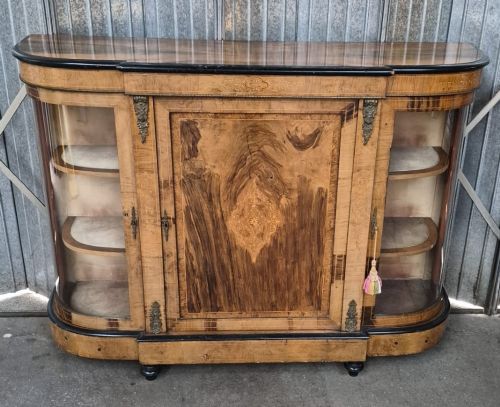
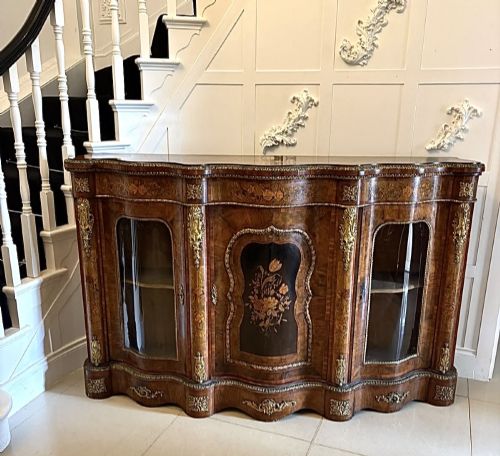
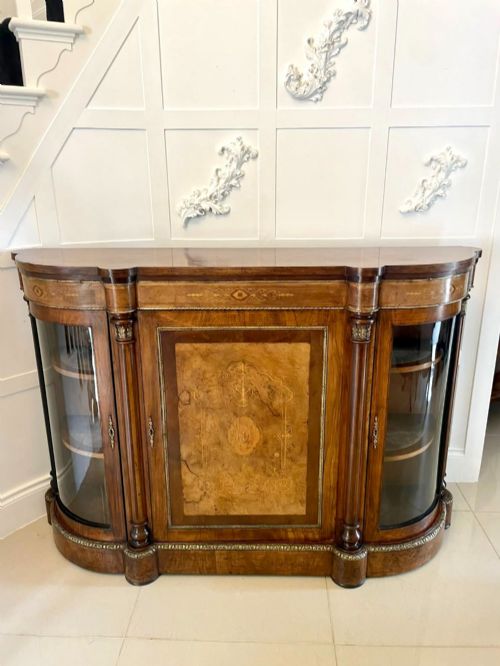
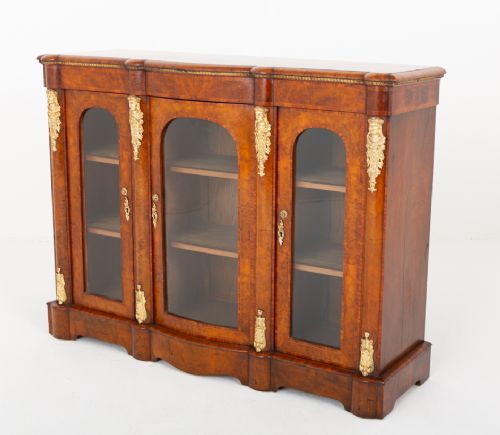
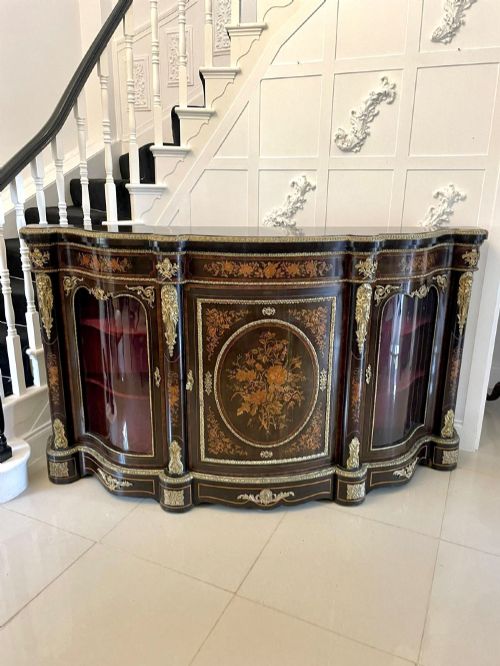
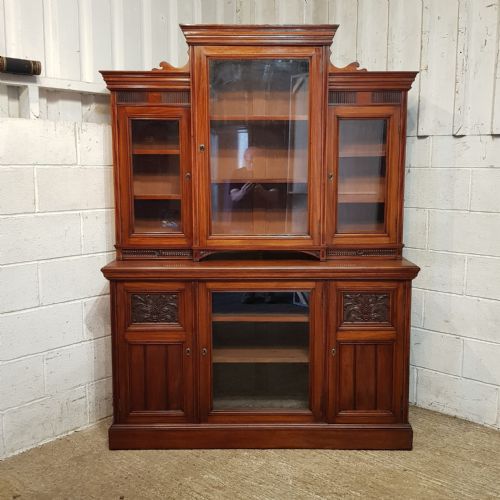
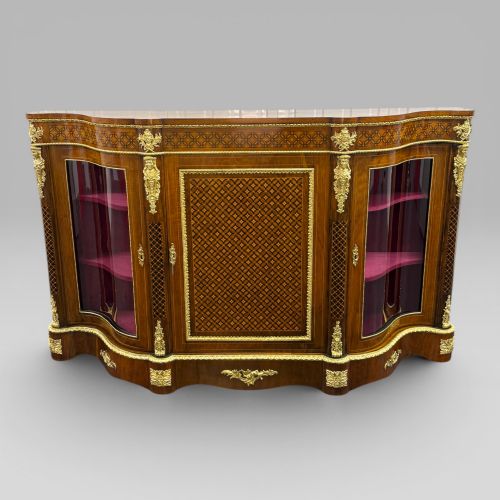
The version you are most likely to meet on this page is the Victorian credenza, often fashioned with a serpentine front and glazed central or side compartments. Alongside credenzas, the selection includes rosewood and walnut side cabinets, upright pier cabinets, and occasional kitchen dressers.
Origins stretch from mid-Victorian workshops through to later revival styles such as Sheraton and Aesthetic Movement pieces. Makers utilised exotic timbers and glass panels to create formal display furniture that reflected the status of the Victorian household.
Materials and construction
Cabinet makers relied heavily on walnut and burr walnut veneers, laid over secondary timbers to create rich, figured surfaces on serpentine and bow-fronted carcases. Rosewood, satinwood, and ebonised wood also appear frequently, often contrasted with lighter marquetry inlays.
Decorative metalwork plays a structural and visual role, with cast ormolu mounts framing panels and brass inlay highlighting geometric or floral motifs. Glass doors, curved to follow the lines of the cabinet, allow light into the velvet-lined or timber-shelved interiors.
Glass Fronted Sideboard Retail Price Guide 2026
Typical asking prices for glass fronted sideboard among the pieces listed under this phrase on Sellingantiques today, from the lower quarter to the upper quarter. They describe what is for sale here now, not the wider market.
Many of these display cabinets still retain their original velvet-lined interiors, ready to showcase a Victorian collection.
What sets finer examples apart
Quality rests upon the choice of timber and the precision of the marquetry, where intricate floral designs demonstrate the hand of a skilled marqueter. Finer cabinets display deep, natural figuring in the burr walnut and seamless matching of veneer across curved surfaces.
The integration of heavy ormolu mounts and the smoothness of sliding or hinged glass doors indicate the standard of original manufacture. Maker attribution, such as work bearing the mark of Maison Gagneau or Edwards and Roberts, elevates an example above standard production.
Maison Gagneau·Edwards and Roberts
The Glass Fronted Sideboard Glossary
- Credenza
- A low dining room or parlour cabinet, typically featuring glazed central doors flanked by curved side cupboards. This form is the most common manifestation of the search phrase on this page.
- Marquetry
- Decorative patterns formed by the insertion of different woods, metals, or ivory into a veneer surface. Master craftsmen used this technique to create elaborate floral motifs on cabinet doors.
- Ormolu
- Gilded bronze mounts applied to furniture for decorative accent. These metal enrichments frame doors and corners on finer Victorian pieces.
- Serpentine
- A furniture front curved in a wave shape, convex in the centre and concave at the sides. This contour requires precise carpentry and veneer matching.
- Pier cabinet
- A tall, narrow display cabinet designed to stand against the wall space between windows. These pieces often feature a single glazed door and velvet-lined interior shelves.
Glass Fronted Sideboard: Frequently Asked Questions
What rooms suit a glass fronted sideboard?
These cabinets suit dining rooms, living rooms, and large hallways where their surface can hold decorative items and the interior can display glassware or ceramics.
The glass doors protect contents from dust while maintaining a light visual presence in the room.
How do I care for burr walnut veneer?
Burr walnut requires stable indoor humidity and protection from direct sunlight to prevent the timber from drying out or the veneer from lifting.
Regular dusting with a dry, soft cloth preserves the polished finish without the need for heavy modern cleaning products.
Are the shelves inside adjustable?
Most nineteenth-century credenzas and side cabinets feature fixed wooden or glass shelves supported by internal wooden battens.
Because they were built as single, integrated units, altering the shelf height requires bespoke carpentry work.
How do I identify a Victorian piece?
Victorian cabinets typically show construction methods such as hand-cut dovetails in the internal drawers and timber backboards appropriate to the nineteenth century.
Stylistic markers like ormolu mounts, ebonised wood accents, and marquetry floral panels further point to the Victorian era.