

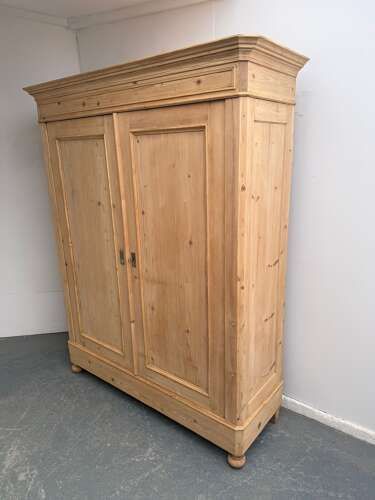

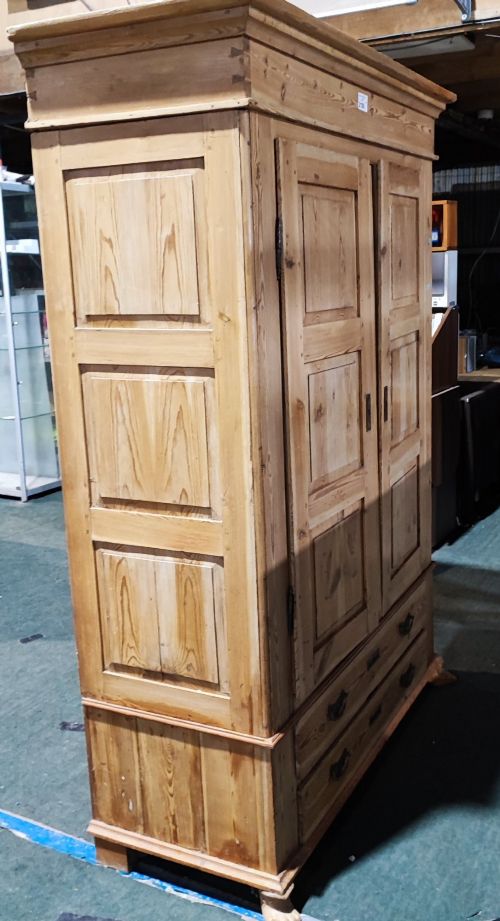
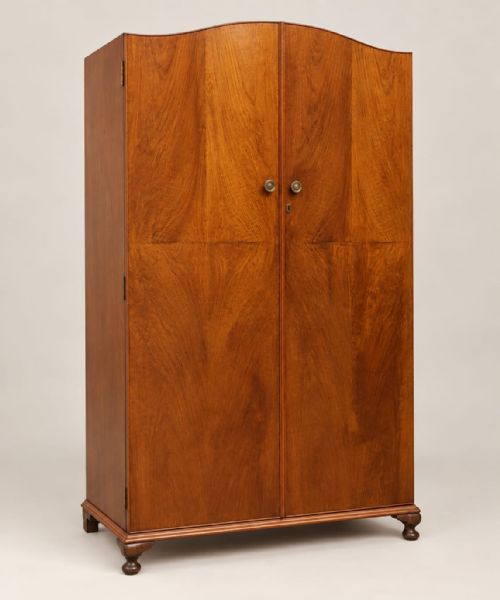
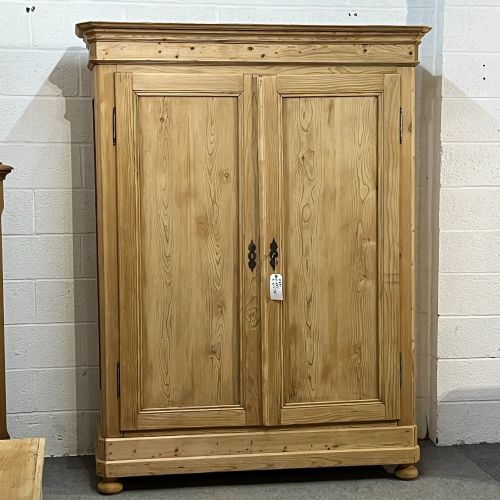
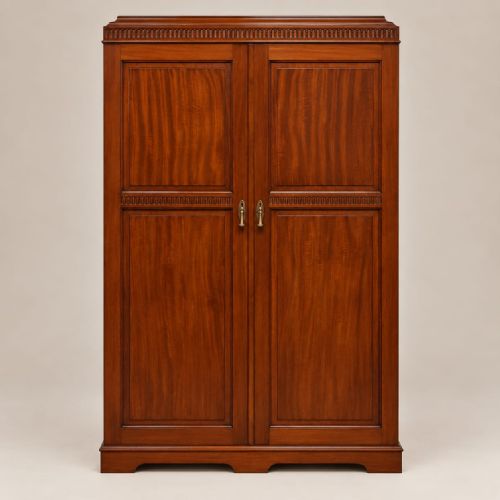
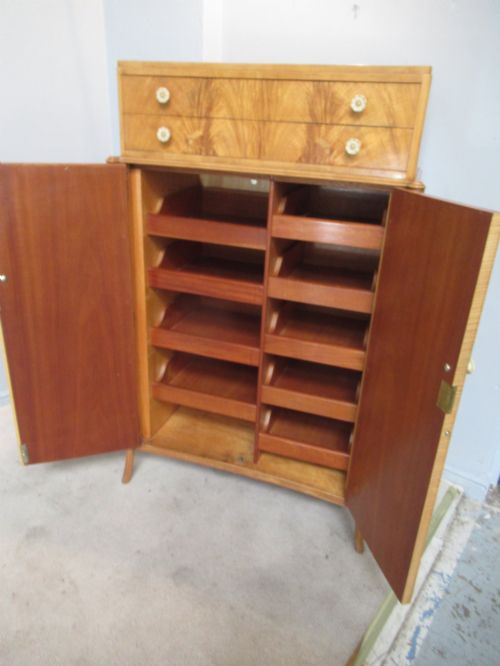
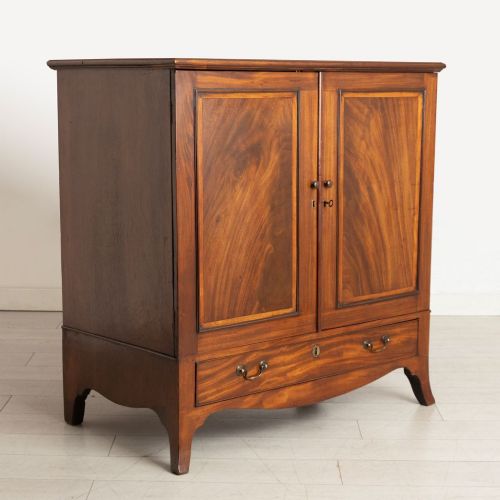
Two Door Press Wardrobe
A two door press wardrobe offers sturdy interior storage, uniting heavy timber construction with traditional hanging space and linen shelves.
Two Door Press Wardrobe
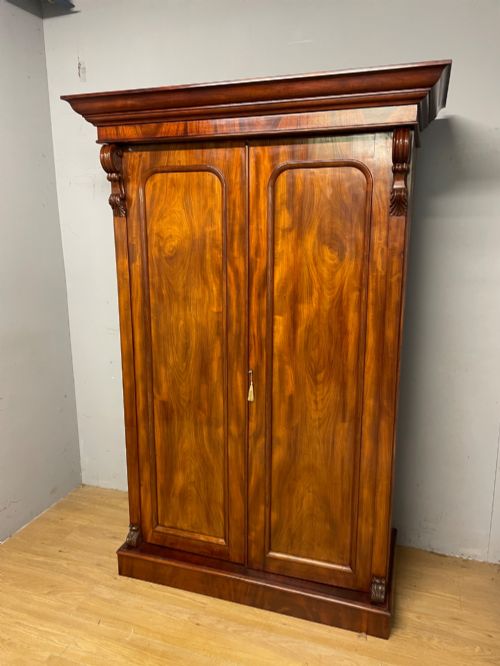
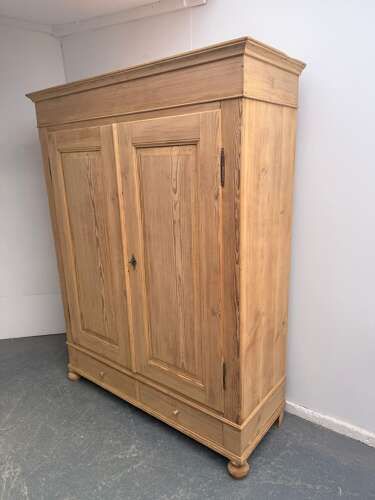
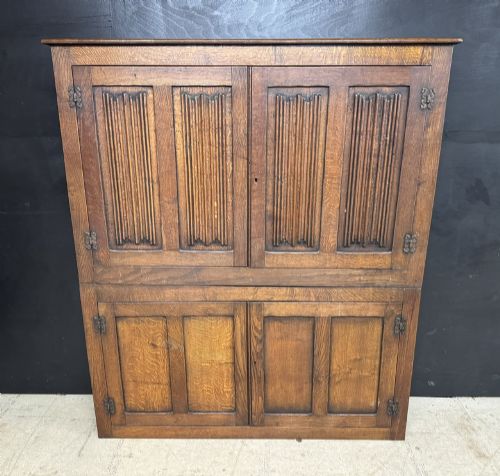
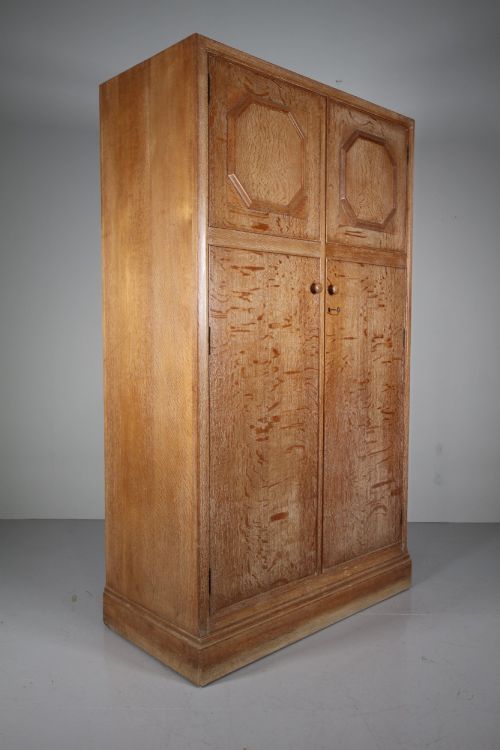
When you search for a two door press wardrobe, you encounter substantial storage furniture designed to hold garments and household linen across several periods. The pieces appearing here span the Georgian, Victorian, and Edwardian eras, alongside later twentieth century examples.
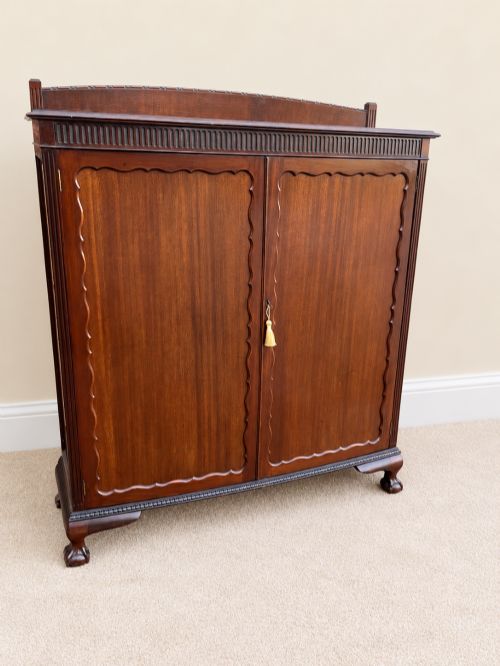
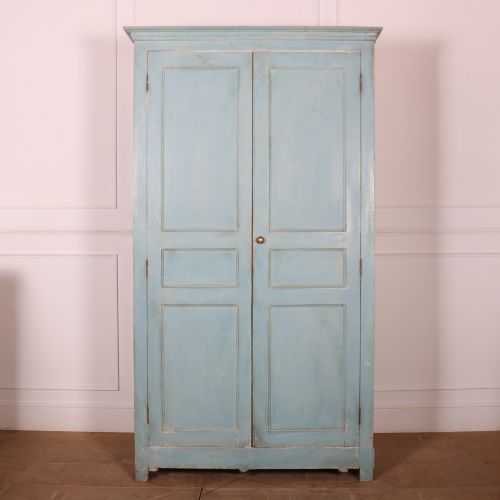
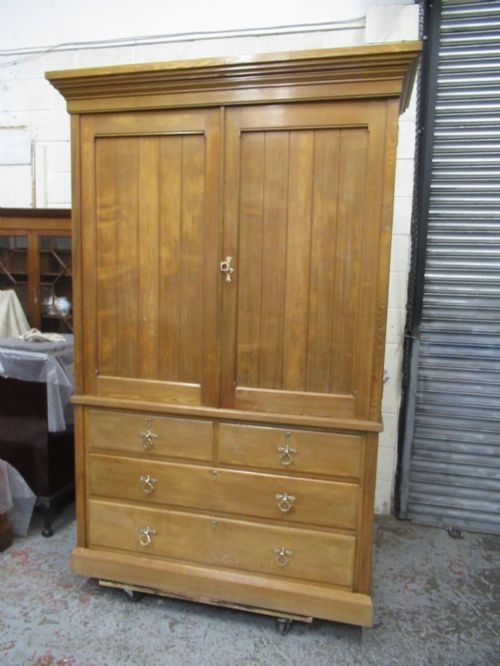
You are most likely to meet pine and mahogany double doors enclosing hanging compartments or internal shelving. Many versions originate from country houses or provincial workshops, incorporating straightforward dual doors rather than complex multi-bay configurations.
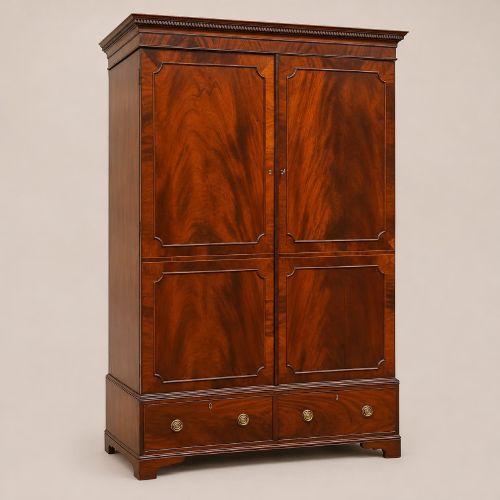
Forms range from tall knockdown pine presses that disassemble for transport to compact burr walnut and flame mahogany double wardrobes. Some items merge the traditional linen press format with modern hanging space, while others retain fixed internal shelves.
How they were made
Cabinet makers constructed these pieces primarily from solid timbers like oak, pine, and mahogany, frequently applying flame mahogany or burr walnut veneers to primary display surfaces. Iron and brass hardware, including hinges, escutcheons, and sliding bolts, secured the dual doors.
Joinery techniques relied on traditional panel construction to accommodate seasonal wood movement in large timber panels. Knockdown variants utilised clever peg and bolt systems so large wardrobes could pass through domestic doorways.
Two Door Press Wardrobe Retail Price Guide 2026
Typical asking prices for two door press wardrobe among the pieces listed under this phrase on Sellingantiques today, from the lower quarter to the upper quarter. They describe what is for sale here now, not the wider market.
Listings feature pieces spanning the Georgian, Victorian, Edwardian, and Art Deco periods, constructed in pine, mahogany, oak, and walnut.
What varies in quality
The choice of timber and veneer figure dictates the initial visual impact, moving from utilitarian stained pine up to finely figured burr walnut and flame mahogany. Timber selection reflects the intended domestic setting, distinguishing grand country house pieces from modest cottage furniture.
Construction depth and interior preservation separate standard examples from finer items. Original internal shelving, uncompromised backboards, and smooth door alignment demonstrate superior cabinet making during initial manufacture.
Heals Of London
The Two Door Press Wardrobe Glossary
- Press wardrobe
- A hybrid storage piece combining traditional linen press shelving with vertical garment hanging space behind two main doors.
- Flame mahogany
- A veneer cut from the fork of a mahogany tree that creates a distinctive flame-like pattern across large surface areas.
- Burr walnut
- Timber taken from a walnut tree growth deformity, prized by cabinet makers for its swirling, highly decorative grain texture.
- Knockdown
- Furniture built to be easily dismantled into separate panels and components for transport and installation in upper rooms.
- Compactum
- A fitted wardrobe containing internal compartments, drawers, and hanging space designed to maximise storage efficiency.
Two Door Press Wardrobe: Frequently Asked Questions
What is a two door press wardrobe?
A two door press wardrobe is a tall timber storage cabinet featuring paired front doors that open to reveal internal shelves, drawers, or hanging space.
These pieces developed to store folded household linens and garments before modern fitted bedroom furniture became standard.
How do I date a wooden wardrobe?
Dating depends on observing timber choices, construction methods, and stylistic details such as cornices, mouldings, and hardware. Georgian and Victorian examples display different handle styles and joinery techniques compared to Edwardian or later twentieth century pieces.
Secondary woods visible on the interior and back panels also provide clear clues regarding the manufacturing period.
Can these wardrobes be dismantled?
Many period wardrobes, particularly pine knockdown versions, were intentionally designed to separate into flat panels, cornices, and bases for easy transport.
Solid hardwood models are often built as single heavy units that require careful measurement of stairwells and doorways prior to delivery.
How do I maintain antique timber furniture?
Protect antique wood by maintaining stable room temperature and humidity, avoiding direct placement near heat sources or strong sunlight.
Apply traditional wax polish occasionally to nourish dry timber and preserve the natural sheen of the polished surface.