


Twin Single Bed Frames
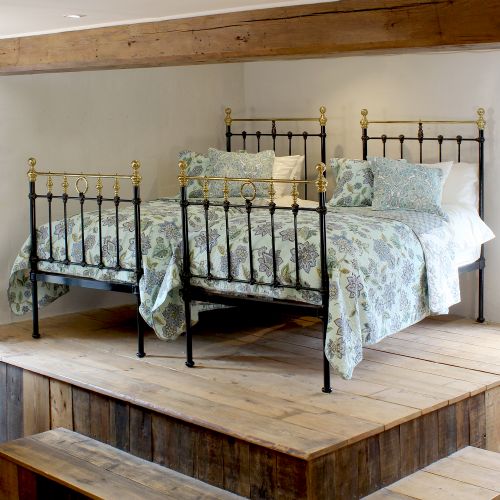
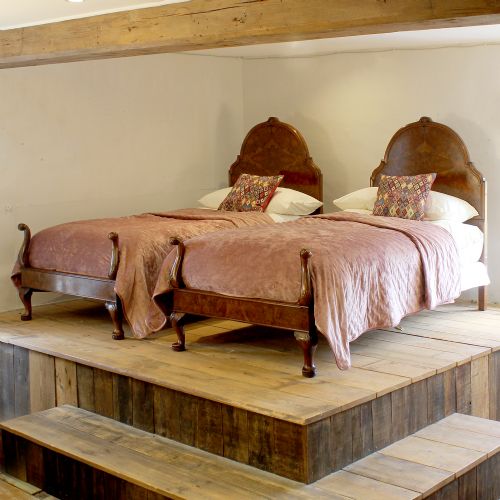
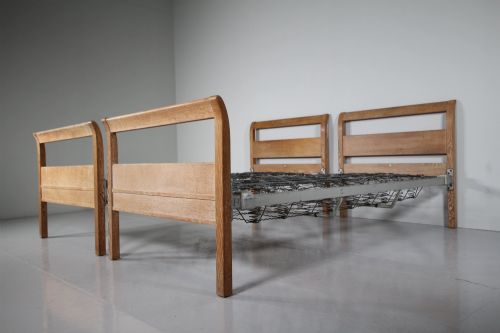
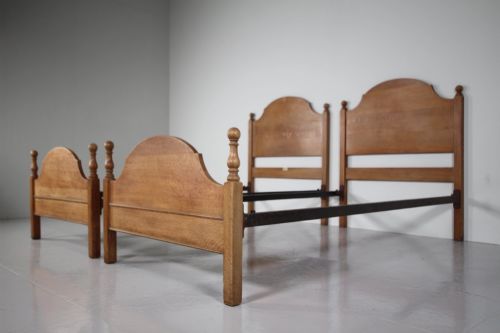
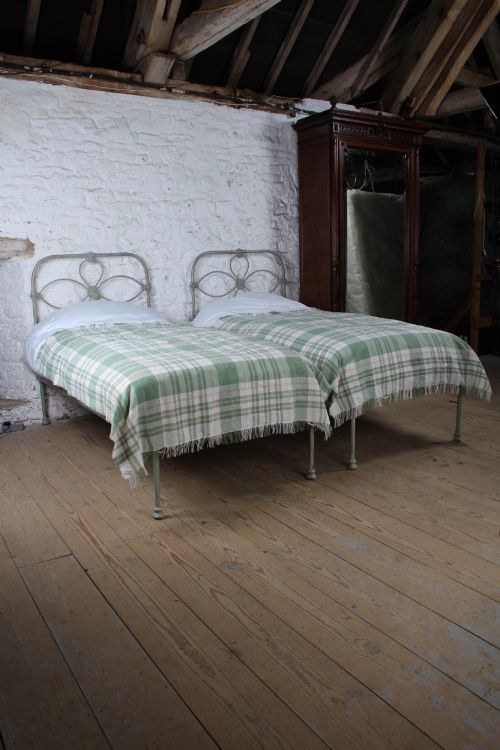
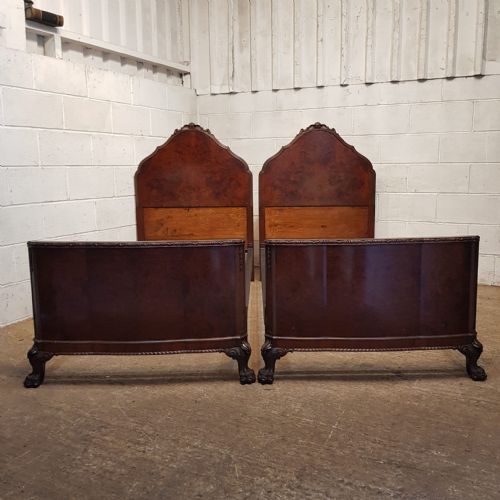
Twin single bed frames offer matching sleeping berths from periods spanning the Victorian era to Art Deco, prized for symmetric bedroom layouts.
Twin Single Bed Frames
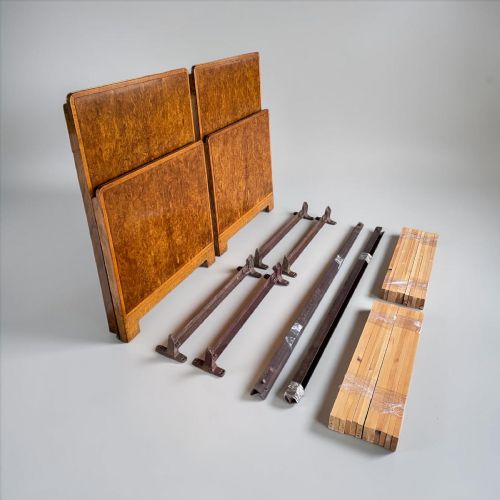
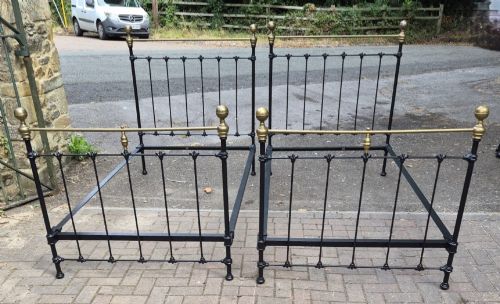
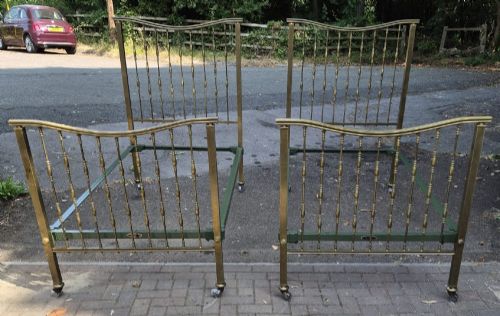
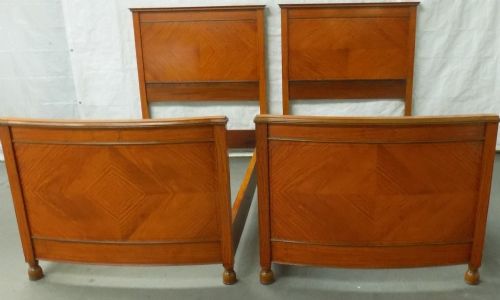
When you search for twin single bed frames, you encounter matched pairs of antique and vintage bedsteads designed to sit together or separately in a bedroom. The selection on this page leans heavily toward matching pairs from the Victorian, Edwardian, and 1930s periods.
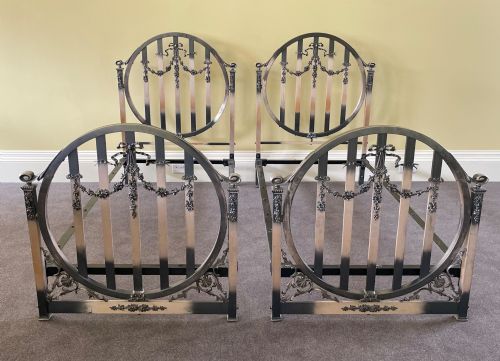
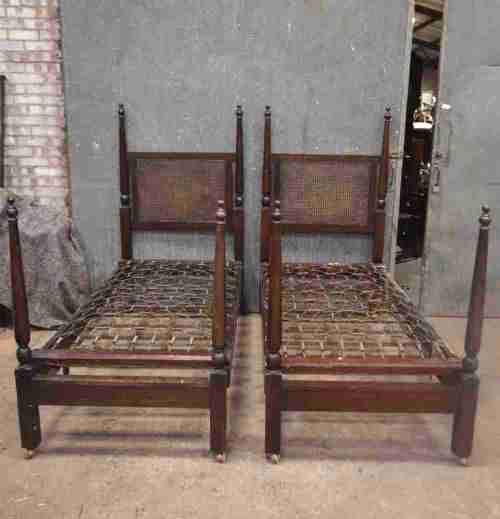
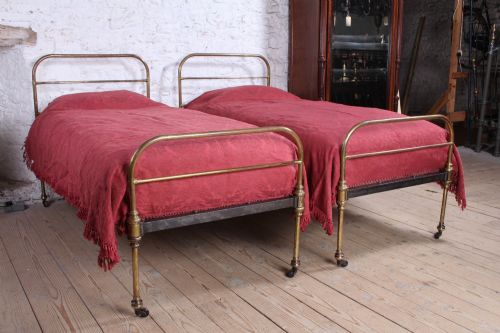
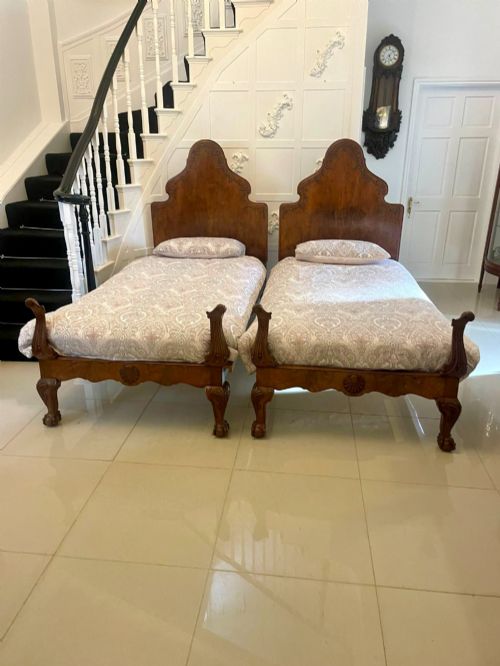
Most examples take the form of single beds or bedsteads constructed from wood or metal, often with specific configurations like low footboards, four posts, or integral bedside tables. Woods such as oak, walnut, and satinwood appear alongside iron, brass, and nickel plating.
Makers and workshops of the early twentieth century, including Heal's, Shapland and Petter, and Betty Joel, contribute high-design iterations of these frames. Alongside English cabinetmaker work, French styles like Louis XVI revival and Empire provide painted, carved, and upholstered alternatives.
How they were made
Construction relies on solid timbers like oak, walnut, fruitwood, and mahogany, frequently shaped with carved details, inlay, or bergere panels. Metal frames combine cast iron and wrought iron with brass mounts, nickel plating, or polychrome paint.
Joinery methods reflect the period of origin, utilising sturdy joints for wooden headboards and footboards alongside bolted metal rails. Surface finishes range from hand-painted portrait panels and polychrome paint to polished wood grains and cream or white painted coats.
What varies in quality
The distinction between standard commercial output and superior craftsmanship rests in the selection of timber and the precision of decorative elements. Burr walnut, figured satinwood, and fruitwood veneers indicate higher workshop ambitions than plain utility timbers.
Heals·Oliver Morel·Hoskins and Sewell·R W Winfield·Shapland and Petter·Betty Joel
The Twin Single Bed Frames Glossary
- Bedstead
- The framework of a bed consisting of headboard, footboard, and side rails. This term often appears interchangeably with bed frame in antique listings.
- Bergere
- A type of enclosed upholstered armchair or bed headboard featuring woven cane panels. It provides a lighter visual weight to wooden furniture.
- Corbeille
- A French style of bed featuring a curved, basket-like headboard and footboard wrapping around the mattress. This form is frequently found in painted finishes.
- Inlay
- A decorative technique where contrasting woods, brass, or satinwood are inserted into recesses within a solid wood surface. Edwardian pieces frequently utilise this method on headboards.
Twin Single Bed Frames: Frequently Asked Questions
Can twin single bed frames be joined together?
Several historical single beds are constructed with mechanisms or matching dimensions allowing them to be joined together as a larger sleeping unit. Listings occasionally specify whether particular iron or wooden frames can be linked.
Buyers intending to combine two separate frames into a single larger bed should inspect the rail fixings and overall width dimensions provided in the specific listing details.
What materials are common in antique twin beds?
Materials span both hardwoods and metals, reflecting the changing tastes from the Victorian era through the 1930s. Oak, walnut, satinwood, and mahogany dominate the wooden frames.
Metal alternatives include cast iron, wrought iron, brass, and nickel plating. Painted surfaces, polychrome panels, and upholstered elements also appear frequently across French and English designs.
How do I identify Edwardian twin bed frames?
Edwardian frames often feature lighter timbers such as satinwood and walnut, frequently decorated with subtle inlay work or painted motifs. Proportions tend to be refined compared to heavier Victorian predecessors.
Maker signatures or labels from firms operating in the early twentieth century serve as reliable indicators of this period.
Are matching bedside tables common with these beds?
Certain listings include ensuite bedside cabinets, matching bedroom chairs, or integral bedside tables attached directly to the bed frames. These matched sets provide a cohesive bedroom suite layout.
Art Deco and Edwardian examples are the most likely to incorporate built-in or matching auxiliary furniture items.