

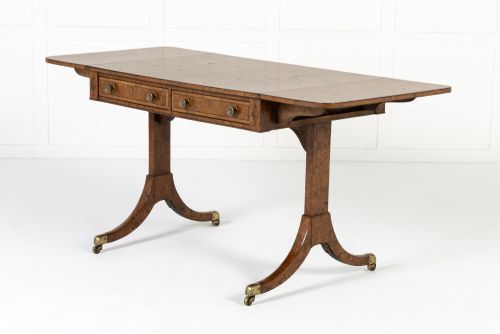
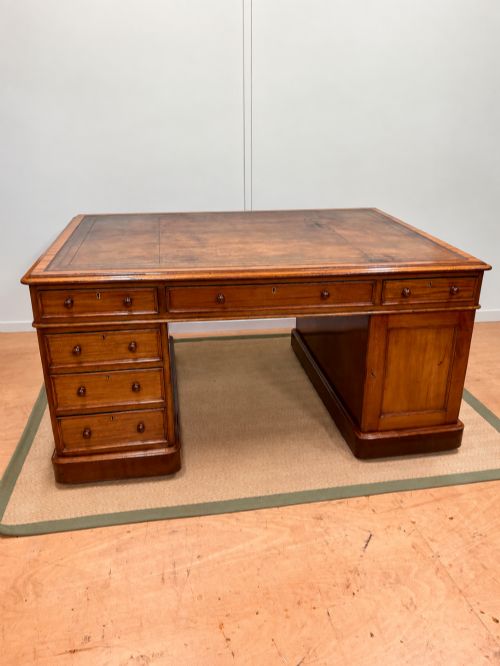
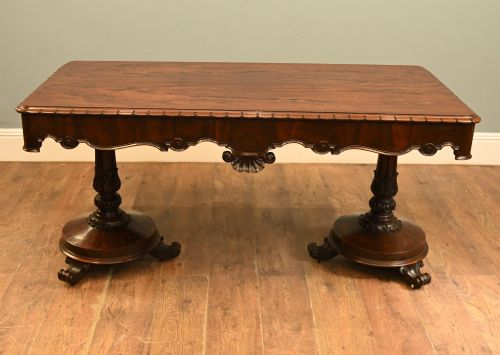
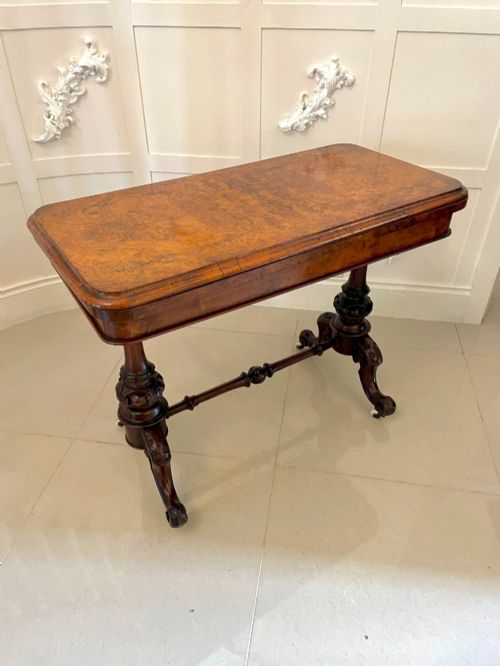


Twin Pedestal Side Table
A twin pedestal side table offers dual support and ample surface space, making it a functional centrepiece for the traditional study or living room.
Twin Pedestal Side Table
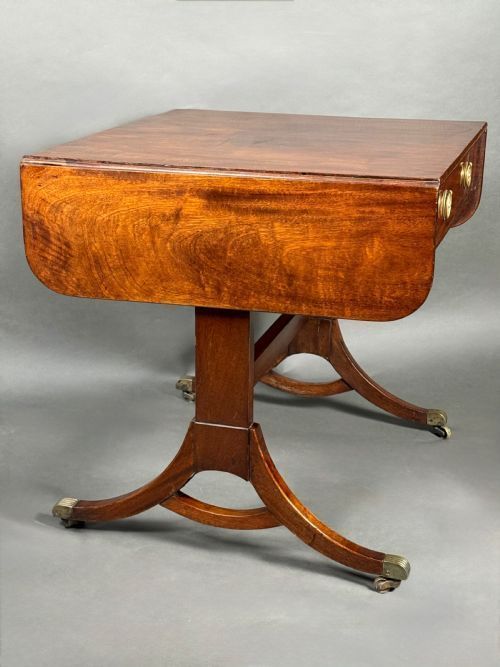
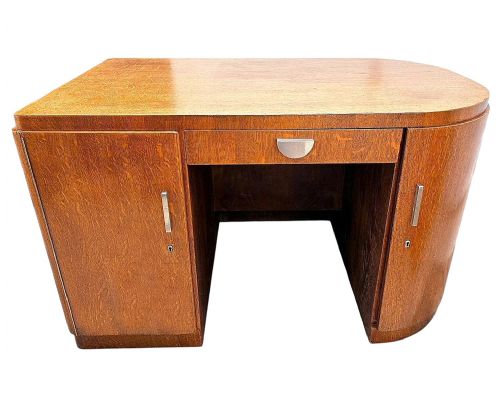
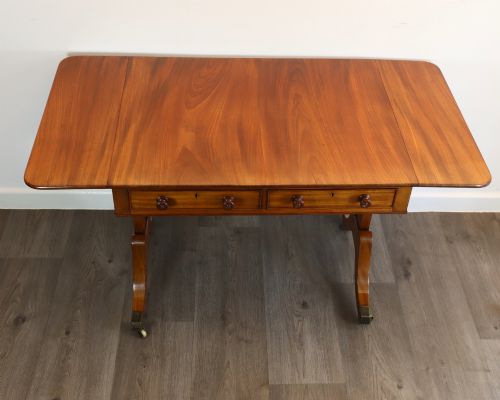
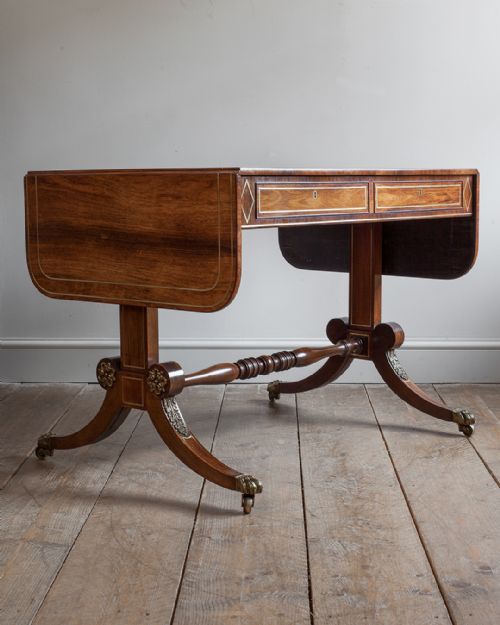
A twin pedestal side table combines stable double-pillar supports with expansive tabletops, designed for utility and formal display in domestic interiors. When searching for a twin pedestal side table, buyers encounter various forms including partners desks, sofa tables, and library tables spanning multiple eras.
The selection here encompasses periods from the eighteenth century through to the early twentieth century, featuring Georgian, Regency, and Victorian aesthetics. Many pieces incorporate drop leaves, double-sided drawers, or inlaid surfaces suited to grand rooms.
Mahogany predominates among the materials, alongside rosewood, burr walnut, and oak, reflecting the preference for rich cabinet timbers. Whether configured as a partners desk or a sofa table, these items provide balanced proportions and robust construction.
Materials and Construction Techniques
Cabinet makers utilised dense hardwoods such as mahogany, rosewood, and oak for structural integrity and longevity. Flame mahogany and burr walnut veneers were frequently applied to tabletops to create striking grain patterns.
Joinery methods involved precise dovetailing for drawers and secure tenon joints within the twin pedestals. Brass details, leather inserts, and marquetry inlays were added to enhance the refined finish of each piece.
Twin Pedestal Side Table Retail Price Guide 2026
Typical asking prices for twin pedestal side table among the pieces listed under this phrase on Sellingantiques today, from the lower quarter to the upper quarter. They describe what is for sale here now, not the wider market.
Object types span partners desks, sofa tables, library tables, and occasional tables with brass and leather details.
Distinguishing Quality in Construction
The choice of primary timber and the selection of veneer figure set the foundation for a superior piece. Fine examples display carefully matched grain across drop leaves and large desk surfaces.
Subtleties in brass hardware, such as original castors and drawer pulls, indicate high-grade production. The integration of secondary timbers and the precision of inlaid marquetry further separate standard items from exceptional ones.
The Twin Pedestal Side Table Glossary
- Partners Desk
- A large double-sided desk designed for two people to work opposite one another, typically featuring pedestals of drawers or cupboards.
- Sofa Table
- A small oblong table traditionally placed in front of a sofa, usually equipped with drop leaves on either end.
- Flame Mahogany
- A veneer cut from the branch junction of a mahogany tree, producing a distinctive flickering flame-like grain pattern.
- Marquetry
- Decorative inlay work using various coloured woods arranged in intricate patterns across a surface.
- Pedestal
- A structural support column or base beneath a table or desk, often housing internal storage compartments.
Twin Pedestal Side Table: Frequently Asked Questions
What is a twin pedestal side table used for?
These tables serve multiple purposes depending on their specific form, functioning as writing desks, library tables, or decorative display surfaces in large rooms.
Their dual support structure provides stability for heavy use while offering generous surface area and integrated storage drawers.
How do I identify a Regency period piece?
Regency items typically date from the early nineteenth century and showcase classical architectural motifs, dark mahogany timbers, and elegant brass mounts.
Look for clean lines and balanced proportions that reflect the influence of classical antiquity during the British Regency era.
Where should I place a sofa table?
A sofa table traditionally sits directly behind a sofa in an open room layout, utilising its narrow profile to display lamps and decorative objects.
They also function effectively along hallways or against bare walls where a full-sized desk would take up too much space.
What maintenance do antique wood tables require?
Antique timber surfaces benefit from regular dusting with a soft, dry cloth and occasional treatment with quality beeswax to preserve the grain.
Keep these pieces away from direct sunlight and excessive moisture fluctuations to prevent the wood or veneer from warping over time.