



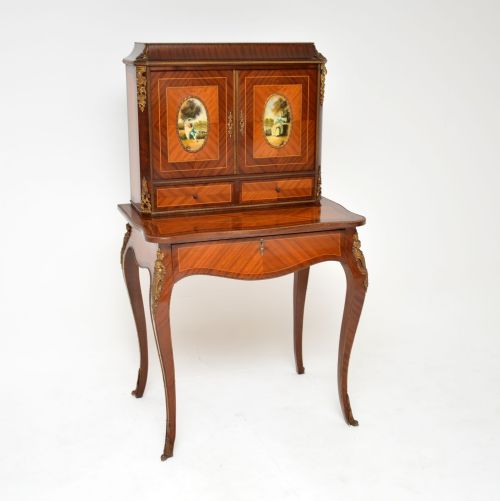
French Rosewood Table
A French rosewood table brings dense grain and gilt mounts together, offering a surface for a salon or study.
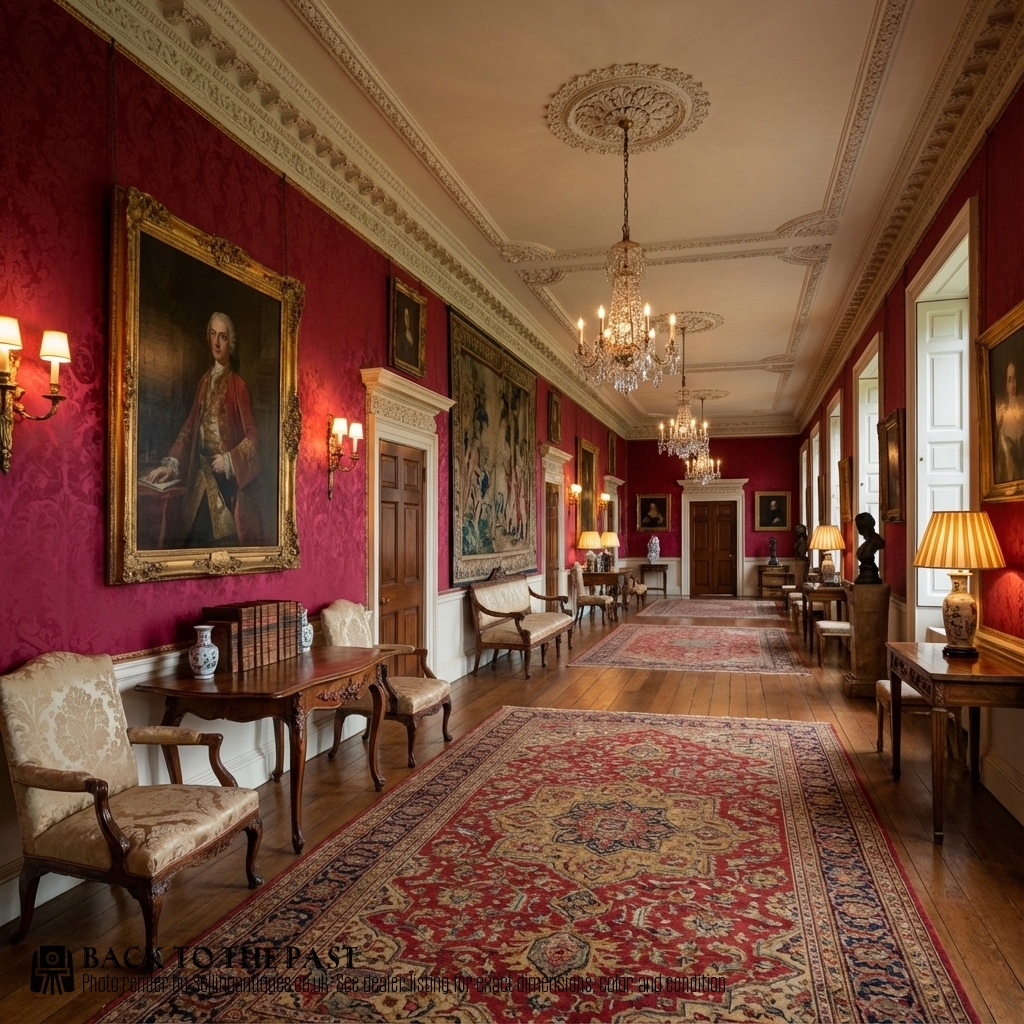
French Rosewood Table
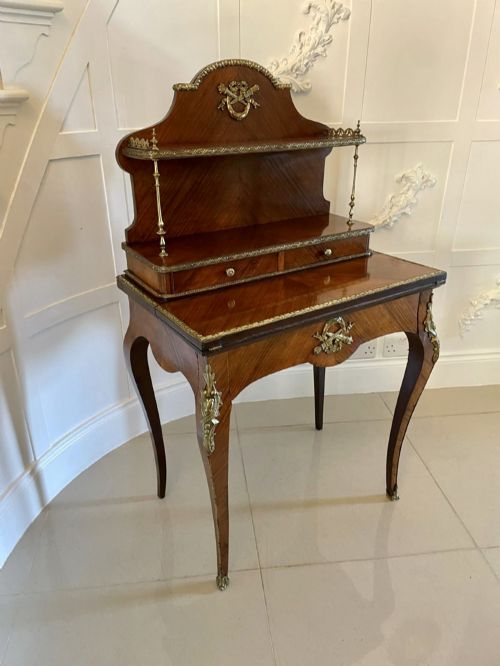
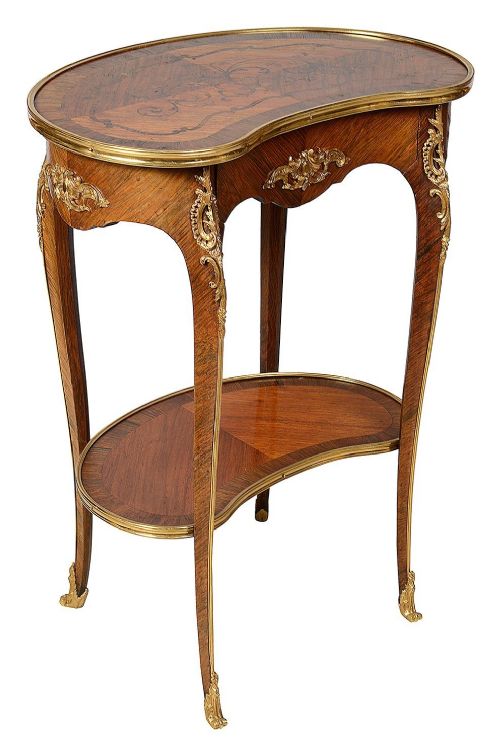
When searching for a French rosewood table, a buyer encounters freestanding centre pieces, smaller occasional designs, and writing desks produced across the nineteenth and early twentieth centuries. These forms reflect revival styles such as Louis XV and Napoleon III, alongside later Art Deco interpretations.
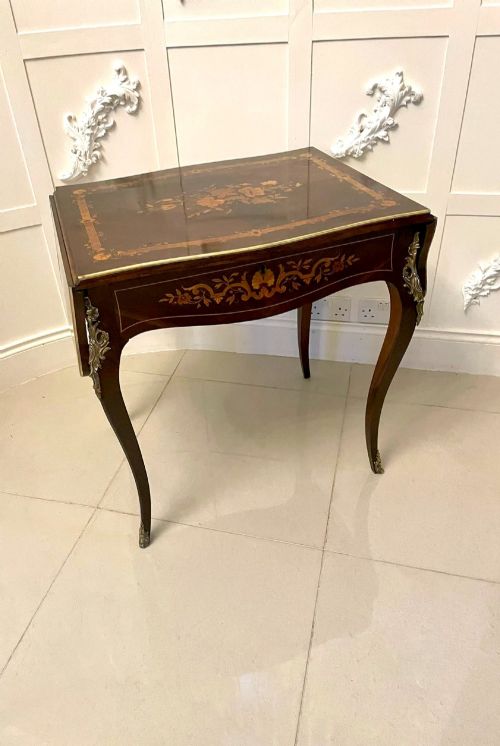
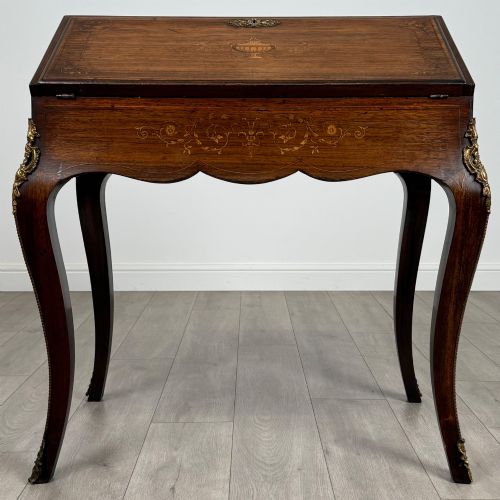
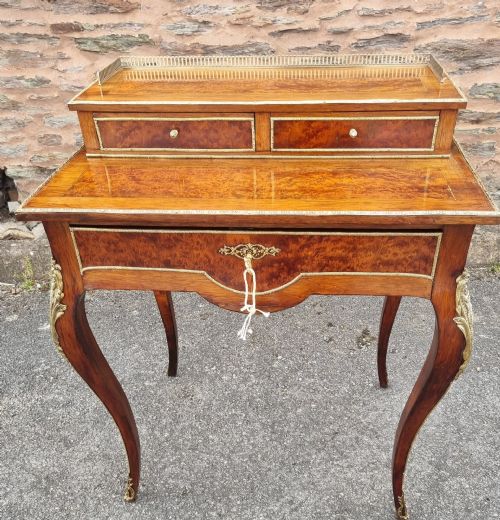
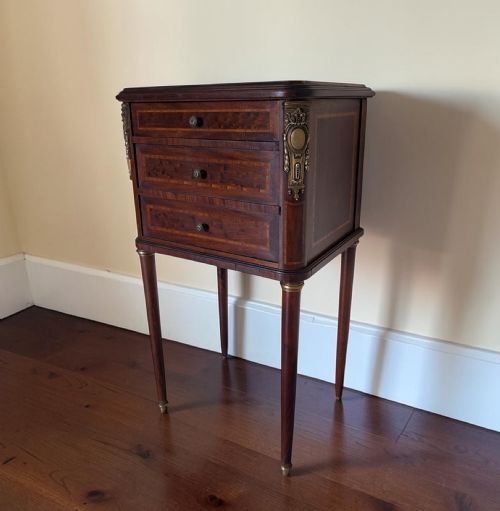
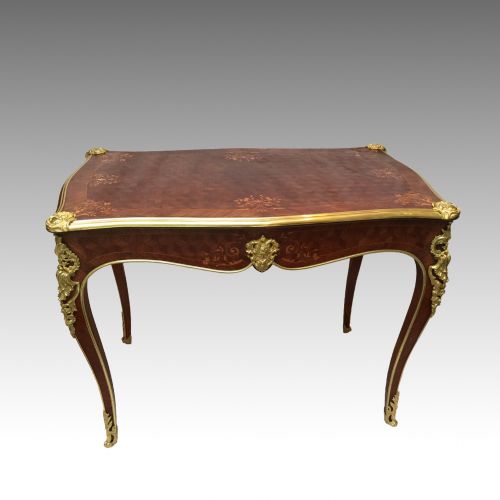
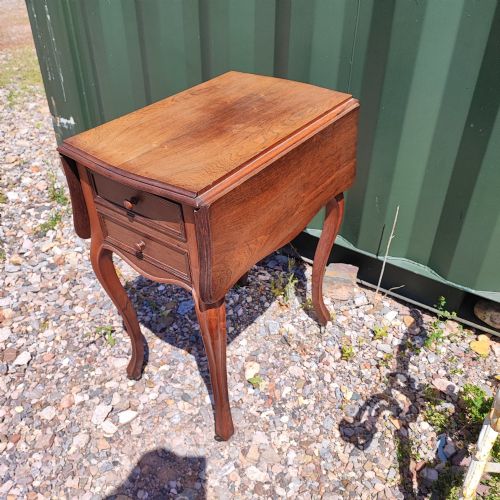
Centre tables and writing desks dominate the selection, often featuring elaborate marquetry or parquetry patterns set into the timber. Side tables and smaller lamp stands also appear frequently, alongside drop-leaf and card tables designed for versatile domestic use.
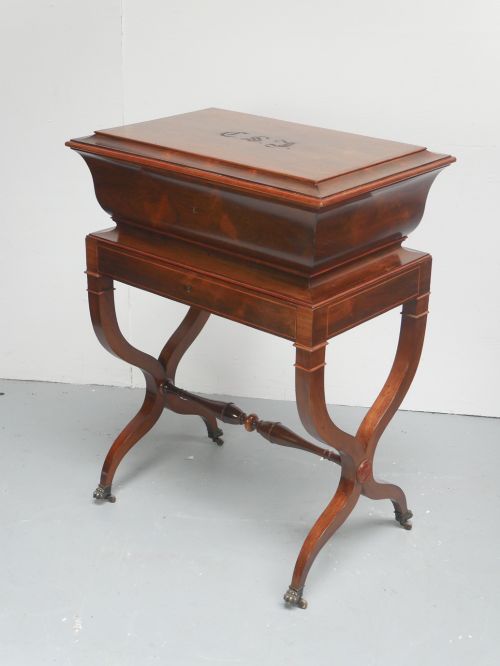
The origins span nineteenth-century workshops and later modernist makers, utilising rich tropical hardwoods combined with contrasting veneers like kingwood, tulipwood, and satinwood. Buyers find both ornate gilt-bronze mounted salon pieces and cleaner geometric lines from the 1920s.
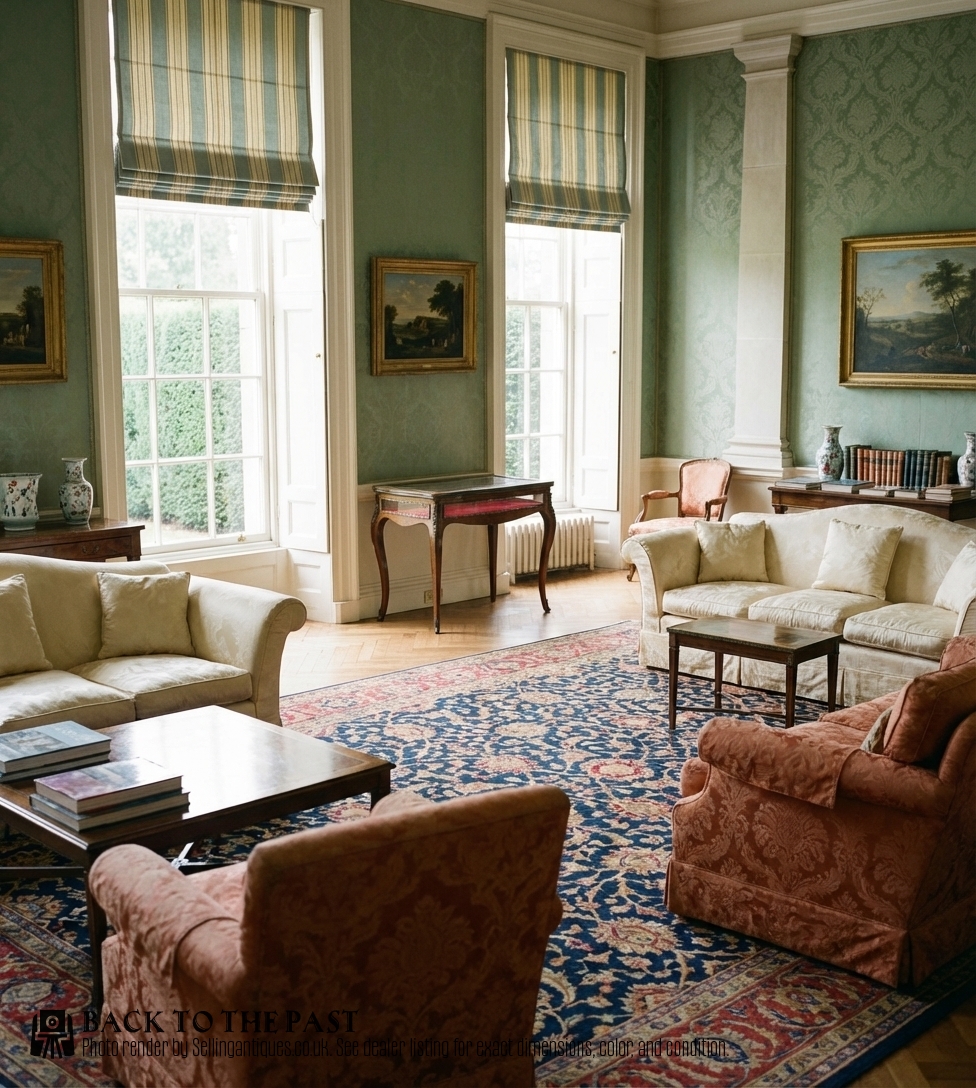
How they were made
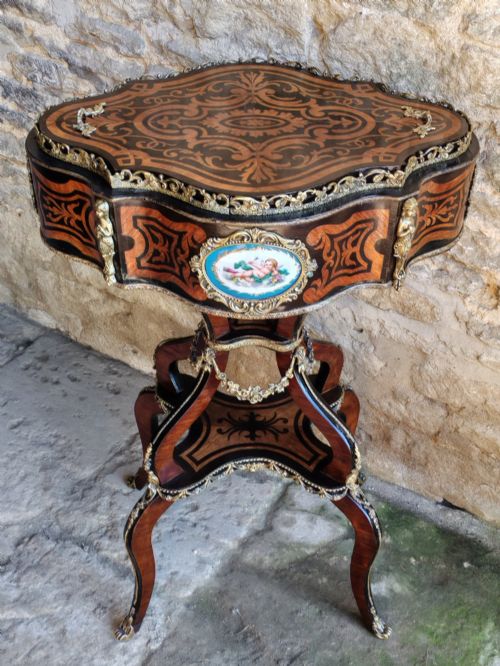
Cabinetmakers constructed these surfaces using dense rosewood and kingwood veneers laid over stable secondary timbers, often cutting the grain diagonally to create symmetrical parquetry or pictorial marquetry motifs. Floral and geometric designs incorporated contrasting woods such as boxwood, lemonwood, and amboyna.
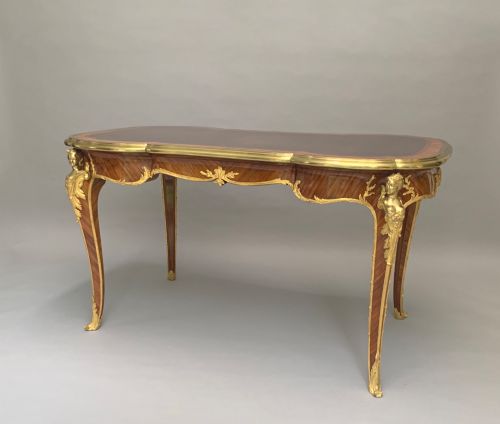
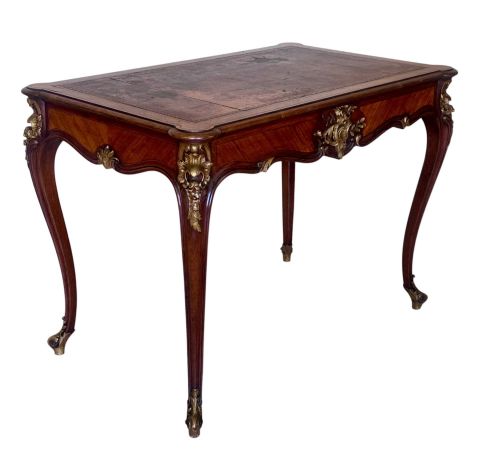
Cast and chased ormolu, gilt-bronze, and brass mounts edge the tops, frame drawers, and accentuate cabriole or tapered legs. Metal sabots protect the feet, while leather inserts define the writing surfaces of desks and bureau plat models.
French Rosewood Table Retail Price Guide 2026
Typical asking prices for french rosewood table among the pieces listed under this phrase on Sellingantiques today, from the lower quarter to the upper quarter. They describe what is for sale here now, not the wider market.
Materials recorded across current and past items include rosewood, brass, ormolu, kingwood, leather, gilt bronze, walnut, and enamel.
What varies in quality
The distinction between tiers rests on the precision of the marquetry inlay and the crispness of the cast ormolu mounts. Finer examples display tight, seamless botanical patterns and heavy, deeply chased bronze enrichment rather than thin brass plating.
Structural integrity of the veneered surfaces and the retention of original patination dictate desirability. Superior pieces maintain crisp edge moulding, flat timber panels without excessive shrinkage, and well-fitted interior drawers.
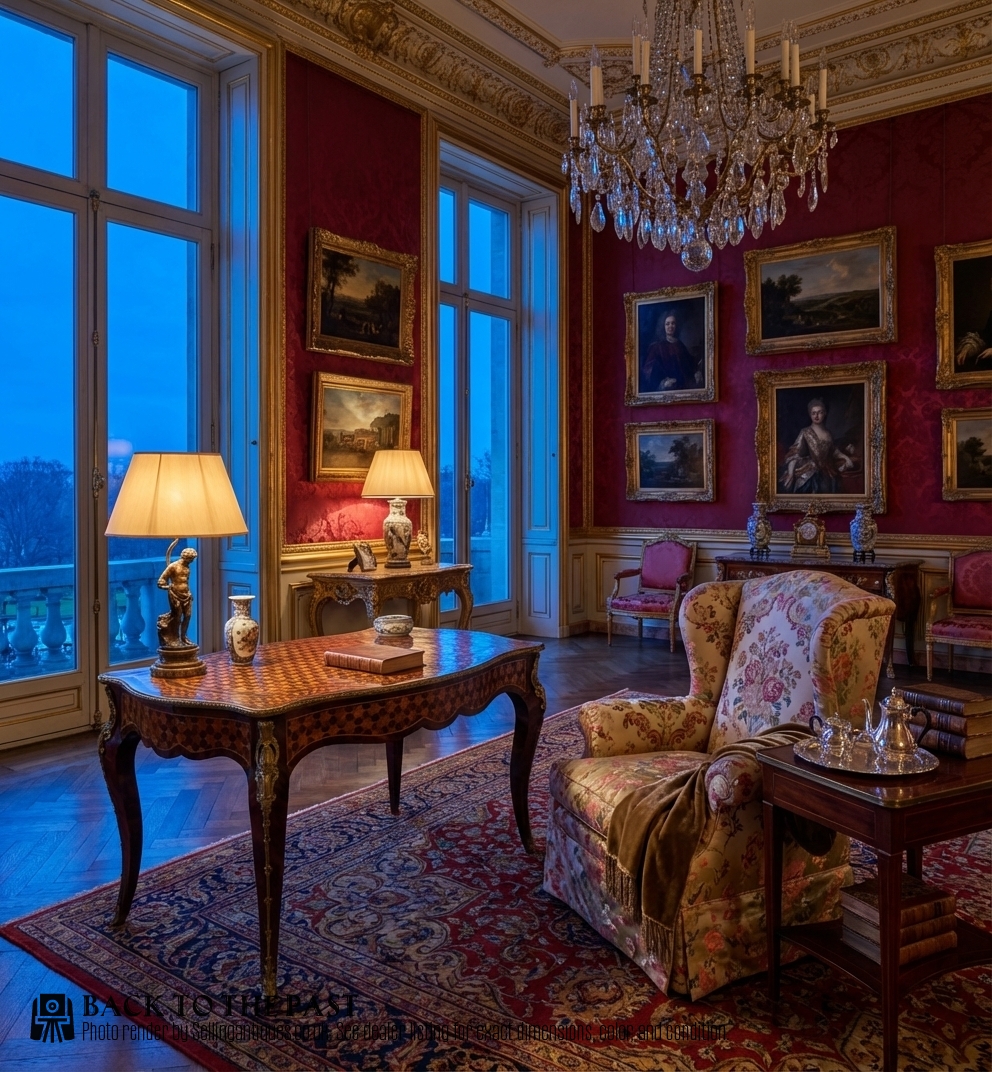
Francois Linke·CH. Jeanselme and Co·Émile Gallé·Edwards and Roberts·Donald Ross
The French Rosewood Table Glossary
- Marquetry
- Decorative patterns formed by fitting together small pieces of wood veneer into pictorial designs. This technique frequently depicts floral arrangements or architectural scenes across table tops.
- Ormolu
- Gilded bronze applied to furniture mounts and decorative hardware. The process involves coating bronze in a gold amalgam and heating it to leave a rich finish.
- Parquetry
- Geometric mosaic woodwork used for repeating patterns on tabletops. Squares, triangles, and lozenges create an optical sense of depth.
- Bureau Plat
- A large, flat-topped freestanding writing desk with drawers in the frieze. These tables typically feature mounted corners and leather-lined writing surfaces.
- Bonheur Du Jour
- A light lady's writing desk featuring a small set of drawers or a cabinet superstructure on top. The form gained popularity during the eighteenth century and continued through later revivals.
- Centre Table
- A freestanding table designed to be viewed from all sides rather than placed against a wall. These pieces often feature all-over marquetry decoration.
French Rosewood Table: Frequently Asked Questions
How do I care for rosewood?
Keep these surfaces away from direct sunlight and heat sources to prevent the veneers from drying and lifting over time. Regular dusting with a dry, soft cloth maintains the natural lustre without requiring heavy polishes.
Occasional application of microcrystalline wax preserves the finish and protects the wood from atmospheric moisture changes.
Can I use a writing table daily?
These tables function well for everyday writing and computer use, provided the leather writing surface receives sensible protection against moisture and scratches. Using blotters safeguards antique hide inserts from ink stains and indentations.
Ensure that drawers slide evenly and avoid overloading delicate occasional supports with heavy equipment.
How do I date a marquetry table?
Stylistic cues such as the sweep of a cabriole leg or the geometry of parquetry help narrow down the period. Mid-nineteenth-century examples frequently favour exuberant revival curves, while later decades introduce cleaner lines.
Examining the underside, secondary woods, and construction joints provides further clues to the workshop era.
What is the difference between a centre table and a side table?
A centre table stands finished on all four sides so it can occupy the middle of a room without a wall backdrop. Side tables typically feature a finished front and back, designed to sit flush against vertical surfaces.
Both forms utilise rich veneers, but centre tables often prioritise all-over marquetry and heavier bronze mounts.