


Turquoise Gold Pin
A turquoise gold pin brings together bright blue stones and warm metal in forms from Victorian hearts to mid-century modern shapes.
Turquoise Gold Pin
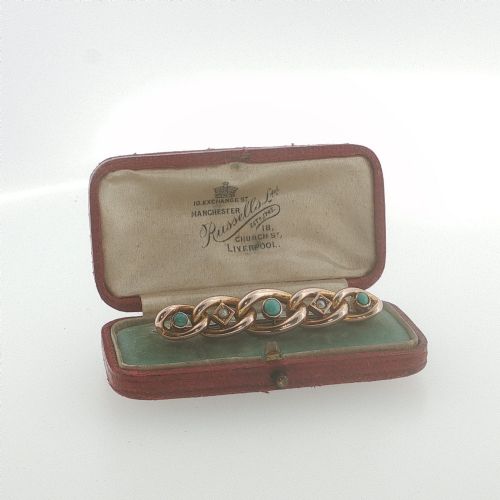
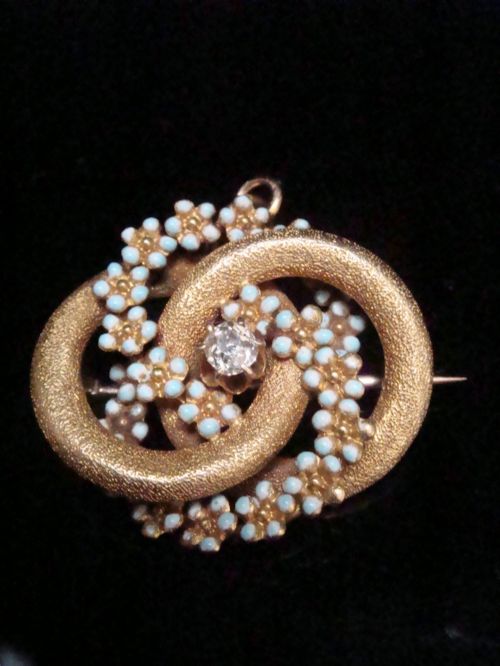
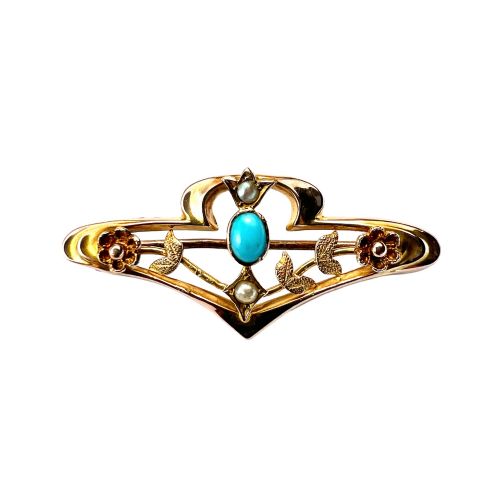
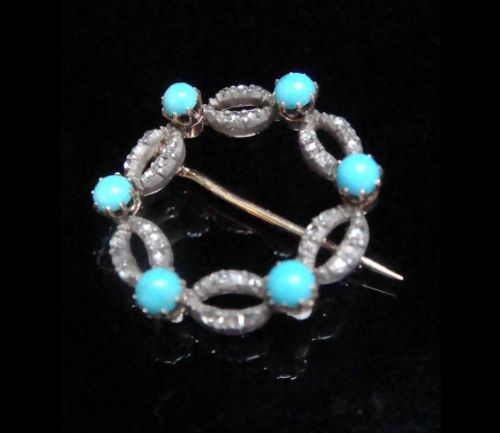
A turquoise gold pin is primarily represented by brooches, stick pins, and tie pins spanning the Victorian, Edwardian, and mid-century periods. These pieces take forms such as hearts, bows, knots, crescents, horseshoes, and floral arrangements, alongside abstract modernist designs.
Materials and construction
The construction relies on shaping gold into delicate mountings, such as rose gold, yellow gold, and rolled gold, combined with silver settings in specific Edwardian pieces. Gemstones like turquoise cabochons and diamonds are securely set alongside seed pearls.
Techniques range from traditional Victorian wirework and knotting to mid-century modernist casting, as seen in works dated to the 1960s. Pins and catches are soldered firmly to the reverses of brooches, while stick pins feature long shafts terminating in decorative heads.
Listings feature 9ct, 15ct, and 18ct gold alongside silver, with turquoise frequently accompanied by diamonds and seed pearls across Victorian and Edwardian periods.
Quality factors in design and execution
The quality of a turquoise gold pin rests on the depth of the gold work and the natural variation of the turquoise stones used. Pieces featuring higher gold purities, such as 15ct and 18ct, demonstrate superior metal substance compared to lower purity or rolled gold items.
The integration of supporting gemstones, including finely matched seed pearls and well-cut diamonds, elevates the overall execution. Finer examples display meticulous detailing in thematic motifs like lover's knots, dragonflies, and winged hearts.
Charles de Temple
The Turquoise Gold Pin Glossary
- Cabochon
- A gemstone shaped and polished with a smooth, rounded surface rather than faceted. This style highlights the natural colour and matrix of turquoise.
- Seed pearl
- A very small, naturally occurring or cultured pearl used to accent jewellery designs. They often form delicate borders around central turquoise stones in Victorian and Edwardian pieces.
- Stick pin
- A long, slender pin with a decorative head, worn upright in a lapel, tie, or cravat. Stick pins frequently incorporate solitaire turquoise or knot motifs.
- Lovers knot
- A decorative motif formed by intertwined strands of metal symbolising affection and connection. This design appears frequently in Victorian pendants and brooches.
- Collar brooch
- A specific type of pin designed to secure a collar or be worn at the neck fastening. These often incorporate multiple chains or drops.
Turquoise Gold Pin: Frequently Asked Questions
What is a turquoise gold pin?
A turquoise gold pin is a decorative jewellery item combining gold metalwork with turquoise stones, taking the form of brooches, stick pins, and tie pins. These items span multiple eras from the Victorian period through to the mid-twentieth century.
The category includes various designs such as floral sprays, hearts, crescents, and abstract modernist shapes, often incorporating secondary gems like pearls and diamonds.
How do I date a Victorian piece?
Dating a Victorian piece involves examining the specific motifs, metal purities, and construction techniques characteristic of the nineteenth century. Common indicators include yellow and rose gold, heartfelt symbols like knots, and the use of natural turquoise paired with seed pearls.
Later Edwardian examples often introduce platinum or silver-topped gold settings alongside brighter turquoise cabochons, while mid-century items display distinct modernist styling.
Can a brooch be worn as a pendant?
Certain brooches are manufactured with integrated loops or hidden bales that allow them to be suspended from a chain. This dual functionality was particularly common during the Victorian period.
Examining the reverse of a piece will reveal whether a hinged pin and safety catch share space with a suspension loop.