

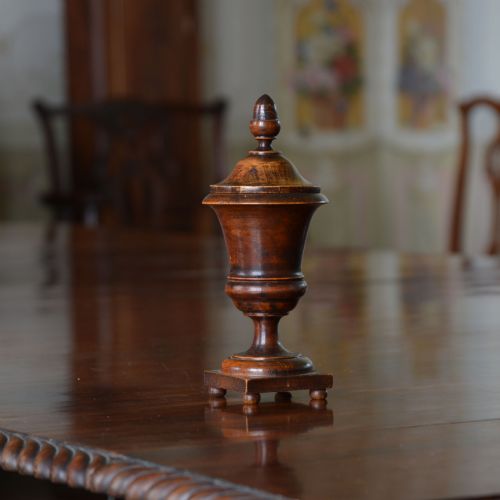


Turned Wooden Vessel
A turned wooden vessel is a carved household utilitarian or decorative object crafted on a lathe, bringing rich tactile grain and centuries of domestic history into modern rooms.
Turned Wooden Vessel
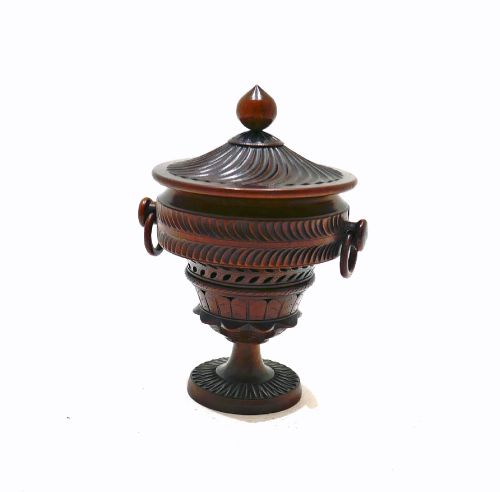
When you search for a turned wooden vessel, you are looking at items shaped upon a lathe from timber, ranging from utility kitchenware to ornamental display pieces. The pieces available span periods from the seventeenth century through the Victorian era, encompassing styles such as Georgian, Regency, and neoclassical forms.
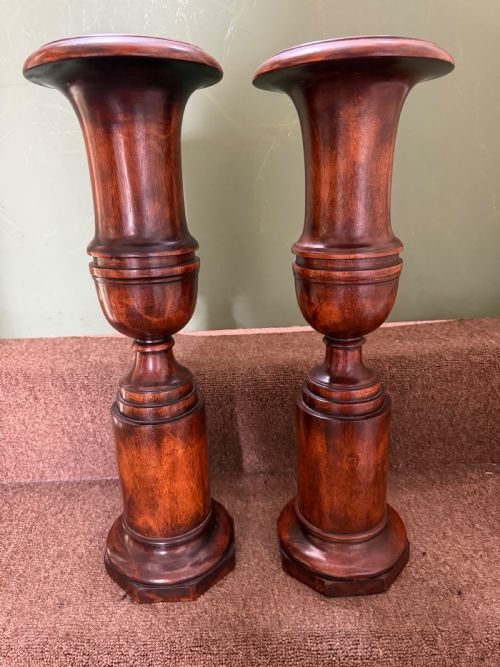
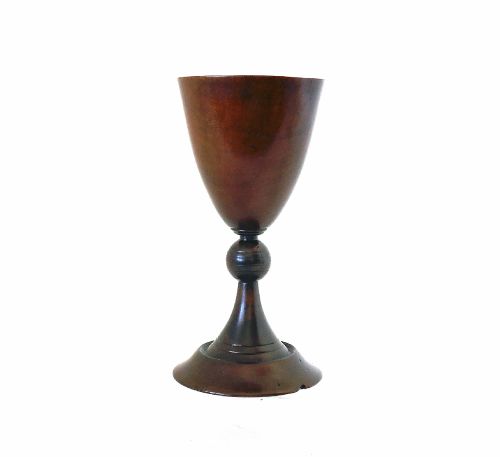
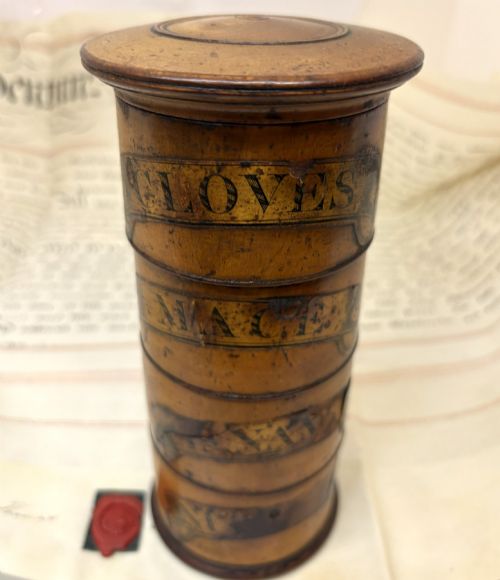
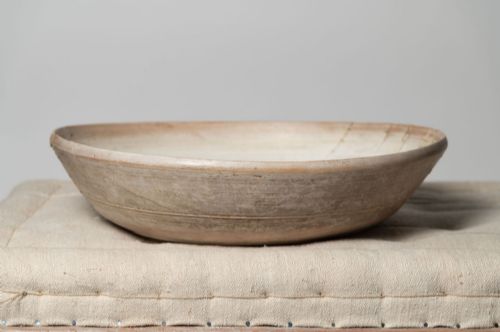
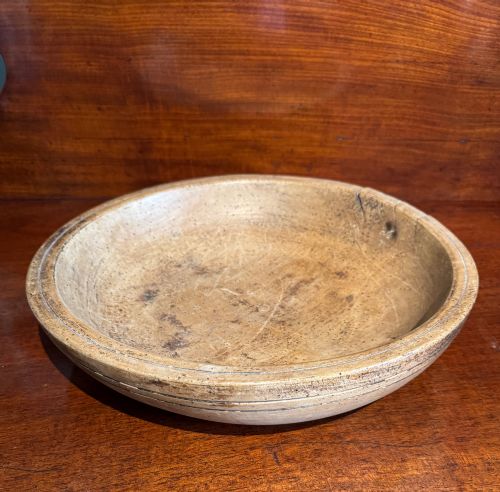
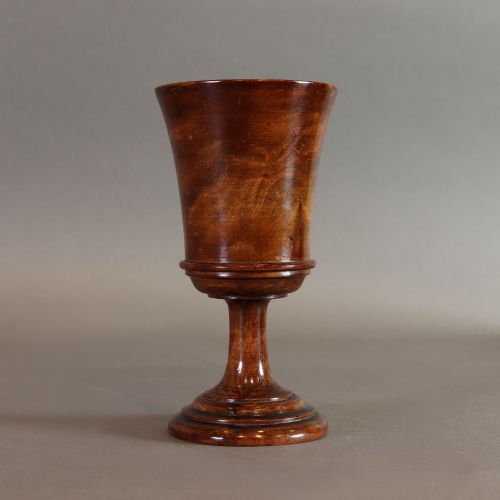
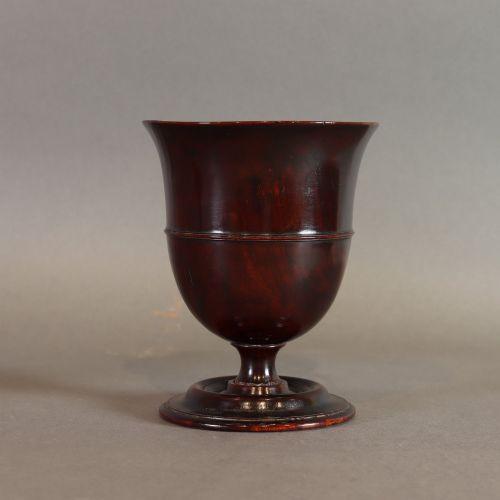
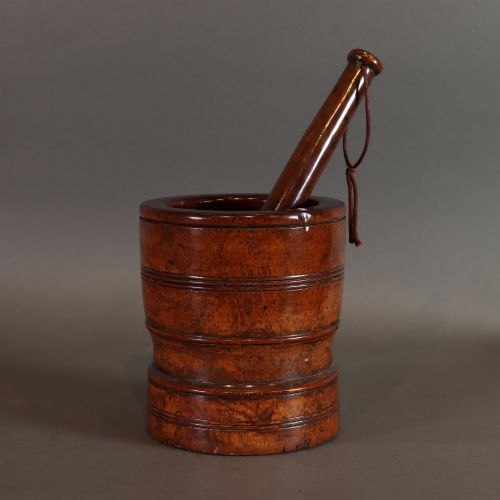
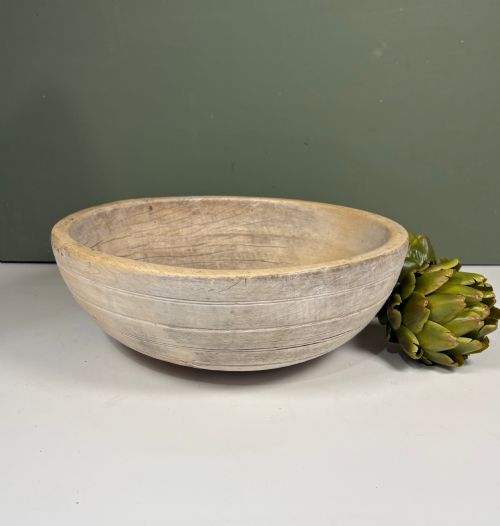
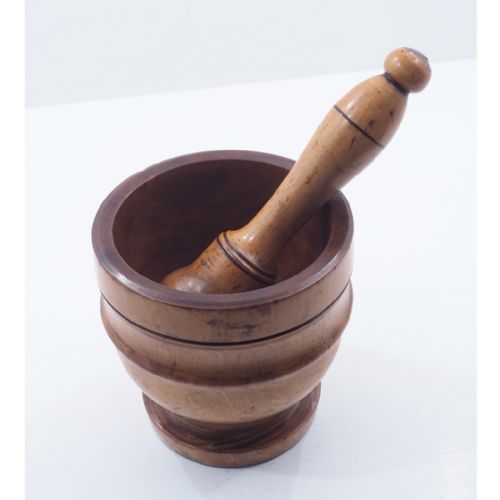
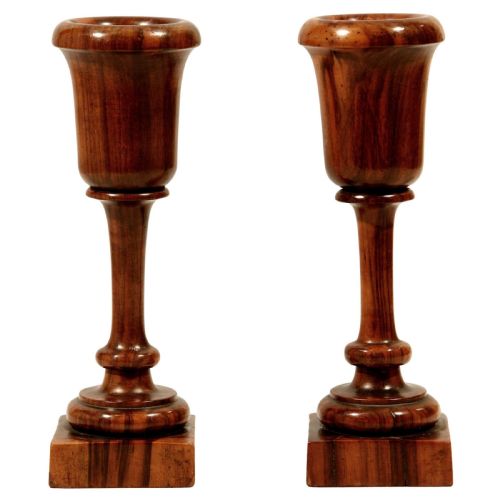
The most common vessels met on this page include dairy bowls in sycamore, fruitwood spice towers, and utilitarian mortars and pestles in dense lignum vitae. Alongside these practical items, you will find decorative urns, spill vases, and goblets that demonstrate the lathe worker's skill across walnut, yew, and assorted hardwoods.
Origins stretch from English workshops to continental European centres, capturing both provincial craftsmanship and refined neoclassical design. Buyers encounter objects that served domestic, culinary, or pharmaceutical purposes before surviving as collected treen and decorative items.
How They Were Made
Maker utilisation of dense timbers such as lignum vitae, walnut, fruitwood, and sycamore governed the durability and final silhouette of each turned wooden vessel. Lathe turning allowed artisans to hollow and shape these hardwoods into symmetrical profiles, ranging from thin-walled dairy bowls to heavy apothecary mortars.
Selected pieces incorporate secondary elements like brass or copper fittings, while surface treatments rely on natural oils and long handling to develop deep patinas over centuries. The grain direction was chosen deliberately to stabilise the wood against splitting while accentuating its natural growth rings and colour variations.
One listed nutmeg grater is cleverly disguised in the cheeky shape of a miniature wine bottle.
What Varies in Quality
The distinction between ordinary and superior pieces rests on the precision of the lathe work and the balance of the proportions achieved by the maker. Thinner, more resilient walls on bowls and crisp architectural details on neoclassical urns or pedestals indicate a higher level of craftsmanship.
Condition and integrity of the timber also define the tier of an object, where minimal shrinkage cracks and an undisturbed, warm historic patina command greater appreciation. The choice of unusual or particularly dense woods, such as plum wood or heavy lignum vitae, elevates the standing of an individual piece.
The Turned Wooden Vessel Glossary
- Treen
- Small handmade wooden domestic objects produced before the widespread adoption of modern plastics and mass manufacturing. These functional items include items like spice towers, dairy bowls, and mortars.
- Lignum Vitae
- An exceptionally heavy and dense exotic hardwood known for its oily resin and dark colour, frequently utilised for mortars, pestles, and pedestals. It sinks in water and resists splitting under heavy impact.
- Campana
- A bell-shaped vessel profile often seen in decorative urns and vases influenced by classical antiquity. This silhouette flares outward toward the rim from a narrow stem.
- Dairy Bowl
- A wide, shallow wooden basin historically used in milk processing for separating cream. They are commonly turned from sycamore or fruitwood to resist taint.
- Spill Vase
- A vertical container designed to hold tapered spills of paper or wood used for lighting fires and candles. These objects often mirror neoclassical architectural urns.
- Patina
- The surface sheen and tonal depth developed on wooden objects through decades of handling, exposure to light, and application of oils. It signals age and organic wear.
Turned Wooden Vessel: Frequently Asked Questions
What is a turned wooden vessel?
A turned wooden vessel is an object shaped on a carpenter's lathe from materials like fruitwood, walnut, sycamore, or lignum vitae. These items include historical bowls, goblets, mortars, and decorative urns.
They represent centuries of domestic and decorative craftsmanship, prized by collectors for their tactile surfaces, historic patinas, and varied utility.
How were old wooden vessels used?
Historical wooden vessels served many practical roles in domestic kitchens, dairies, and apothecaries. Dairy bowls processed milk, mortars ground spices and medicines, and spice towers stored flavourings.
Over time, many utilitarian objects transitioned into decorative mantel or table items, appreciated purely for their form and historic significance.
How do I care for antique turned wood?
Antique turned wood requires stable indoor environments away from direct sunlight and sudden radiator heat to prevent timber shrinkage and cracking. Maintaining moderate humidity preserves the structural integrity of the piece.
Occasional light dusting with a dry cloth is sufficient, avoiding modern chemical polishes that can damage historic patinas and dry out the grain.
How can I tell the period of treen?
Dating treen relies on identifying tool marks, wood species, design styles like Georgian neoclassical or Victorian, and overall wear patterns. Heavy, dark lignum vitae often indicates earlier centuries, while sycamore dairy bowls span the eighteenth and nineteenth eras.
Comparing profiles against documented examples helps narrow down the decade of manufacture when provenance is unrecorded.