
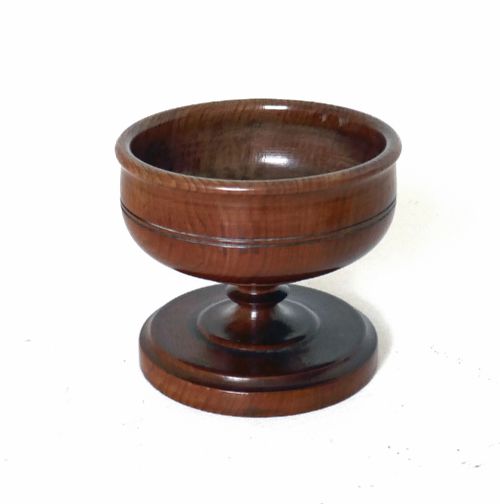


Wooden Pedestal Bowl
These wooden pedestal bowl pieces are raised serving items and centrepieces that bring rich timber grain and classic turned elevations to a table.
Wooden Pedestal Bowl
A wooden pedestal bowl takes various forms across the eighteenth and nineteenth centuries, appearing as turned salts, fruit centrepieces, tazzas and vase stands. You will most frequently encounter nineteenth-century walnut and oak examples alongside earlier treen pieces.
The selection ranges from traditional Georgian style stands and carved Liege bowls to inlaid rosewood tazzas and Italian walnut tazzas. Each piece elevates its contents upon a raised base or pedestal structure.
Makers utilised dense timbers like yew wood, fruitwood, oak, walnut and rosewood to construct these elevated vessels. Some examples incorporate brass or silver plate mounts alongside the turned wood.
Materials and construction methods
Craftsmen turned timber on a lathe to shape the smooth rounded bodies and elevated bases of early treen salts and fruit bowls. This woodturning technique creates symmetrical profiles that highlight the natural grain of yew wood, walnut and fruitwood.
Carving provides textural detail on pieces such as oak fruit bowl centrepieces featuring carved fruiting vine decoration. Inlaid rosewood tazzas demonstrate precision in surface decoration, combining fine timbers with structured pedestal forms.
Listings feature oak, walnut, rosewood, yew wood, fruitwood, and mahogany across the eighteenth and nineteenth centuries.
Judging quality in turned and carved timber
The depth of carved detail and the crispness of turning separate standard production from superior examples. Finely executed fruiting vine decoration or precise lathe work indicates a higher standard of workmanship.
The choice and condition of timber dictate the visual presence of a piece. Rich colour in early yew wood and well-figured walnut or rosewood elevate the aesthetic merit of the vessel.
The Wooden Pedestal Bowl Glossary
- Treen
- Small handmade wooden household objects and utilitarian wares. These items display historical turning techniques and aged timber surfaces.
- Tazza
- A shallow bowl or plate mounted on a pedestal foot. Such vessels serve decorative or presentation functions on tables.
- Salt
- A small vessel used for holding domestic salt before the introduction of modern shakers. Early versions often feature raised wooden bases.
- Tea poy
- A small container or table designed to hold loose tea leaves. These often sit upon a pedestal or stand structure.
Wooden Pedestal Bowl: Frequently Asked Questions
What is a wooden pedestal bowl used for?
These elevated vessels serve primarily as centrepieces, fruit bowls or decorative display pieces on dining tables and sideboards. Historically, smaller turned versions functioned as salt cellars or presentation pieces.
The raised base lifts the contents above the surface, drawing the eye to the timber grain and carved details of the bowl.
How do I date an antique wooden bowl?
Dating relies upon identifying the timber species, turning marks, tool work and prevailing period styles such as Georgian or Victorian. Eighteenth-century pieces often show specific treen characteristics and rich patination.
Comparing the form and decorative motifs, such as carved fruiting vines or classical revival elements, helps narrow the decade of origin.
What woods were used for these bowls?
Makers selected dense hardwoods including oak, walnut, rosewood, yew wood and fruitwood for their stability and grain pattern. Lighter woods like fruitwood and yew appear in earlier treen items.
Darker timbers such as walnut and rosewood frequently feature in nineteenth-century tazzas and stands.
How should I care for antique wood?
Keep wooden pedestal bowls away from direct sunlight, extreme heat sources and rapid humidity changes to prevent the timber from splitting. Dust gently with a dry, soft cloth rather than using wet cleaners.
Applying occasional appropriate wax preserves the natural sheen and protects the aged surface of the wood.