


Turned Wooden Rocker
Turned wooden rockers are tactile chairs built for rhythmic motion, offering centuries of vernacular comfort in solid timber.
Turned Wooden Rocker
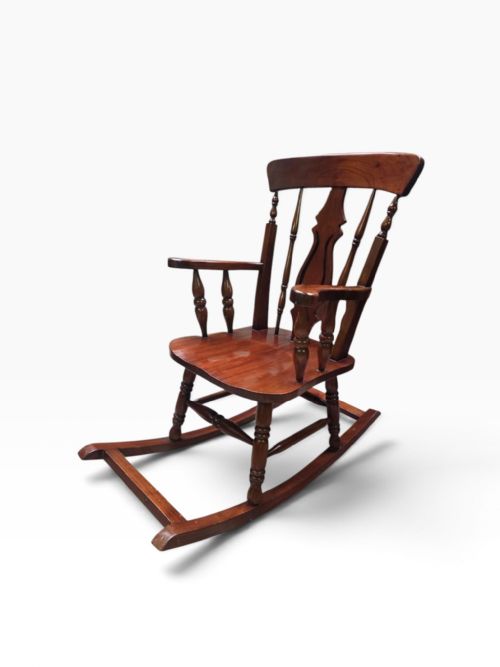
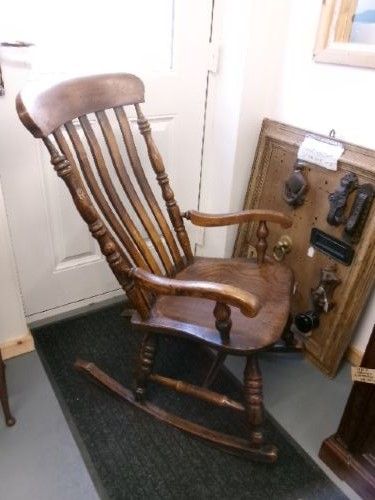
A turned wooden rocker is a seating form defined by its curved runners and turned components, spanning periods from the early nineteenth century into the twentieth. You will frequently encounter nineteenth-century examples alongside Victorian country variations, ranging from full-sized fireside seating to smaller child and doll proportions.
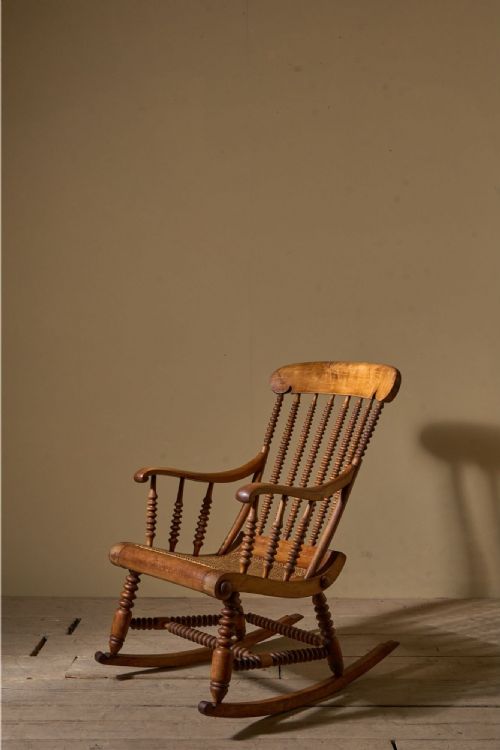
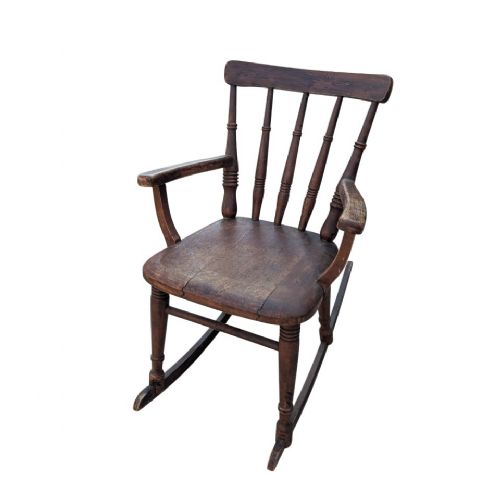
The regional and stylistic variations include English, Scottish, and Swedish vernacular pieces, alongside American-influenced formats. Common regional expressions feature Windsor framing, ladder backs, and spindle backs built for domestic interiors.
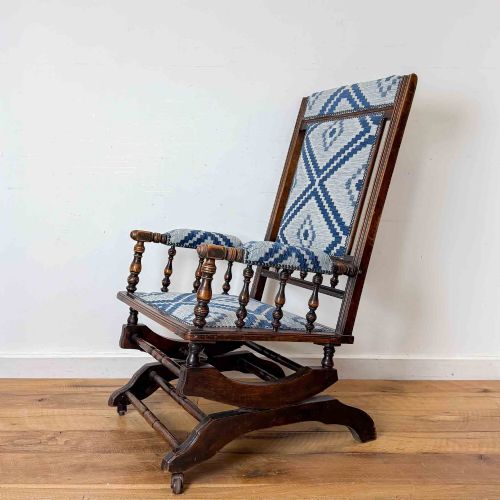
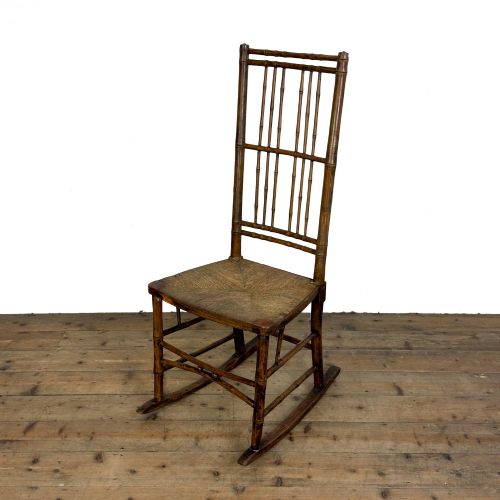
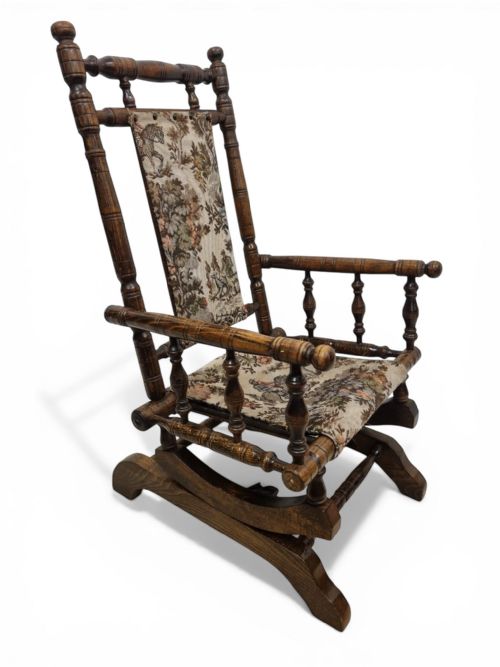
Materials span native timbers such as beech, elm, ash, and oak, occasionally complemented by cane, sea grass, or tapestry upholstery. These seating forms served nurseries, parlours, and firesides, prioritising functional movement over formal stiffness.
Materials and construction
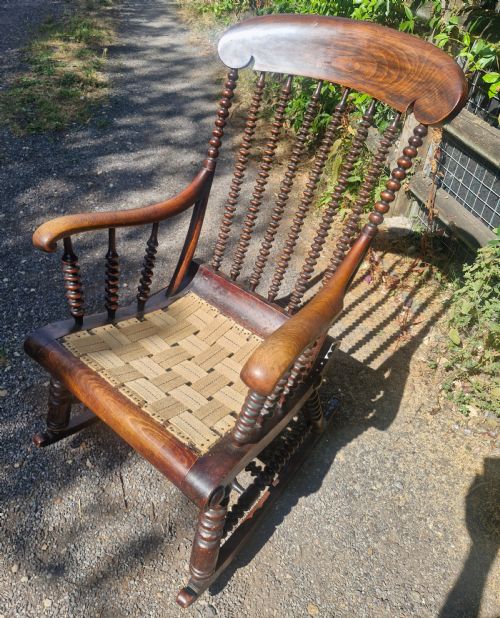
Makers utilised solid hardwoods like beech, elm, and ash for structural strength, turning components on a lathe to create bobbin, spindle, and pillar profiles. These turned uprights and stretchers were then joined to heavy wooden seats using traditional pegged and wedged joinery.
Curved rocking runners were shaped from thick timber to establish the gentle arc required for smooth motion. Seats were frequently carved from solid elm or beech planks, or woven with cane and sea grass to provide a resilient surface.
Listings feature timbers including beech, elm, ash, and oak, alongside cane and sea grass seating.
Judging quality and integrity
Quality rests in the crispness of the lathe turning and the harmonious balance of the turned uprights, stretchers, and arms. Superior examples retain their original timber surfaces, whether unpainted grain or early paint, without heavy alterations to the rocking runners.
Structural integrity depends on tight joints and minimal replacement timber, particularly along the curved runners which endure constant friction during movement. Finer pieces demonstrate careful timber selection, such as figured elm seats paired with well-turned spindles.
The Turned Wooden Rocker Glossary
- Bobbin turned
- A style of woodturning characterised by a series of rounded spheres resembling bobbins or spools along a spindle or leg.
- Spindle back
- A chair back constructed from multiple thin turned wooden rods vertical between the seat and top rail.
- Windsor
- A traditional chair type featuring a solid wooden seat into which the legs, back spindles, and bow are separately dowelled.
- Vernacular
- Everyday domestic furniture made by local regional craftsmen rather than urban cabinet makers, using readily available native timbers.
- Cane seated
- A seating surface woven from peeled rattan or cane strips, offering a flexible and lightweight platform.
Turned Wooden Rocker: Frequently Asked Questions
What is a turned wooden rocker?
A turned wooden rocker is a movable seat mounted on curved wooden runners, featuring structural uprights shaped on a lathe. These chairs appear in various regional vernacular styles across the nineteenth and early twentieth centuries.
They combine turned bobbin, spindle, or pillar work with solid timber seats made from woods like beech, elm, or ash. Their design evolved for domestic comfort by the fireside or in the nursery.
How were these rocking chairs used?
These chairs served primarily as functional domestic seating in parlours, bedrooms, and nurseries for rocking children or quiet resting. Smaller child and doll-sized versions were also produced for domestic play or nursery use.
The gentle motion made them popular fireside seats during the Victorian era and earlier nineteenth century. Their sturdy construction allowed them to withstand daily family life in country houses and farmhouses.
How do I date a turned wooden rocker?
Dating relies on observing construction methods, turned profiles, and timber choices across different periods like the nineteenth century or Edwardian era. Earlier nineteenth-century examples often display simpler hand-turned bobbin or spindle work in native woods like elm and ash.
Later Victorian and Edwardian pieces incorporate machine-turned components, alternative upholstery materials like tapestry or cane, and styles influenced by the Arts and Crafts movement. Comparing the turned joinery and seat shaping helps establish the likely production era.
Are smaller rocking chairs for children?
Yes, many smaller formats found in these listings are designated as child, children, or doll rocking chairs produced during the nineteenth and early twentieth centuries. These miniature versions replicate the larger adult Windsor, bobbin-turned, and ladder-back styles.
They were built with the same solid woods and turned construction as full-sized chairs. Their scale reflects period domestic habits where children had scaled furniture for the nursery.
What woods were used for these chairs?
Makers relied heavily on native hardwoods such as beech, elm, ash, and oak for structural durability and turning work. Elm was frequently chosen for solid shaped seats due to its resistance to splitting under weight.
Birch, mahogany, and occasionally painted surfaces also appear depending on the regional tradition and period style. These materials ensured the chairs could endure the physical stresses of constant rocking.