

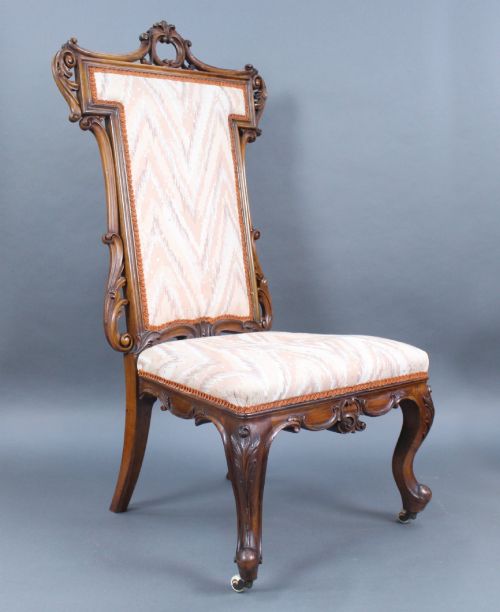


Period Occasional Chairs
Period occasional chairs bring mobility and distinct historic character to a room, offering adaptable seating shaped by centuries of changing domestic design.
Period Occasional Chairs
Period occasional chairs encompass a diverse assortment of moveable seating forms designed to serve different functions throughout the home, from bedroom and salon use to library and reception spaces. Buyers seeking period occasional chairs will encounter various iterations shaped by the design movements of their respective eras, including George III, Regency, Victorian, and Edwardian periods.
The objects span multiple structural types such as side chairs, armchairs, salon chairs, and specific regional variations like Scottish hall chairs or French fauteuils. Mahogany and walnut form the structural backbone of these pieces, alongside maple, rosewood, and giltwood.
Upholstery treatments vary widely across the selection, ranging from exposed cane seats to surfaces covered in velvet, silk, or modern upholstery fabrics. Pieces range from the straightforward utility of a bedroom chair to the refined ornamentation of Regency giltwood or French neoclassical designs.
Construction and materials
Cabinetmakers constructed these frames using dense hardwoods like mahogany and walnut, employing traditional joinery techniques to ensure lasting stability. Selected timbers were often shaped through turning, carving, or steam bending to achieve the curved profiles characteristic of Regency and Victorian seating.
Surface enrichment frequently involved brass inlay, string inlay, and gilding, applied to enhance the visual weight of the timber frames. Caning and drop-in or sprung upholstery provided the functional seat bases, utilising textiles such as velvet and woven fabrics.
Period Occasional Chairs Retail Price Guide 2026
Typical asking prices for period occasional chairs among the pieces listed under this phrase on Sellingantiques today, from the lower quarter to the upper quarter. They describe what is for sale here now, not the wider market.
A Scottish hall chair quietly holds court among the lot, ready to receive visitors who arrive with 1820s punctuality.
Assessing quality in construction and design
Quality reveals itself in the crispness of the timber carving and the precision of decorative elements such as brass or string inlay. Superior examples demonstrate a careful selection of figured wood grains and robust joinery that remains tight and stable over centuries.
Proportion and structural integrity separate standard utility pieces from high-status salon or library chairs. The integration of fine details, such as curved curule frames or thorough carving, distinguishes the work of skilled workshops.
Gillows
The Period Occasional Chairs Glossary
- Fauteuil
- An open-armed French armchair with upholstered back and armrests, typically featuring an exposed wooden frame. These chairs originated in court circles and emphasise elegance for salon use.
- Giltwood
- Timber that has been coated with a thin layer of gold leaf or gesso preparation. This finish is frequently encountered on decorative chairs from the Regency and Georgian periods.
- Curule
- A distinctive X-shaped furniture design derived from ancient Roman magistrate seats. Library armchairs utilise this structural form to provide robust support with a classical silhouette.
- Caning
- A seating material woven from peeled rattan or cane strips, creating a light and resilient grid. It appears frequently on the seats of Regency and Victorian occasional chairs.
- String inlay
- A narrow line of contrasting wood veneer embedded flush into the primary timber surface. Edwardian salon chairs often display this delicate decorative technique.
Period Occasional Chairs: Frequently Asked Questions
What defines a period occasional chair?
A period occasional chair is a moveable seat produced before the twentieth century, designed for flexible placement in spaces like bedrooms, parlours, and libraries.
These pieces reflect the stylistic shifts of eras such as the Regency, Victorian, and Edwardian periods, utilising hardwoods like mahogany and walnut alongside diverse upholstery.
How do I identify the period of a chair?
Dating relies on observing structural forms, wood types, and decorative motifs that align with documented historical periods. For example, crisp brass inlay and curule frames often point to Regency design, while turned walnut or rosewood frequently suggests Victorian manufacture.
Examining the construction methods and joinery beneath the upholstery also provides reliable clues to the era of origin.
Where were occasional chairs used in historic homes?
These versatile seats were moved around the house to supplement primary seating wherever guests gathered. They served in reception rooms, bedrooms as dressing chairs, and libraries as desk or reading seats.
Their lightweight construction allowed servants to reconfigure rooms easily depending on the social occasion.
Can I use antique chairs for daily seating?
Most period occasional chairs remain sturdy enough for regular use, provided the frame joinery is sound and stable. Buyers should assess the physical condition of the timber and the strength of the joints before daily placement.
Historic upholstery or cane seats may require professional reinforcement if intended for heavy, continuous use.