


Turned Wooden Candlesticks
Turned wooden candlesticks are classic turned accessories offering sculptural form and warm grain to any room.
Turned Wooden Candlesticks
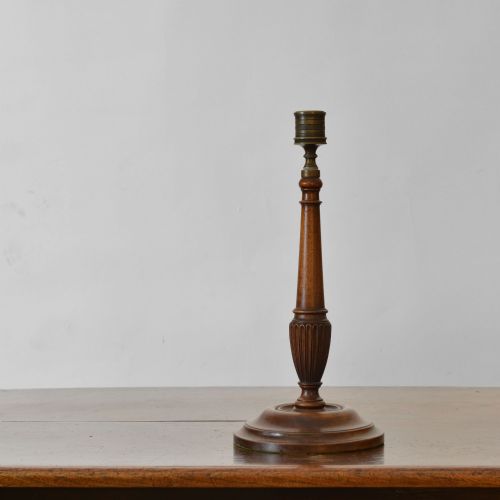
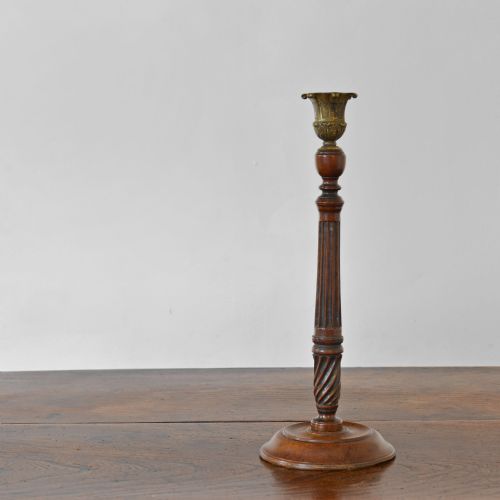
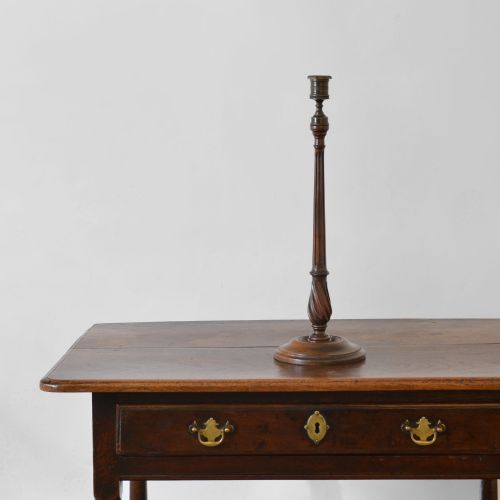
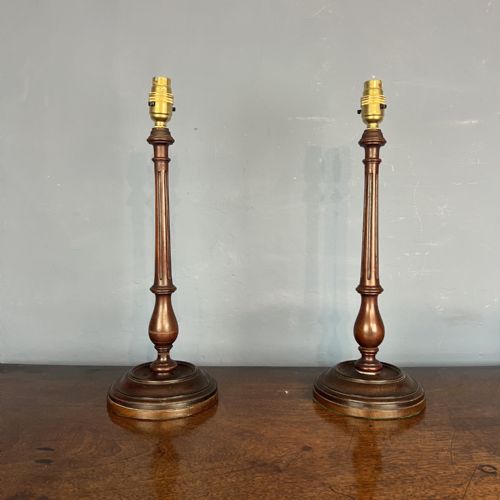
Turned wooden candlesticks bring tactile warmth and architectural shape to interior lighting. When you search for turned wooden candlesticks, you encounter pieces spanning from the eighteenth century through the Edwardian period and the 1920s.
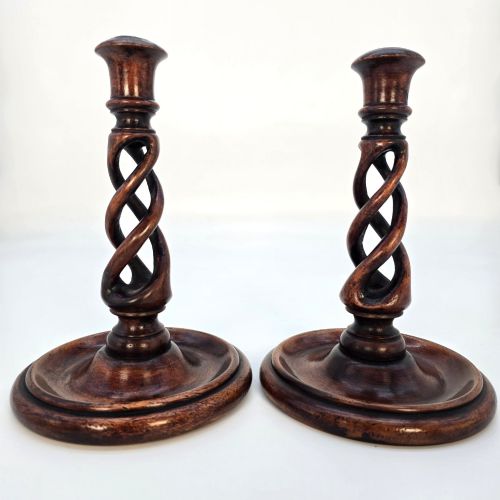
The selection ranges from tall Georgian mahogany examples and fruitwood open twists to Victorian lignum vitae and oak barley twist designs. Many pieces incorporate brass sconces, while others take the form of travelling Brighton buns or chamber sticks.
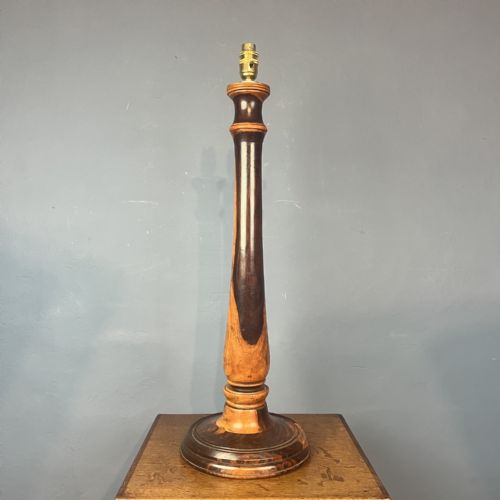
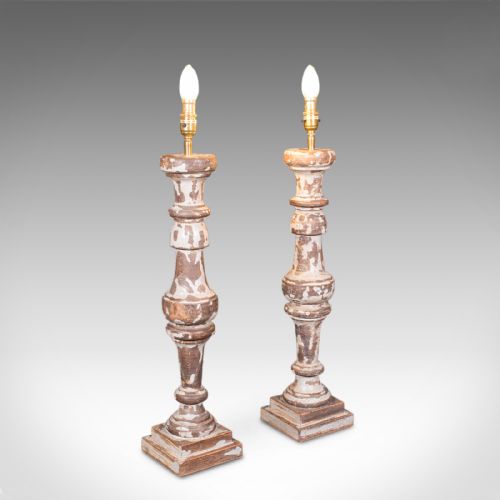
Makers utilised dense timbers and decorative turnery to create both slim tapers and large display pieces. Alongside traditional candlesticks, the listings include related turned forms such as table lamp bases, torcheres, and treen items.
How they were made
Craftsmen shaped these items on a lathe using dense hardwoods like mahogany, oak, walnut, fruitwood, and heavy lignum vitae. Open twists, bobbin turning, and spiral carver details required skilled hand manipulation of gouges and chisels.
Many examples combine turned timber with fitted brass nozzle tops, drip pans, or weighted bases for stability. Surface finishes range from polished natural grain and handpainted pine to folk-art paint and gilt accents.
One notable pair of bobbin-turned teak candlesticks came straight from the Royal yacht HMS Renown.
What varies in quality
The quality of turned wooden candlesticks rests in the crispness of the turning and the choice of timber. Crisp barley twists, clean open spirals, and dense, heavy woods like lignum vitae indicate superior workmanship.
Proportion and balance define the better examples, where the stem flows harmoniously into a stable foot. Original brass sconces and clean, unblemished timber surfaces elevate an individual pair above simpler utilitarian pieces.
The Turned Wooden Candlesticks Glossary
- Treen
- Small handmade wooden household objects turned or carved on a lathe. This term covers domestic items such as small candlesticks and turned treen containers.
- Barley twist
- A helical carved or turned column resembling a twisted rope. This decorative motif appears frequently on nineteenth and early twentieth century shafts.
- Lignum vitae
- An extremely dense and heavy tropical hardwood valued for its durability and dark oily grain. It was frequently used for Victorian turned items requiring weight.
- Sconce
- The metal nozzle or socket fitted to the top of a candlestick to catch wax and hold the taper securely. Many wooden examples pair timber stems with brass sconces.
- Brighton bun
- A compact, portable travelling candlestick that unscrews and packs into its own turned wooden halves. Olive wood versions are typical of this pocket design.
Turned Wooden Candlesticks: Frequently Asked Questions
How do I date turned wooden candlesticks?
Dating relies on timber choice, turning style, and construction methods. Georgian pieces often feature rich mahogany with straightforward classic proportions, while Victorian items lean towards dense lignum vitae and complex brass pairings.
Later Edwardian and 1920s examples introduce oak barley twists and folk-art painted finishes. Examining the wear on the base and the method used to join the stem to the foot also clarifies the age.
Were these always meant for candles?
Most of these pieces started life holding wax tapers in domestic settings before the widespread adoption of electricity. Some examples were later converted into table lamps by adding internal wiring.
Certain items such as Brighton buns were specifically engineered for travel, allowing owners to pack a light source safely on journeys.
What is the difference between treen and standard turned wood?
Treen specifically denotes small functional wooden wares made for domestic use rather than large furniture. Turned wooden candlesticks fall squarely into this category due to their scale and lathe-turned origins.
The term highlights the small-scale craftsmanship and everyday utility of objects shaped by woodturners.
How should I care for antique turned wood?
Antique timber benefits from a stable indoor environment away from direct heat sources and extreme humidity fluctuations. Applying a sparing amount of microcrystalline wax preserves the lustre of the polished grain.
Avoid using liquid cleaners or soaking the wood, especially around brass mounts and fitted sconces.