


Traditional Turned Wooden Candlesticks
Traditional turned wooden candlesticks bring tactile warmth and rich grain to a room through centuries of lathe work.
Traditional Turned Wooden Candlesticks
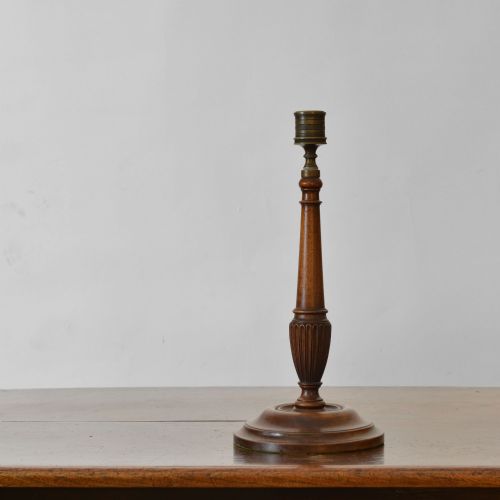
Traditional turned wooden candlesticks comprise decorative holders and lamps shaped on a lathe, appearing across the Georgian, Victorian, and early twentieth-century periods. These pieces serve as functional lighting accents that showcase the natural figure of timber.
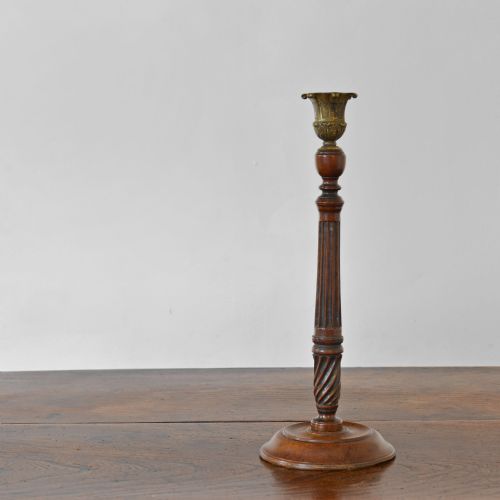
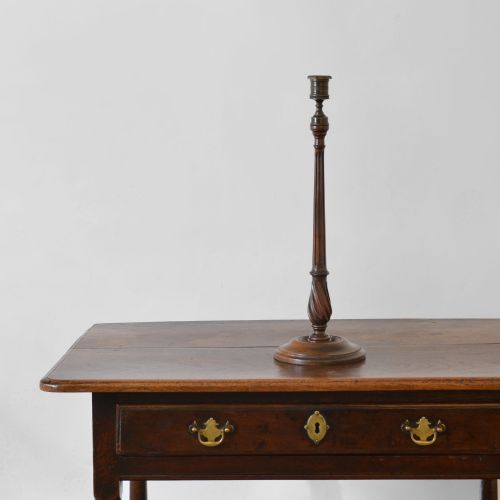
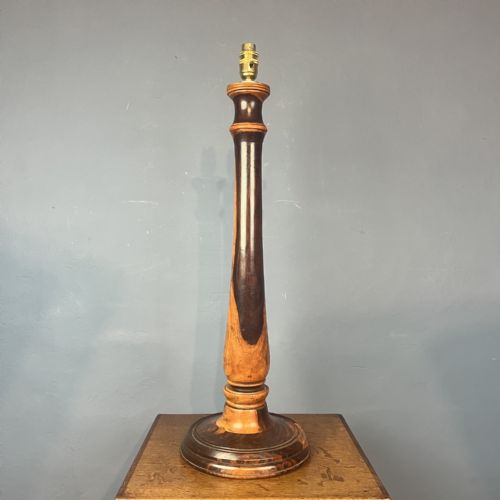
Mahogany, lignum vitae, walnut, and oak dominate the forms seen here, often paired with brass sconces or nozzles. Buyers frequently encounter pairs alongside single tall examples and occasional table lamps adapted from earlier turned shafts.
Stylistic influences range from austere Georgian proportions to decorative folk art and baroque revival interpretations. Such variety reflects the shifting domestic tastes across nineteenth-century English and French workshops.
How they were made
Turned wooden pieces take shape on a lathe, where artisans cut profiles ranging from simple tapering columns to elaborate spiral carvings. Dense hardwoods like lignum vitae and mahogany provide the structural stability required for slender stems and heavy weighted bases.
Many examples integrate brass drip pans or sconces fitted directly into the timber tops to protect the wood from melting wax. Surface finishes vary from waxed or polished grain to painted folk-art treatments applied in the early twentieth century.
Some early twentieth-century makers chose to paint their turned wood entirely, hiding the expensive mahogany beneath a cheerful coat of colour.
What varies in quality
Quality rests upon the proportion of the turning and the density of the chosen timber, where heavier woods like lignum vitae command greater presence. Crispness in the lathe work and balanced symmetry between pairs indicate skilled execution in the workshop.
The integration of original brass fittings alongside well-preserved patination elevates an example above altered or heavily refinished pieces. Good weight distribution across the base ensures stability for taller shafts.
The Traditional Turned Wooden Candlesticks Glossary
- Treen
- Small handmade wooden household objects valued for their utility and tactile qualities. The term derives from the old English word for tree.
- Sconce
- The metal nozzle or socket fitted to the top of a candlestick to hold the candle securely. Brass is the most common metal found on these wooden examples.
- Turning
- The process of shaping wood on a rotating lathe using cutting tools to create symmetrical profiles. This method produces the characteristic rings and columns seen on these pieces.
Traditional Turned Wooden Candlesticks: Frequently Asked Questions
How do I date traditional turned wooden candlesticks?
Dating relies on identifying timber choices, tool marks, and stylistic details that match documented periods from the eighteenth to the early twentieth century. Mahogany and heavy brass pairings often point to Georgian or Victorian eras, while lighter painted finishes suggest early twentieth-century production.
Examining the base and interior fittings provides further clues regarding manufacturing techniques. Comparing proportions with known period examples helps confirm the likely era of origin.
Were these items used for candles or electricity?
Traditional turned wooden candlesticks were originally designed solely to hold wax tapers or candles for illumination before widespread domestic electricity. Many surviving examples retain their original brass sconces intended for wax collection.
Some tall turned pieces have subsequently been adapted into table lamps with internal wiring. This conversion allows older timber stems to continue functioning with modern lighting.
How should I care for antique turned wood?
Maintaining antique turned wood involves keeping pieces away from direct heat sources and sudden humidity changes that can cause timber to split. Regular dusting with a soft, dry cloth preserves the surface without building up excessive residue.
Applying a light microcrystalline wax occasionally helps protect the polished finish of hardwoods like mahogany and walnut. Avoid using harsh chemical cleaners or liquid polishes that might strip the historic patina.
What is lignum vitae and why is it used?
Lignum vitae is an exceptionally dense and heavy natural timber prized for its durability and oily resin content. Makers utilised this material for turned items that required robust strength and resistance to splitting under pressure.
Its dark heartwood and tight grain finish to a smooth lustre that feels substantial in the hand. This made it a favored choice for sturdy nineteenth-century table lamps and candlesticks.