
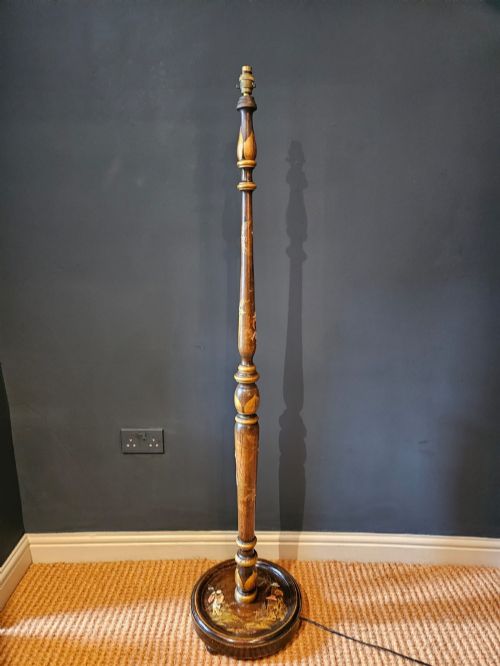
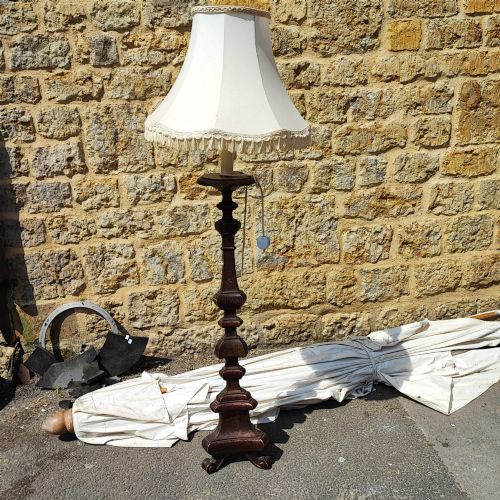
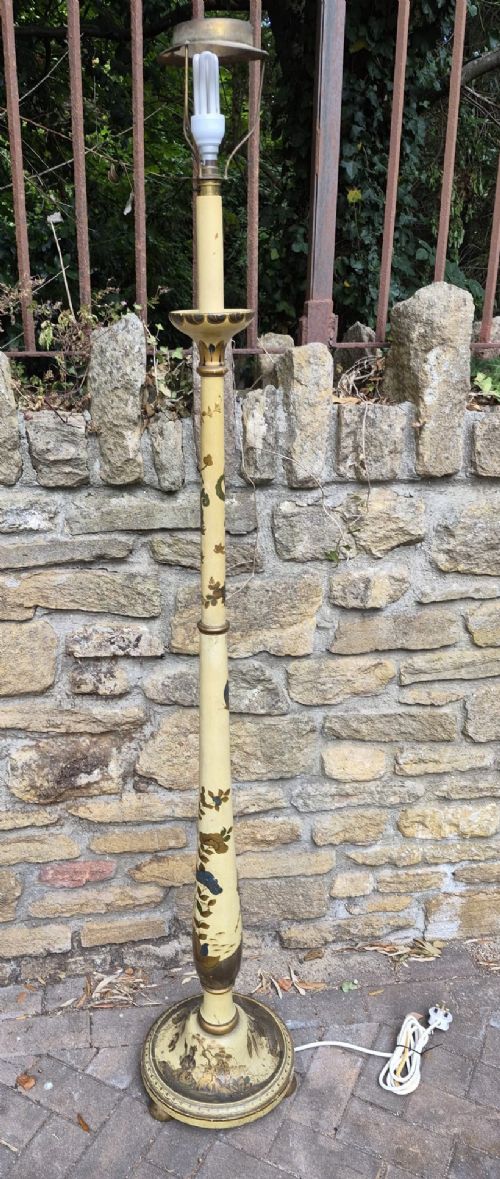


Turned Wood Standard Lamp
A turned wood standard lamp brings height and warmth to a room, offering practical lighting paired with traditional craftsmanship.
Turned Wood Standard Lamp
When a buyer searches for a turned wood standard lamp, they are looking for tall, upright floor lighting shaped on a lathe. These pieces anchor a room's lighting scheme while displaying the grain and form of timber.
The versions most commonly met on this page date from the late nineteenth century through the nineteen-thirties, spanning Edwardian designs and interwar traditional styles. They appear in forms ranging from simple cottage timbers to elaborate painted finishes.
Makers utilised various regional timbers, shaping posts into columns, flutes, and baluster forms. These uprights often stand on circular or tripod bases, supporting shades of fabric or glass.
How they were made
Makers turned dense timbers such as mahogany, oak, beech, and pine on lathes to create the characteristic slender columns of a turned wood standard lamp. Selected sections were hand-carved or parcel-gilded to add textural contrast against the polished grain.
Surface treatments included clear French polish to accentuate natural mahogany or oak, alongside painted and lacquered finishes seen on Chinoiserie examples. Some specimens incorporated brass fittings and triple glass shades to complete the assembly.
Turned Wood Standard Lamp Retail Price Guide 2026
Typical asking prices for turned wood standard lamp among the pieces listed under this phrase on Sellingantiques today, from the lower quarter to the upper quarter. They describe what is for sale here now, not the wider market.
Pine lamp bodies occasionally reveal old layers of forgotten nursery paint beneath decades of dark polish.
What varies in quality
The quality of a turned wood standard lamp rests on the selection of timber and the precision of the lathe work. Heavier, dense woods like mahogany and oak provide stability and sharper detail in the turned profiles compared to softer pines.
Design ambition also separates standard examples from finer pieces, such as those featuring parcel gilding, hand-painted Chinoiserie decoration, or integrated brass hardware. The integration of structural bases that prevent wobble distinguishes better-executed lighting.
The Turned Wood Standard Lamp Glossary
- Standard lamp
- A tall floor-standing lamp designed to illuminate a room from standing height, distinct from table lighting.
- Turned wood
- Timber shaped by rotating it on a lathe against cutting tools to produce symmetrical, rounded profiles.
- Parcel gilt
- Wood decorated with partial applications of gold leaf to highlight specific carved or raised details.
- Chinoiserie
- European decorative style employing motifs inspired by Chinese art, frequently executed in painted lacquer.
- Baluster
- An architectural form shaped like a moulded vase or pillar, commonly incorporated into the central column.
Turned Wood Standard Lamp: Frequently Asked Questions
What periods do these lamps come from?
The pieces span from the late Victorian and Edwardian eras through to the nineteen-thirties. You will encounter styles reflecting nineteenth-century revivalism alongside interwar traditional designs.
Dating relies on timber choice, turning styles, and surface finishes such as early polish or lacquer.
Where were standard lamps used?
They served as principal floor lighting in Victorian and Edwardian drawing rooms, parlours, and libraries. Their height allowed them to cast light over reading chairs and writing desks.
Today they continue to function as ambient room lighting while adding vertical interest to corners.
How do I distinguish Edwardian from later pieces?
Edwardian examples often feature lighter oak or satin-polished mahogany with restrained turning. Nineteen-thirties pieces sometimes incorporate bolder proportions or applied decorative schemes.
Examining the turning sharpness and finish helps separate earlier hand-turned columns from later production methods.
Are shades original to the lamps?
Fabric shades rarely survive in original condition due to age and changing interior fashions. Most surviving standards now carry replacement fabric or glass shades suited to modern fittings.
Glass shades, where present, are often associated with early twentieth-century electric conversions.