
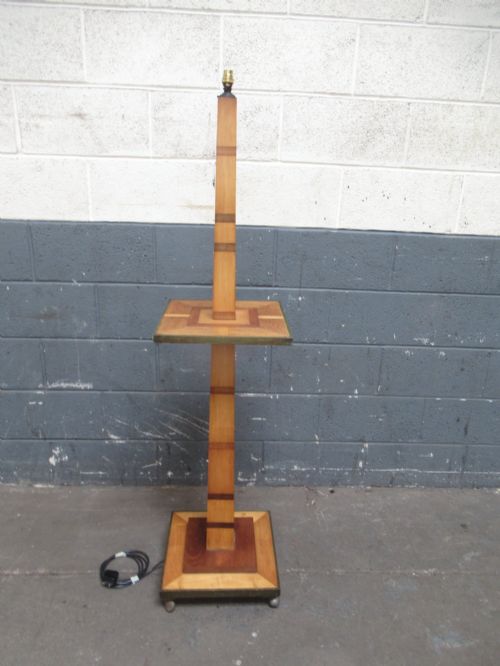
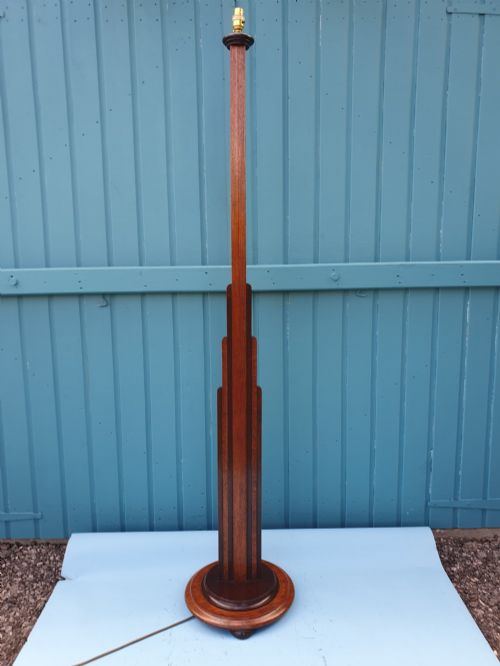


Light Oak Floor Lamp
A light oak floor lamp brings warmth and upright height to a room, using honest timber and practical wiring to anchor a corner.
Light Oak Floor Lamp
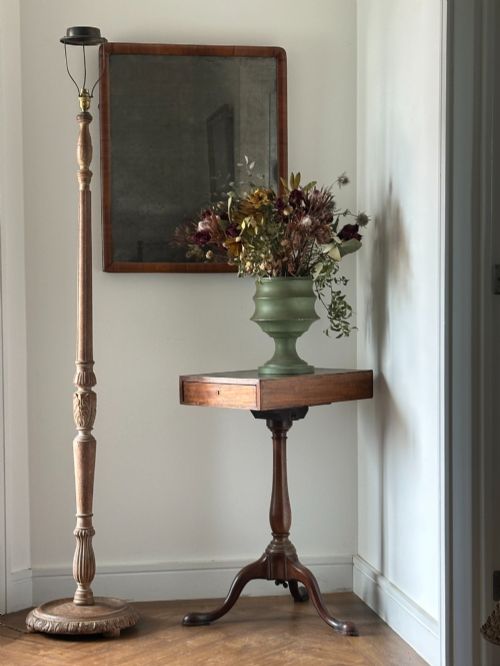
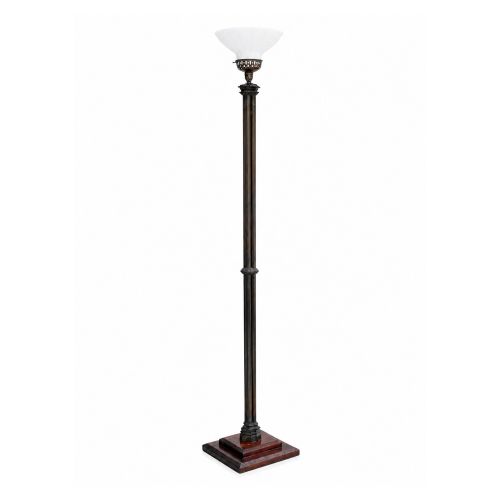
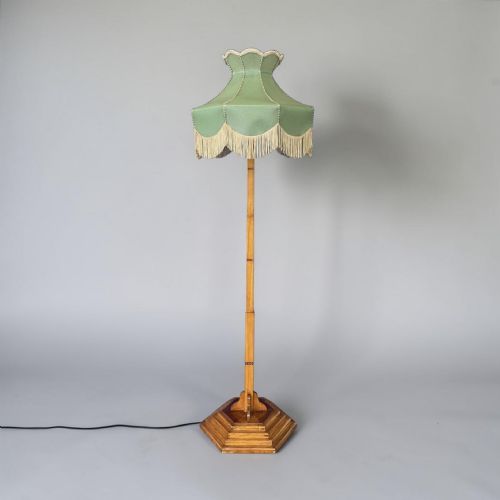
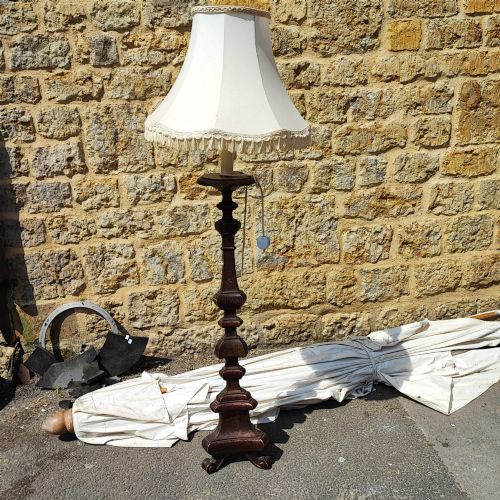
When you search for a light oak floor lamp, you encounter tall upright standards built predominantly from pale British timber, often designed to stand beside armchairs or sofas in living spaces. These pieces function simultaneously as furniture and illumination, casting light downwards or upwards depending on the shade and fitment.
The versions most commonly found across these listings date from the Edwardian era through the interwar years, encompassing the 1910s, 1920s, and 1930s. Their forms range from simple turned columns to geometric Art Deco skyscrapers and carved Gothic Revival shafts.
How they were made
The construction relies heavily on solid oak, sometimes paired with contrasting woods such as ebony or walnut, shaped through turning, carving, and joinery. Makers utilised brass fittings and weighted bases to ensure stability in tall upright standards.
Surface treatments vary from limed finishes and natural polish to decorative carved detailing, reflecting the predominant craftsmanship styles of the early twentieth century.
Materials documented across these standards include oak, brass, glass, fabric, walnut, and fringe, showing a diverse range of decorative treatments.
What varies in quality
The distinction between ordinary and superior pieces rests upon the crispness of the carving, the selection of the oak grain, and the overall proportion of the standard. High-quality examples display deliberate architectural massing, such as stepped Art Deco tiers or clean Arts and Crafts lines, rather than generic turned shapes.
Superior execution also shows in the integration of secondary materials, such as inlaid ebony details or heavy brass hardware, which demonstrate that the maker invested care into the hidden and visible elements alike.
Whytock and Reid·Heals and Sons
The Light Oak Floor Lamp Glossary
- Standard lamp
- An alternative historical term for a floor lamp, describing a tall vertical timber post designed to support an electrical or oil light fitting at standing height.
- Limed oak
- A wood finishing technique where a white pigment is rubbed into the open grain of oak to create a pale, textured surface appearance.
- Art Deco
- A design style dominant in the 1920s and 1930s characterised by geometric symmetry, stepped forms, and streamlined modernism.
- Gothic Revival
- An architectural and decorative style drawing on medieval ecclesiastical forms, featuring pointed arches, heavy mouldings, and formal verticality.
Light Oak Floor Lamp: Frequently Asked Questions
How do I date a light oak floor lamp?
Dating relies primarily on stylistic clues, such as geometric stepped profiles pointing to the 1930s, or simpler turned columns typical of Edwardian and 1910s production.
Construction methods and wiring channels also offer clues, though many older standards have been updated with modern electrical flex for safe domestic use.
Where should I place a standard lamp?
These tall fixtures suit corners of living rooms, studies, or reading areas where they provide ambient vertical light without occupying floor space needed for tables.
Ensure the heavy base sits firmly on level flooring so the upright column remains completely stable.
What is the difference between oak and walnut?
Oak provides a prominent open grain and a naturally pale or honeyed tone that accepts liming and staining readily, suiting robust Arts and Crafts or early twentieth-century designs.
Walnut offers a darker, smoother grain pattern with richer chocolate tones, often employed for contrast or in more formal furniture contexts.
Are these lamps safe for modern use?
Most antique standards require rewiring to meet contemporary electrical standards, which is best carried out by a professional before connecting to mains power.
The original wooden structure and brass lampholders can usually be retained while updating the internal cabling.