



Turned Wood High Chair
A turned wood high chair brings country craftsmanship straight to the nursery, offering robust seating built from honest timbers.
Turned Wood High Chair
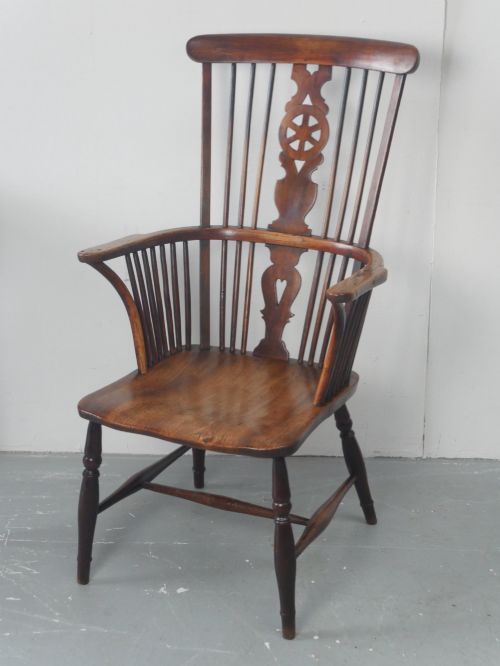
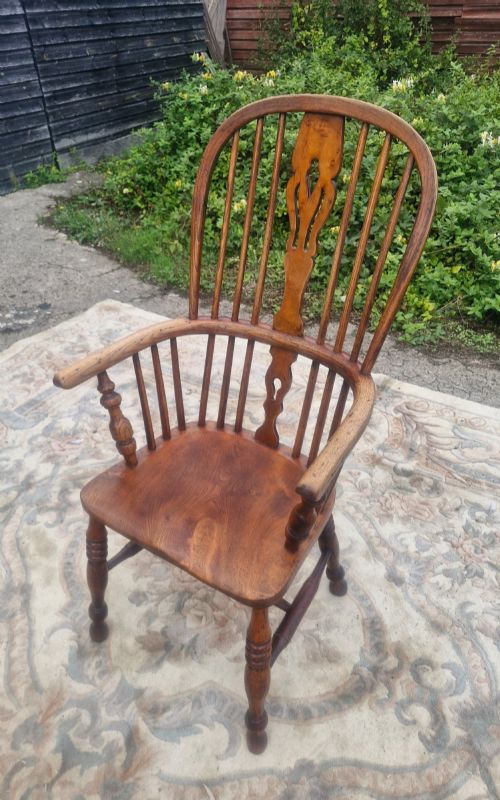
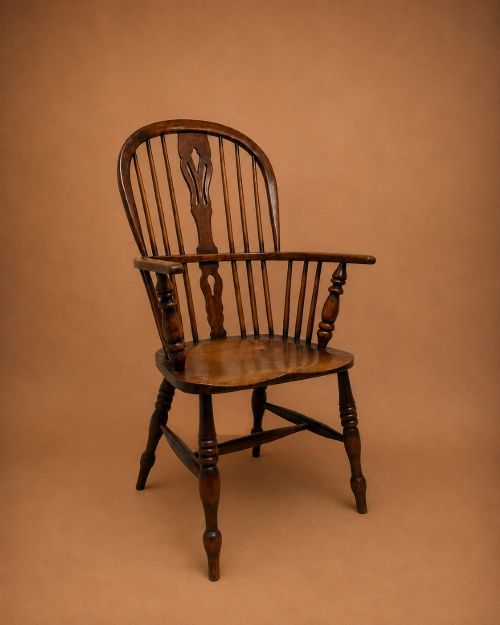
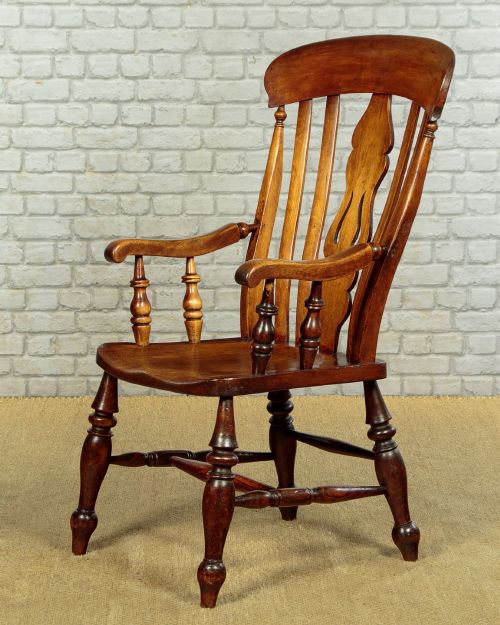
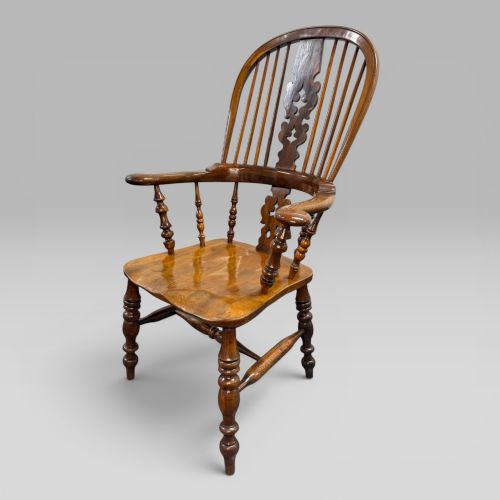
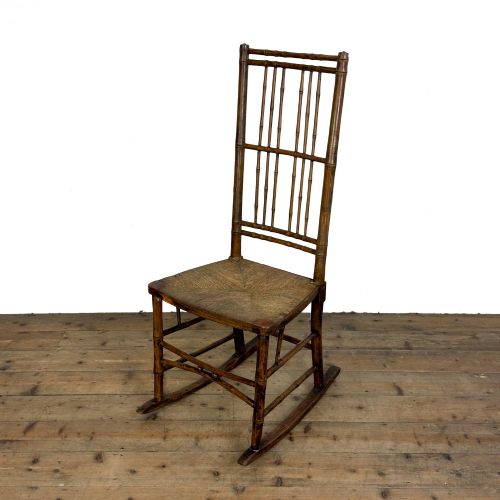
A turned wood high chair represents traditional domestic seating intended for young children, emerging primarily from nineteenth-century rural workshops. These examples frequently combine robust construction with spindle-turned components designed to elevate a child to table height.
The evidence on this page draws largely from nineteenth-century pieces, including Victorian interpretations and functional farmhouse seating. Buyers encounter solid timber frames, often utilising combinations of elm, ash, and beech, reflecting vernacular furniture traditions across Britain.
Most items meeting this description display characteristic Windsor or spindle-back influences adapted specifically for youth. The forms prioritize sturdy leg bases and protective arm structures, ensuring stability for daily domestic use.
Materials and construction methods
Maker practices relied on pairing contrasting woods to balance structural strength and seating comfort. Workshops commonly turned spindles from ash or beech while seating children upon carved solid elm planks.
Construction techniques depended heavily on traditional joinery where turned legs and uprights fit directly into bored holes within the solid seat. Artisans shaped each component using lathes and drawknives, securing the frame without complex metal fasteners.
Listings feature nineteenth-century and Victorian pieces constructed from elm, ash, and beech.
Evaluating craftsmanship and survival
Quality rests upon the selection of timber and the precision of the turning work. Finer examples display balanced proportions, crisp spindle turnings, and well-figured grain within the seat boards.
Condition and originality dictate the standing of individual pieces. Retaining original turned members, uncompromised structural joints, and honest surface patination elevates an example above altered or heavily restored counterparts.
Gabbitass of Worksop
The Turned Wood High Chair Glossary
- Windsor
- A traditional chair construction method featuring a solid wooden seat into which the legs, back spindles, and bow are separately socketed. This method provides immense structural rigidity while utilising simpler component parts.
- Spindle
- A slender, turned wooden rod shaped on a lathe to form the vertical uprights of a chair back. These elements distribute back support evenly across the frame.
- Elm
- A tough, interlocking hardwood frequently selected for chair seats due to its resistance to splitting under stress. Cabinetmakers valued its complex grain pattern.
- Ash
- A flexible, resilient hardwood utilised widely for turned legs, stretchers, and bow backs in country seating. It absorbs shocks well without fracturing.
- Stretcher
- A horizontal wooden rod connecting the legs of a chair to reinforce the underframe. These components prevent the legs from splaying outward under weight.
Turned Wood High Chair: Frequently Asked Questions
What defines a turned wood high chair?
These pieces are elevated child seating structures constructed using lathe-turned wooden spindles and solid timber seats.
They reflect vernacular furniture traditions, utilising durable domestic hardwoods to ensure stability for everyday nursery use.
How were these chairs used historically?
Families placed them at dining tables to keep young children secure and level with adults during meals.
Their elevated stance and enclosed arms kept the child safely contained within the domestic space.
How do I live with antique children's seating?
Placing these items in living spaces or hallways highlights their sculptural turning without requiring heavy daily handling.
Their compact proportions allow them to function as decorative display stands or sculptural accents in modern interiors.
How can I tell the period of these chairs?
Dating relies on observing turning styles, wood species choices, and the degree of wear upon the lower foot rests.
Nineteenth-century examples often display simpler, utilitarian turning patterns compared to later revival pieces.