
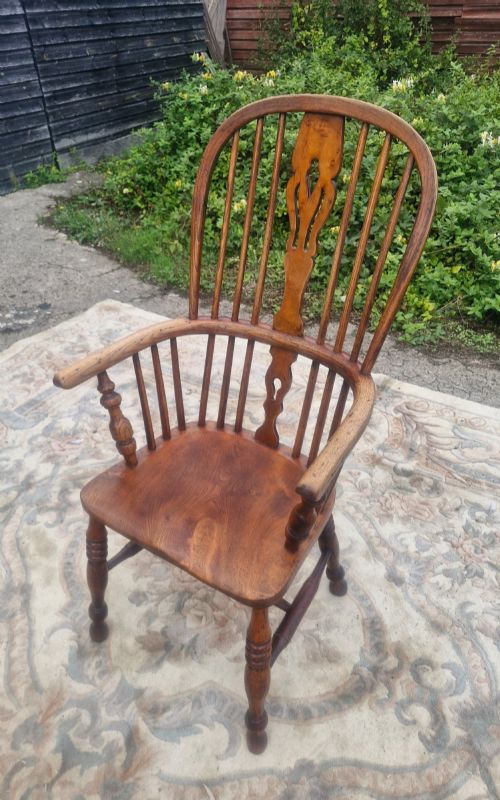
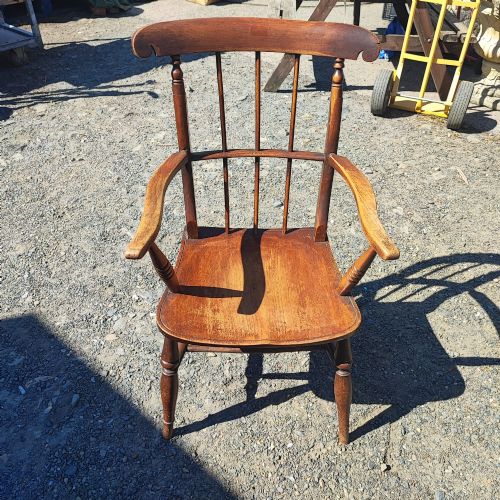
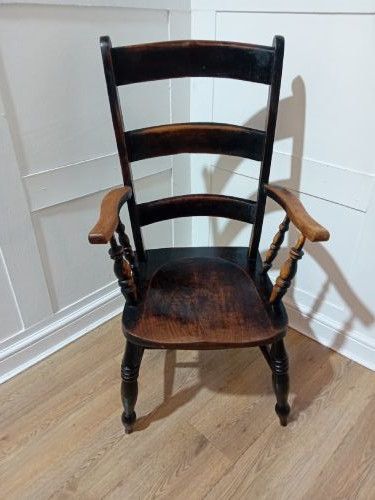
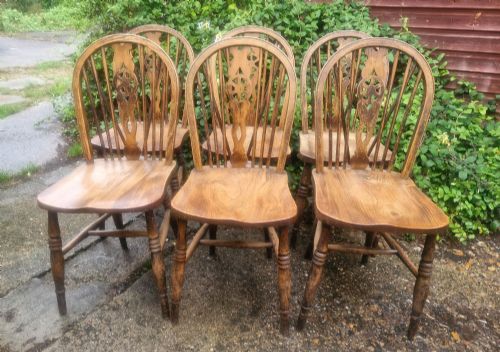
Turned Wood Country Chair
A turned wood country chair brings honest regional craftsmanship and tactile warmth straight into a modern interior.
Turned Wood Country Chair
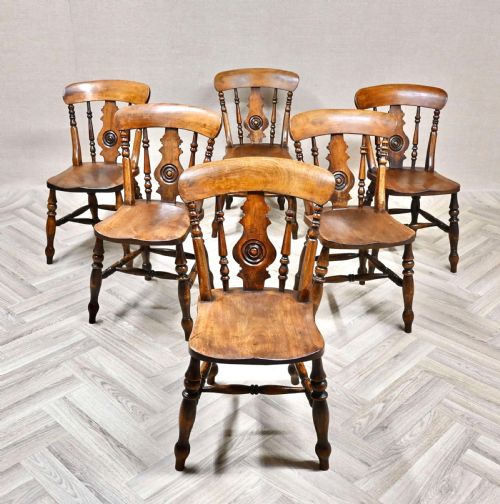
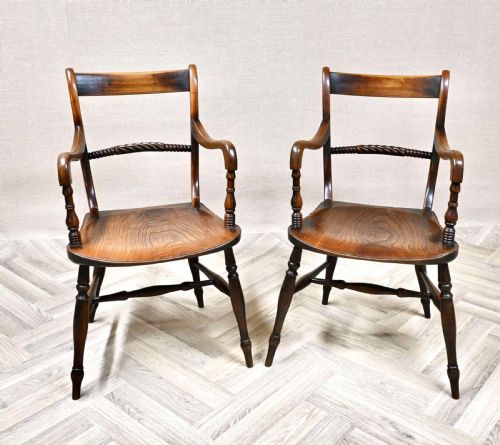
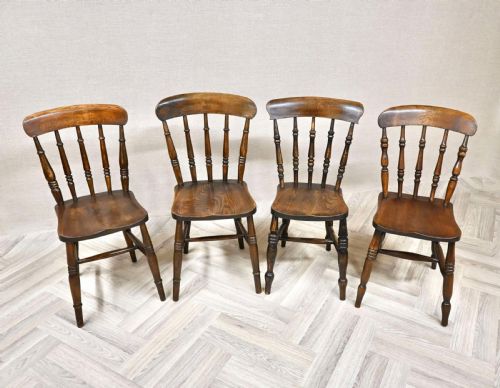
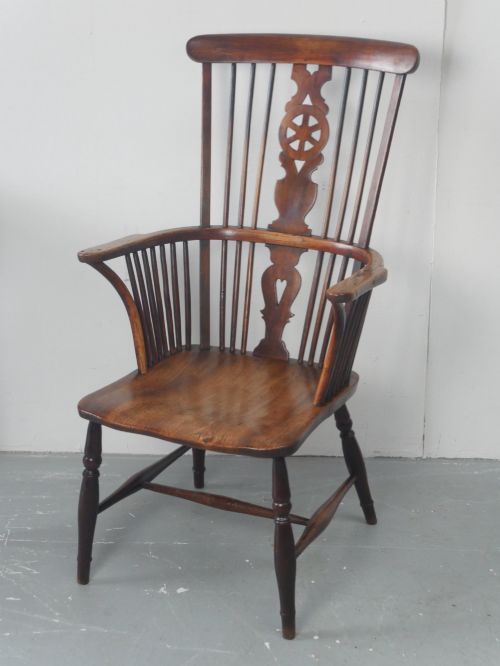
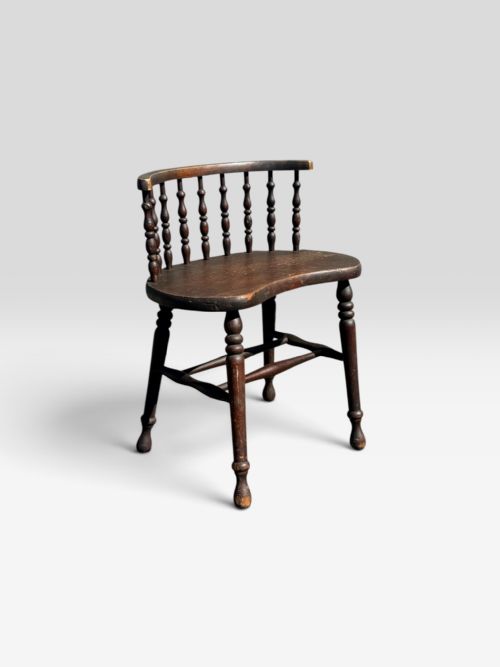
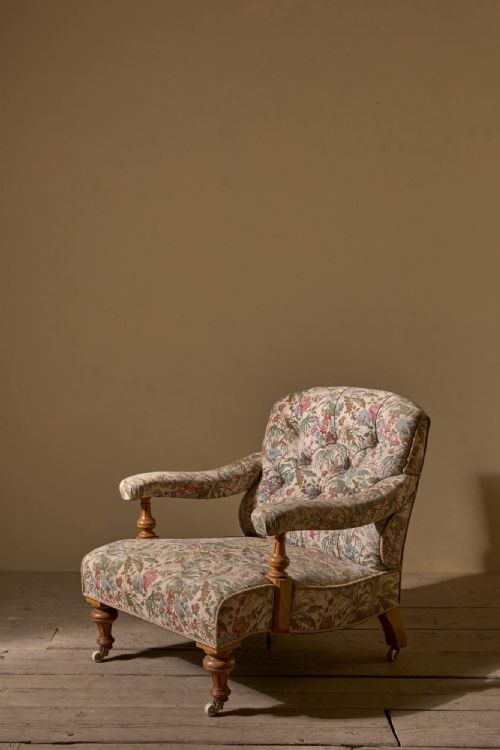
A turned wood country chair represents the vernacular seating traditions of rural Britain, shaped by local turners using native timbers. When you search for a turned wood country chair, you encounter forms designed for daily domestic utility in farmhouses, cottages and country houses.
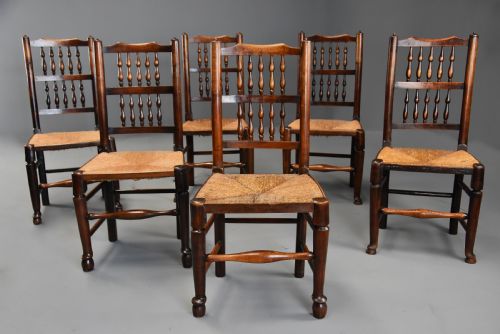
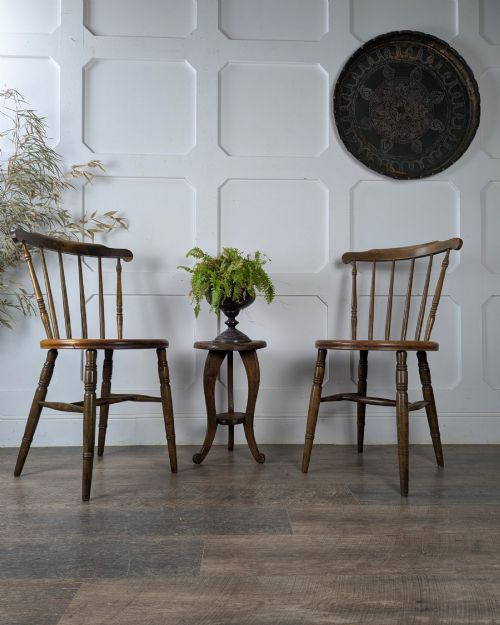
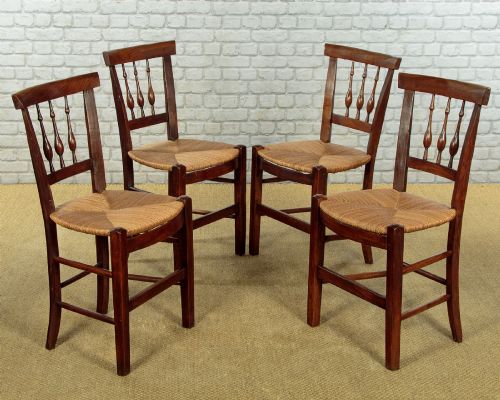
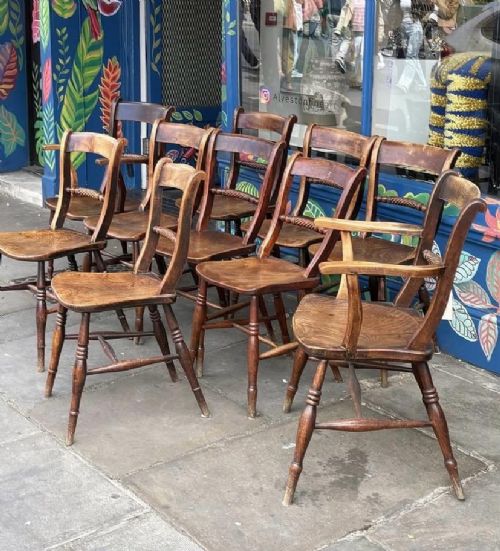
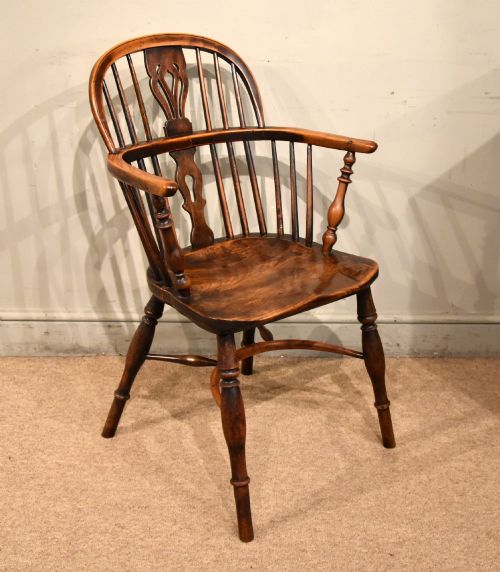
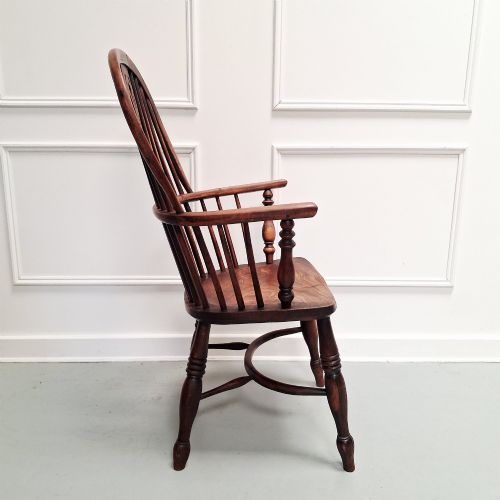
The varieties seen here most often are Windsor armchairs and kitchen dining chairs dating from the eighteenth, nineteenth and early twentieth centuries. These encompass high backs, wheel backs, barbacks and spindle backs, alongside rocking chairs and rush-seated side chairs.
Regional variations emerge across England and Scotland, from Thames Valley designs to Lancashire and Cheshire models. Each piece reflects the functional requirements of provincial life, prioritising sturdy construction and comfortable seating over courtly ornamentation.
Materials and construction
Maker-turners built these seats using a combination of native hardwoods, pairing sturdy elm for solid, saddled seats with flexible ash, beech or oak for spindles, legs and bow backs. Yew and laburnum appear in select examples, prized for their rich grain and natural figuring.
Components were shaped on the lathe using bobbin, spindle and ring turning techniques, then assembled using traditional mortise and tenon joints and wedged spindles. Rush and leather provide additional seating surfaces where solid wood was not utilised.
Judging quality
Quality rests in the harmony of the timber selection and the crispness of the lathe work. A well-turned bobbin or crisp spindle shows the confidence of the country craftsman at the lathe.
Proportion and structural integrity dictate the standing of a piece. Chairs that retain their original surface finishes and natural timber patination command greater regard than those stripped or overly restored.
J Spencer·Mellier And Co·Howard And Sons
The Turned Wood Country Chair Glossary
- Windsor
- A chair built with a solid wooden seat into which the legs, back and arms are separately tenoned. This construction method creates a sturdy, resilient form characteristic of country seating.
- Elm
- A durable, interlocking timber frequently utilised for chair seats because it resists splitting when nailed or bored. Its distinctive grain adds visual interest to the top of the seat.
- Bobbin turning
- A lathe-working technique that produces a sequence of rounded spheres or discs along the length of a wooden shaft. It creates a decorative, tactile profile seen on chair legs and stretchers.
- Rush
- Dried marsh grass twisted into cords and woven to form flexible, supportive seats. It provides a traditional seating surface on country chairs and stools.
- Spindle back
- A chair back constructed from a series of slender turned wooden rods set between a top rail and the seat. This arrangement offers light yet robust support.
Turned Wood Country Chair: Frequently Asked Questions
What is a Windsor chair?
A Windsor chair is a seating form defined by a solid wooden seat that directly receives the legs and back spindles. This design provides structural strength without requiring a heavy frame.
Craftsmen shaped these chairs using native woods like elm and ash, creating versatile seating suitable for kitchens and parlours alike.
How do I care for antique wood?
Keep wooden chairs away from direct heat sources and rapid temperature fluctuations to prevent the timber from drying and splitting. Applying a suitable wax polish periodically helps maintain the surface finish.
Avoid harsh modern cleaning agents, using a soft, dry cloth for dusting to preserve the natural patina developed over generations.
Are these chairs comfortable?
Country chairs were designed for practical domestic use, featuring saddled wooden seats shaped to fit the body. High backs and supportive arms offer comfortable reclining for daily sitting.
Adding a loose cushion or pad can enhance comfort while allowing you to preserve the original seat surface underneath.
How are different periods identified?
Periods are determined by examining construction methods, tool marks, timber choice and design styles. Eighteenth-century examples often display simpler joinery and deeper patination, whilst Victorian pieces incorporate steam-bent components and varied spindle turnings.
Comparing the turning profiles and overall proportions against known regional styles helps narrow down the date of manufacture.