


Turned Timber Armchair
These turned timber armchair examples span nineteenth century vernacular forms to twentieth century seating, offering robust construction and honest country character.
Turned Timber Armchair
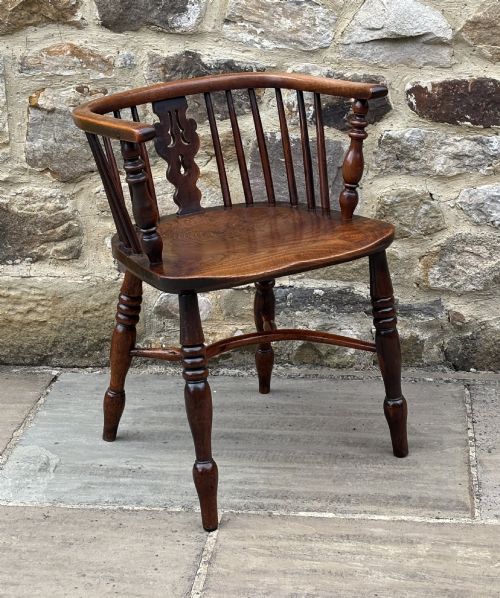
A turned timber armchair brings sturdy vernacular seating into modern interiors, drawing on centuries of regional woodworking traditions. When buyers search for a turned timber armchair, they encounter heavy wooden frames shaped by the lathe rather than smooth urban joinery.
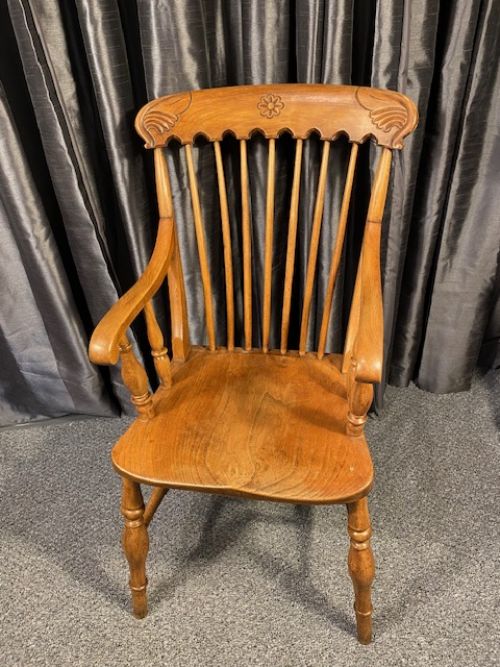
The selection here ranges from nineteenth century kitchen chairs and Windsor variants to twentieth century ladderbacks and rocking chairs. Elm, oak, beech and ash predominate, often combined with rush or hessian seats to create durable domestic furniture.
Origin styles lean heavily toward English country and provincial interpretations, alongside occasional American colonial and French country pieces. These chairs served everyday utility in firesides, kitchens and bedrooms, prioritizing solid construction over delicate ornament.
How they were made
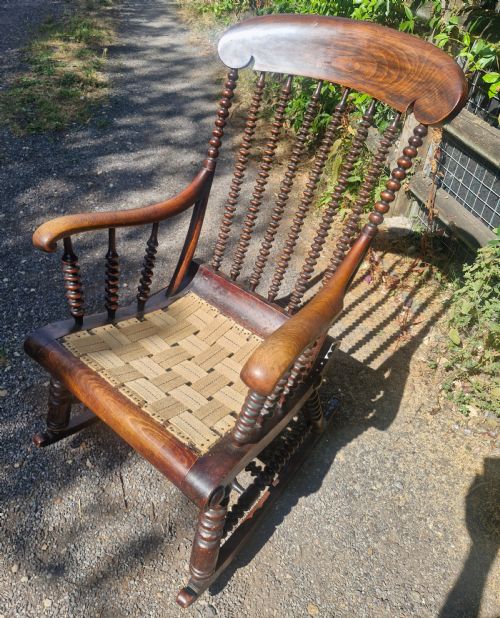
Makers shaped structural components on the lathe, producing distinctive bobbin frames, turned spindles and sturdy legs from dense hardwoods like elm, oak, beech and ash. Green woodworking techniques allowed timber to dry around joints, locking components tightly together without excessive metal fastenings.
Seats utilised solid carved timber planks, rush weaving or hessian squabs to support daily use in kitchens and parlours. Supplementary materials such as brass fittings or rush seating provided functional contrast to the primary turned wooden framework.
The inventory spans Victorian country vernacular armchairs, rocking chairs, high chairs and child-sized seating.
What varies in quality
The architectural integrity of the lathe work dictates the overall standard of each piece, distinguishing simple utility seating from master carpentry. Crisp, deep turnings on spindles and bobbin frames retain sharper definition than worn or poorly executed domestic reproductions.
Timber selection and original surface condition separate standard regional chairs from superior examples. Natural grain figuring in elm and oak seats, combined with untouched patination on the turned framing, elevates the visual presence of the chair.
Trollope and Sons
The Turned Timber Armchair Glossary
- Windsor chair
- A wooden chair built with a thick solid timber seat into which the legs and back spindles are separately bored and wedged. This design relies on turned components for strength and comfort.
- Bobbin framing
- A style of furniture turning characterised by repeated spherical or cylindrical bulges resembling wooden bobbins strung together. It is frequently seen on seventeenth century revival and nineteenth century country seating.
- Ladderback
- A chair back constructed with horizontal arched slats resembling the rungs of a ladder between two upright posts. These frames often supported rush or woven seats.
- Rush seating
- Woven chair seats made from dried marsh grasses twisted into cords and hand-lacquered across a wooden frame. This technique provides a resilient and flexible surface for daily sitting.
Turned Timber Armchair: Frequently Asked Questions
How do I clean a turned timber armchair?
Dust the turned spindles regularly with a dry soft cloth to prevent grime accumulation in the lathe grooves. Avoid abrasive liquid cleaners that strip historic patination from the wood.
Nourish dry hardwood occasionally with a traditional beeswax polish applied sparingly and buffed gently. Protect rush or hessian seating components from excess moisture to maintain their structural integrity.
Are these chairs comfortable for daily use?
Most vernacular turned chairs prioritize sturdy upright posture over deep cushioned lounging. Solid elm seats and supportive spindle backs encourage an upright seating position suitable for dining or desk work.
Adding a removable wool or cotton squab cushion can soften the wooden seat for longer sitting periods. The ergonomic proportions reflect nineteenth century domestic habits rather than modern lounge standards.
Can I mix these with modern furniture?
The honest timber construction and sculptural lathe work of a country armchair pair easily with contemporary minimalism. Their tactile wood grain adds warmth and textural contrast to sleek modern interiors.
Placing a single nineteenth century Windsor or bobbin chair at a modern desk creates an effective focal point. The neutral tones of elm, beech and oak coordinate readily with diverse interior palettes.
How do I tell nineteenth century chairs apart?
Examine the tooling marks on the underside of the seat and the wear patterns around the foot rails. Nineteenth century vernacular pieces often show hand-adzed seat bottoms and minor variations in individual turned spindles.
Compare the timber species and construction methods against regional English and American traditions. Machine-sanded uniformity usually indicates a later twentieth century manufacture date rather than an earlier workshop origin.