



Antique Spool Turned Seating
Antique spool turned seating brings distinctive repetitive turned woodwork into a room, offering tactile charm and rich period character.
Antique Spool Turned Seating
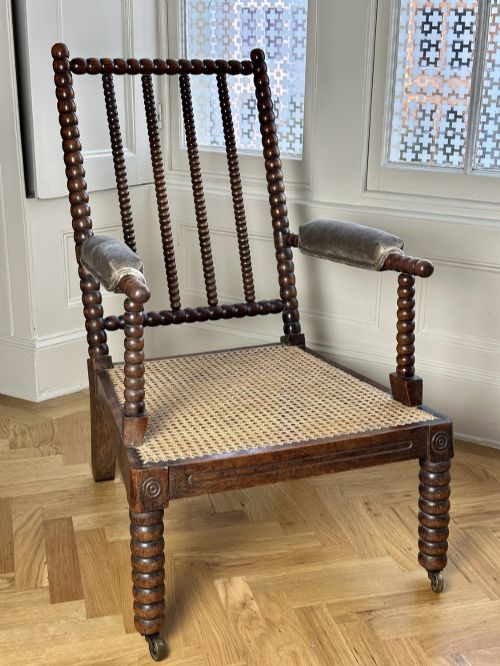
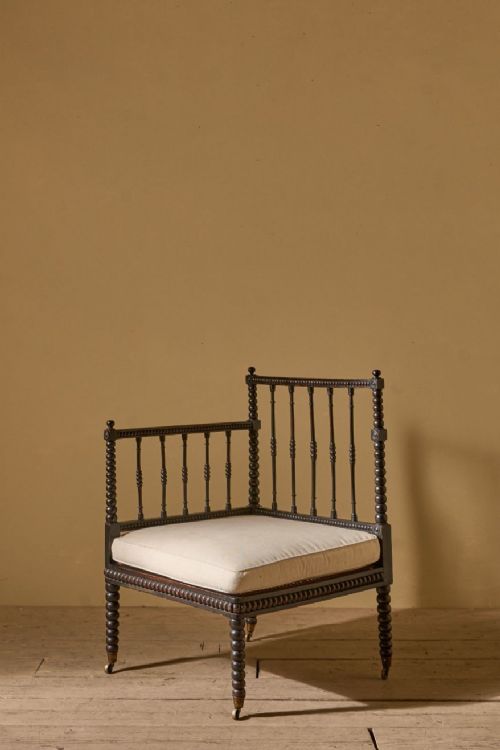
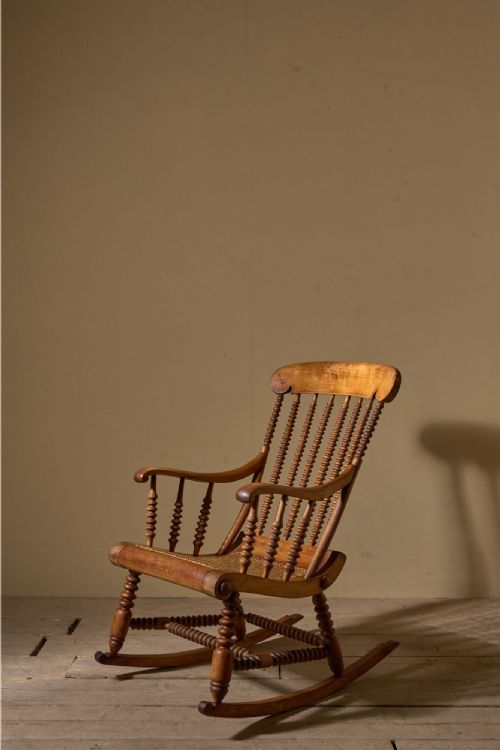
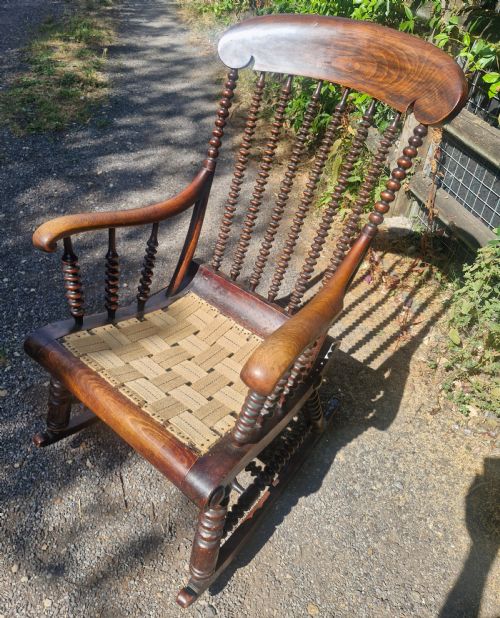
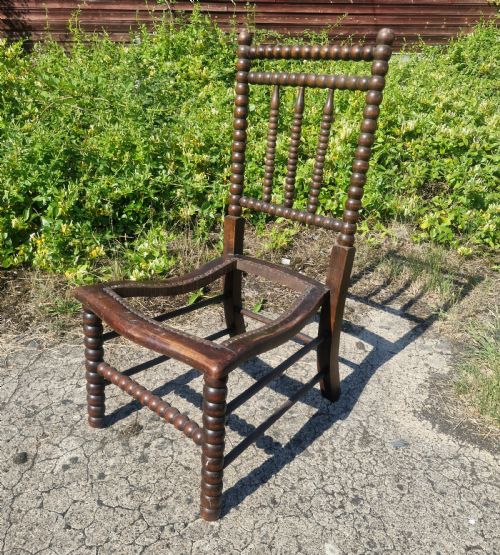
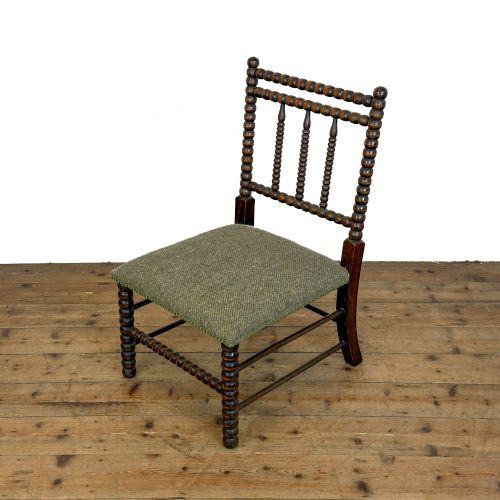
Antique spool turned seating encompasses chairs defined by characteristic cylindrical or bobbin shaped turnings along their frames. Buyers seeking antique spool turned seating will encounter various forms spanning the nineteenth century, including armchairs, rocking chairs, corner chairs, and low bedroom chairs.
The pieces appearing in these listings predominantly reflect Victorian manufacture alongside regional interpretations such as Swedish country folk art and English country styles. Armchairs and corner chairs emerge most frequently among the current options, often displaying ebonised finishes or natural hardwoods.
Makers utilised familiar domestic forms like rocking chairs and slipper chairs, adapting them with repetitive turned components. This approach transformed standard seating into decorative statement pieces suitable for period interiors.
How these chairs were made
Craftsmen shaped the characteristic spool and bobbin motifs using woodturning lathes, producing uniform cylindrical segments along the uprights, stretchers, and arms. Hardwoods such as oak, walnut, and rosewood provided the structural strength necessary for these intricate turned components.
Frames were frequently finished with ebonising to imitate more costly materials like ebony, while other examples retained natural wood grains. Seating surfaces incorporated woven cane or upholstered pads covered in fabric and velvet, secured to the turned wooden frameworks.
Antique Spool Turned Seating Retail Price Guide 2026
Typical asking prices for spool turned seating among the pieces listed under this phrase on Sellingantiques today, from the lower quarter to the upper quarter. They describe what is for sale here now, not the wider market.
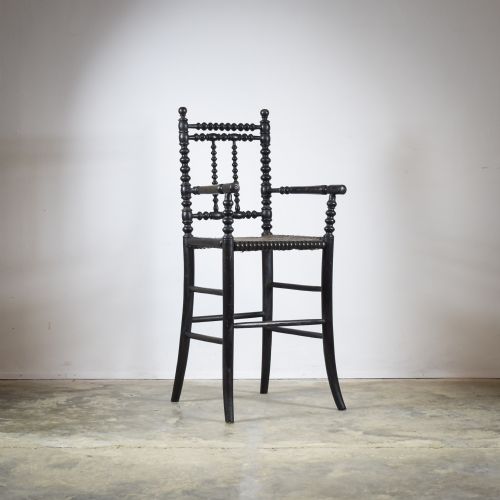
Even the smallest child's chair received the full bobbin treatment, proving that Victorian toddlers took their seating seriously.
What varies in quality
Quality in these chairs rests upon the crispness and consistency of the lathe work along the turned members. Sharply defined bobbin profiles and well proportioned framing distinguish superior examples from simpler utilitarian output.
The choice of primary timber and the survival of original surface finishes, such as ebonising or polished hardwood, influence the character of the piece. Additionally, the structural integrity of the turned joints determines how well the seating withstands daily use.
The Antique Spool Turned Seating Glossary
- Bobbin turning
- A form of woodturning characterised by a sequence of rounded swellings resembling spools or bobbins. This decorative technique creates a tactile, repetitive rhythm along chair legs, arms, and stretchers.
- Ebonised wood
- Timber treated with a dark stain or finish to simulate genuine ebony. This process was widely utilised during the nineteenth century to achieve a sleek, formal appearance.
- Corner chair
- A seating form designed to fit neatly into the corner of a room, typically featuring a curved backrest supported by multiple spindles and a square seat set on a diagonal.
- Cane seat
- A seating surface woven from peeled rattan strips in an open mesh pattern. This traditional method provides a resilient and lightweight platform for chairs.
Antique Spool Turned Seating: Frequently Asked Questions
What periods do these chairs date from?
The pieces listed originate primarily from the nineteenth century, with specific examples spanning decades such as eighteen-sixty and eighteen-ninety. Victorian production accounts for the majority of the items available.
Regional variations also appear, including Swedish country folk art and Italian revival styles. These dates reflect the popularity of bobbin turning during the Victorian era.
What materials were used for the frames?
Frames were constructed from various hardwoods, including oak, walnut, and rosewood. Ebonised wood appears frequently to achieve a dark, uniform aesthetic.
Seating surfaces incorporate woven cane, fabric, velvet, or bare wood. Brass elements occasionally appear on specific structural or decorative components.
How were corner chairs used historically?
Corner chairs were designed to maximise space in nineteenth century domestic interiors by tucking into room corners. They also served as writing chairs or occasional seating.
The distinctive shape allowed sitters to converse easily while occupying a compact footprint. Their turned frames added visual interest from every angle.
How do I care for an ebonised finish?
Maintain ebonised wooden frames by dusting regularly with a soft, dry cloth. Avoid exposure to direct sunlight and excessive moisture to protect the dark surface.
Apply occasional appropriate furniture wax if the finish appears dry. Proper care preserves the subtle sheen characteristic of nineteenth century ebonised woodwork.
What styles are represented in the collection?
The selection includes Victorian, Victorian country, and English country styles. Regional European examples such as Swedish country folk art and Italian baroque revival also feature.
These diverse styles demonstrate how different makers interpreted spool turning traditions. Each aesthetic brings a distinct regional character to the turned framework.