





Turned Stretcher Chair
A turned stretcher chair brings honest vernacular timber and sturdy joinery into a room, offering both reliable comfort and enduring historic character.
Turned Stretcher Chair
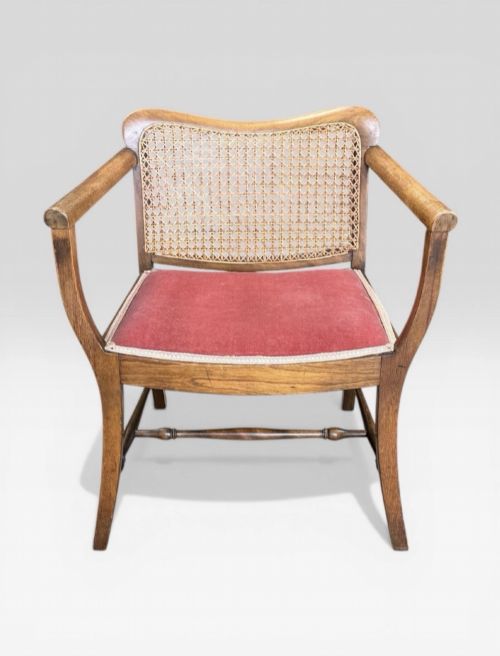
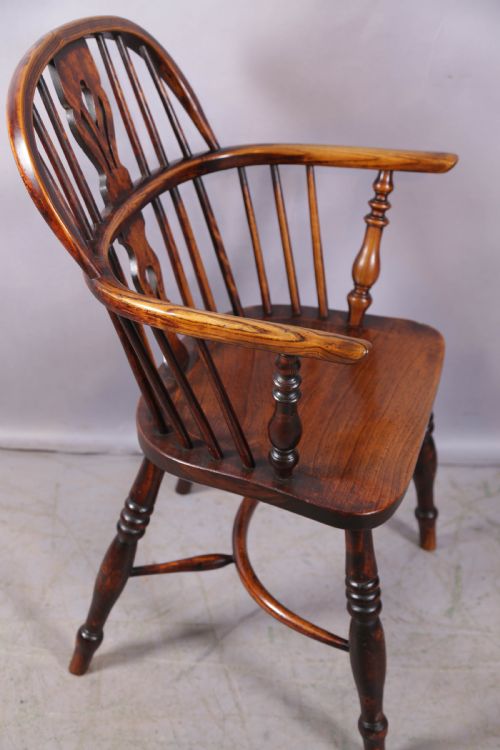
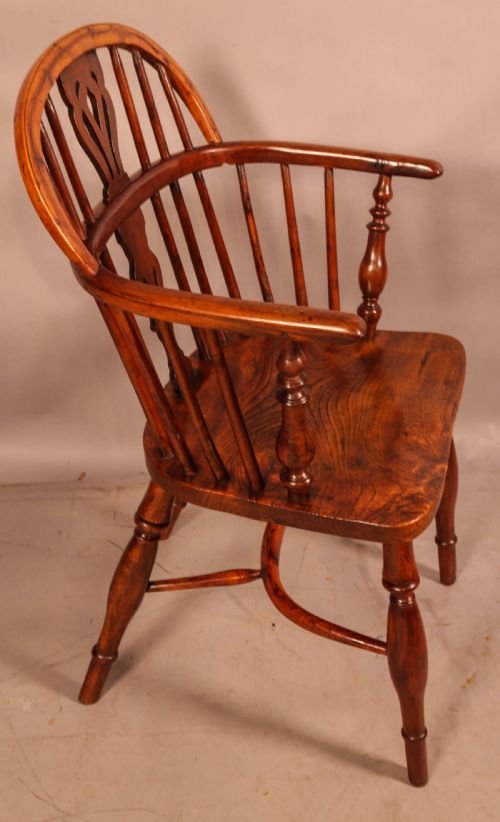
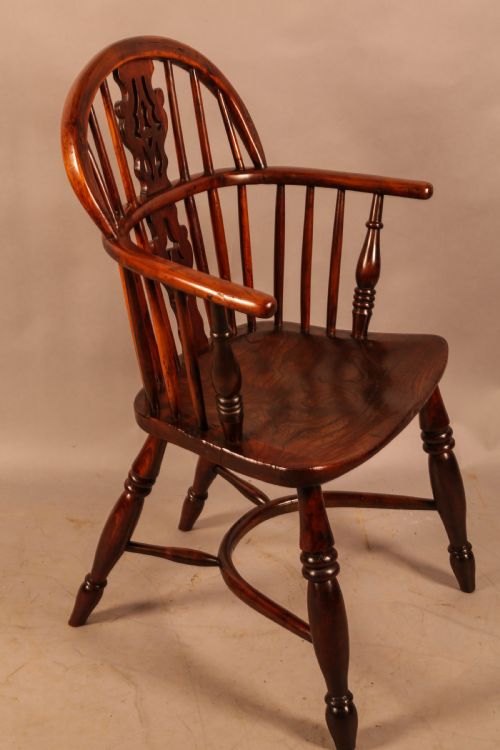
A turned stretcher chair encompasses a diverse group of seating forms defined by turned wooden underframing, most frequently appearing here as English Country and Victorian Windsor armchairs alongside kitchen and library seating.
The selection ranges from low-back Windsor armchairs and fiddle back kitchen chairs to wainscot and library desk chairs, reflecting both vernacular utility and stylistic revival tastes.
How they were made
The construction relies heavily on native hardwoods such as elm for solid seats, ash or beech for spindles and legs, and richly figured yew for traditional Windsor bows and arms.
Underframing components are shaped using a lathe to create decorative turnings, which are then pegged and jointed to lock the legs and stretchers into a rigid structural base.
What varies in quality
Quality rests upon the selection and integration of timbers, where matching grain patterns and the use of dense, seasoned woods like yew or oak elevate an ordinary frame.
The refinement of the lathe work on the stretchers and supports distinguishes master craftsmanship from simpler vernacular production, alongside the preservation of original surfaces and patination.
Rockley Maker·Fred Walker·James Shoolbred
The Turned Stretcher Chair Glossary
- Stretcher
- A horizontal wooden brace connecting the legs of a chair to provide structural rigidity. These often feature decorative lathe turnings in vernacular furniture.
- Windsor chair
- A chair built with a solid wooden seat into which the back sticks and legs are bored directly. They frequently incorporate shaped saddles and bentwood bows.
- Wainscot chair
- An early heavy wooden armchair constructed of panelled oak, typical of the seventeenth century. They represent some of the earliest joined seating forms.
- Bergere
- An enclosed upholstered armchair with a cane or wicker panelled back and sides. Many Victorian examples incorporate turned wooden supports.
- Carolean
- A seventeenth-century stylistic period associated with the reign of Charles II, known for ornate scrolling joinery and turned woodwork.
Turned Stretcher Chair: Frequently Asked Questions
How do I date an old wooden chair?
Dating relies on examining the joinery methods, tool marks left during production, and the specific wood species utilised.
Earlier pieces often feature pegged joints and native hardwoods like oak, whereas later nineteenth-century examples display machine-assisted turning and factory stamps.
Were these chairs used for dining?
Many turned stretcher chairs served everyday functional roles in kitchens, libraries, and country homes.
Armchairs were typically used at desks or by the hearth, while side and fiddle-back chairs accompanied dining tables.
How should I care for antique timber?
Antique timber benefits from stable indoor humidity and protection from direct sunlight to prevent wood shrinkage and splitting.
Applying a traditional beeswax polish occasionally helps nourish the surface and preserve the historic patination.