


Cane Back Open Armchair
A cane back open armchair brings lightness and texture to a room, offering open woodwork alongside woven panels.
Cane Back Open Armchair
A cane back open armchair combines a wooden frame with a woven cane backrest, designed for versatile seating in libraries, studies and drawing rooms. These seats appear across multiple periods, ranging from eighteenth-century examples to later revival pieces.
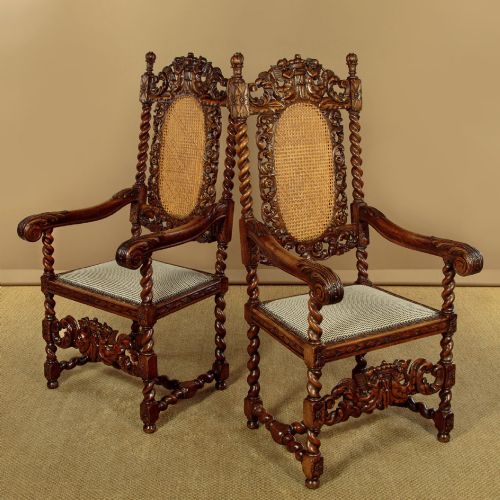
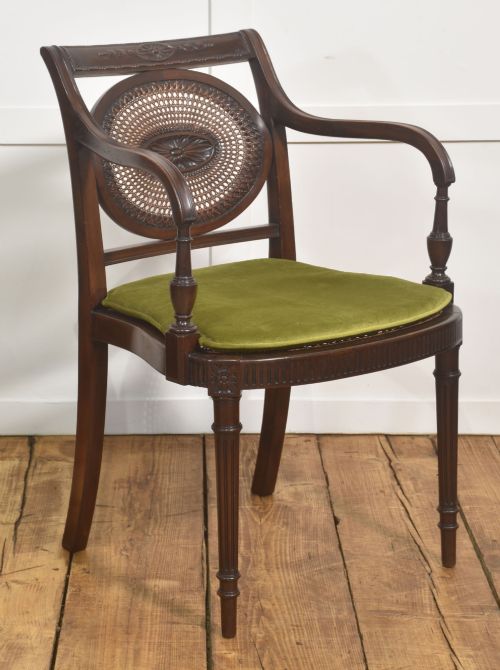
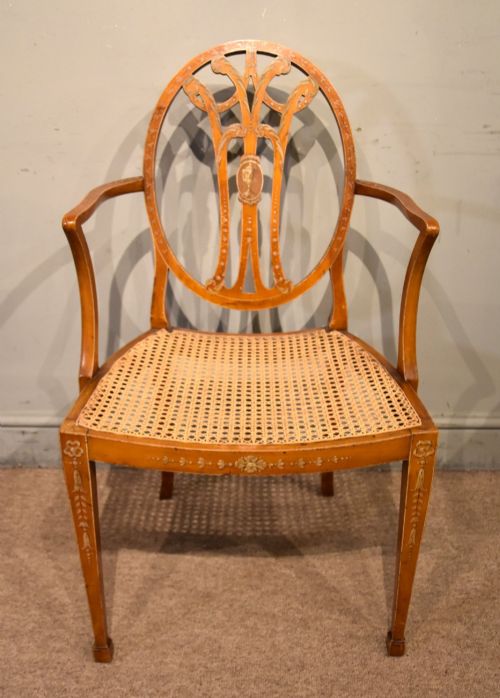
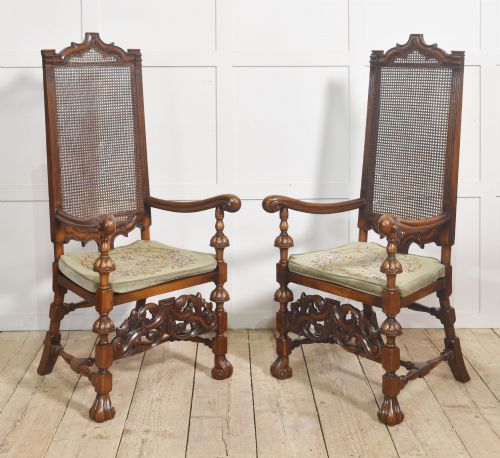
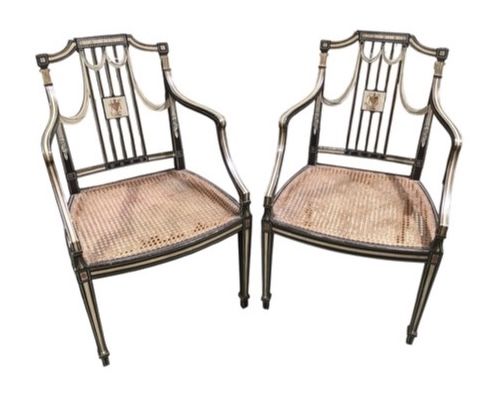
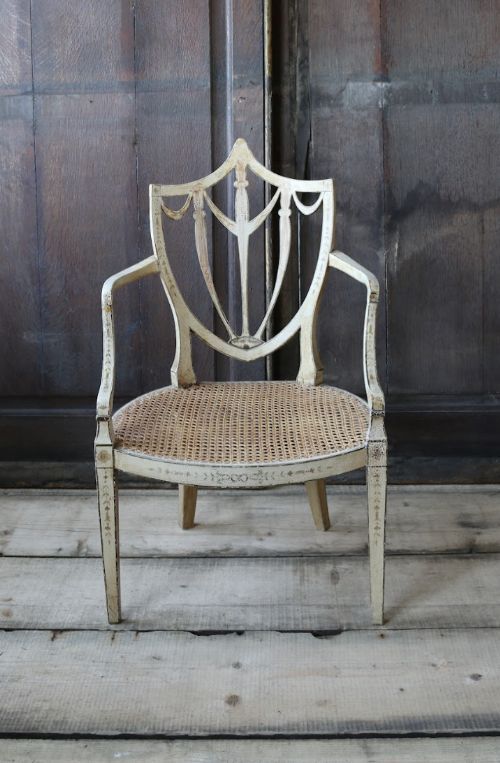
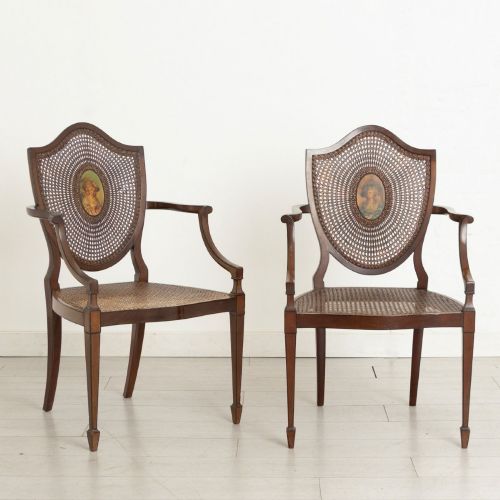
The versions most commonly met on this page span the nineteenth and early twentieth centuries, drawing on earlier styles such as Sheraton, Regency and Carolean. Makers often worked in walnut, mahogany or painted woods, pairing open arms with upholstered seats or loose cushions.
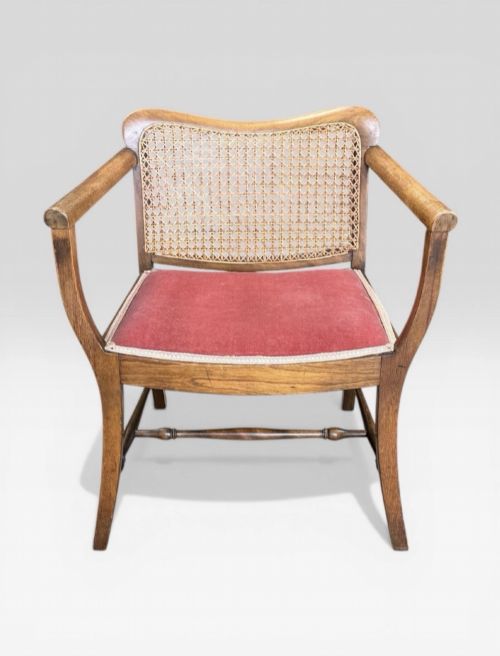
Forms vary from shield-back and medallion shapes to larger library seating and child-sized bergere chairs. Buyers encounter both single chairs and matched pairs, reflecting the wide range of domestic seating produced across these eras.
How they were made
Frames are constructed from hardwoods such as walnut, mahogany, oak and satinwood, frequently shaped through carving, turning or painting. Some pieces feature japanned finishes, simulated rosewood or ebony details.
Backrests incorporate woven cane panels, sometimes complemented by cane seats or upholstered squab cushions covered in velvet and fabric. Brass accents occasionally appear on nineteenth-century examples to complete the construction.
The selection includes eighteenth-century designs alongside nineteenth-century revival pieces.
What varies in quality
The refinement of the carved woodwork and the tightness of the cane weaving distinguish finer examples from standard production. Crisp detailing on revival frames and the selection of figured timbers mark out pieces made with greater care.
Proportion and structural balance dictate the overall presence of the chair, with well-balanced arm supports and carefully joined frames creating a more enduring piece.
James Shoolbred
The Cane Back Open Armchair Glossary
- Bergere
- An enclosed or open armchair with a woven cane back and sides, usually featuring a upholstered loose seat cushion. These seats gained popularity in eighteenth-century France and returned in later revival pieces.
- Carolean
- A style relating to the reign of King Charles II, characterised by rich carving, scrolling woodwork and turned supports. Revival versions appeared frequently in the nineteenth century.
- Japanned
- European furniture finished with decorative lacquering in imitation of East Asian export wares. This technique often employs raised motifs and gilt decoration upon a dark ground.
- Shield-back
- A chair back shaped like a heraldic shield, popularised by eighteenth-century designers such as Sheraton and Hepplewhite. The form offers a slender frame well-suited to decorative carving.
- Medallion
- A circular or oval padded panel set within the wooden frame of a chair back. This French neoclassical form became popular during the reign of Louis XVI.
Cane Back Open Armchair: Frequently Asked Questions
What is a cane back open armchair?
A cane back open armchair is a wooden seat featuring an open framework and a woven cane backrest. These chairs combine rigid timber construction with the flexible texture of woven plant materials.
They appear in various revival styles spanning several centuries, serving as both decorative and functional seating for domestic interiors.
How were these armchairs used historically?
Historically, these chairs served as comfortable seating in libraries, drawing rooms and private chambers. Their open arms and lighter frames allowed them to be moved easily around reception rooms.
Many included squab cushions or upholstered seats to provide additional comfort during extended periods of reading or conversation.
Where should I place one at home?
A cane back open armchair works well in a study, sitting room or bedroom where its open woodwork prevents the furniture arrangement from feeling heavy. Pairing a single chair with a small side table creates an inviting reading corner.
Because the woven back allows light to pass through, these chairs suit spaces where maintaining a sense of openness is important.
How do I date a cane back chair?
Dating relies on examining the timber species, the style of the carved ornament, and the construction methods used in the frame. Details such as Sheraton or Regency proportions point toward specific nineteenth-century revival movements or earlier Georgian origins.
The tightness and pattern of the cane work, alongside any painted or japanned finishes, also provide clues to the period of manufacture.