
Red Velvet Seat Chair
A red velvet seat chair brings tactile warmth and period character to a room, ranging from dining sets to solo armchairs.
Red Velvet Seat Chair
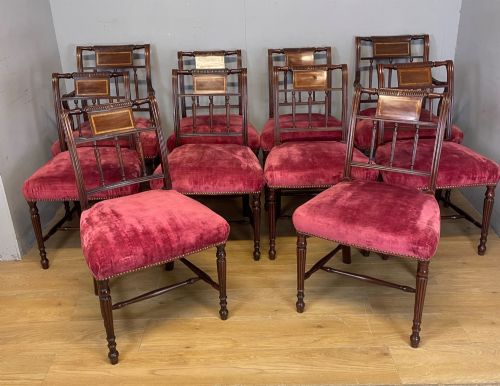
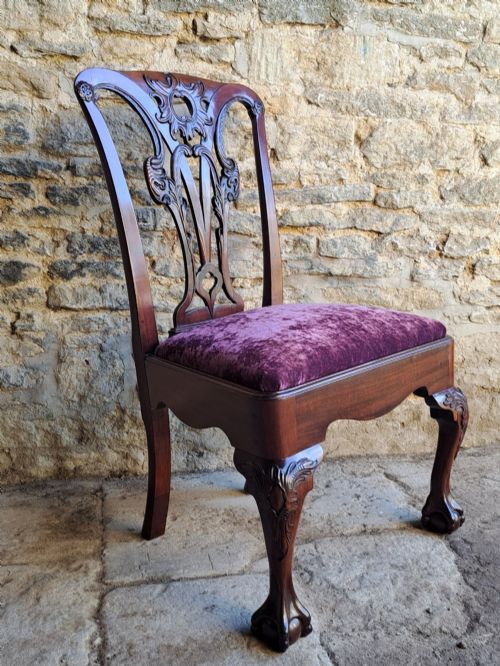
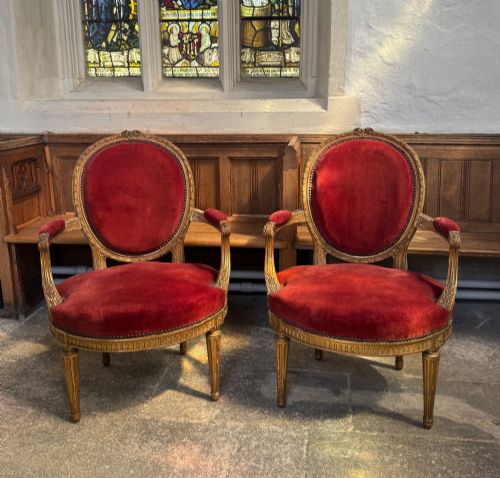
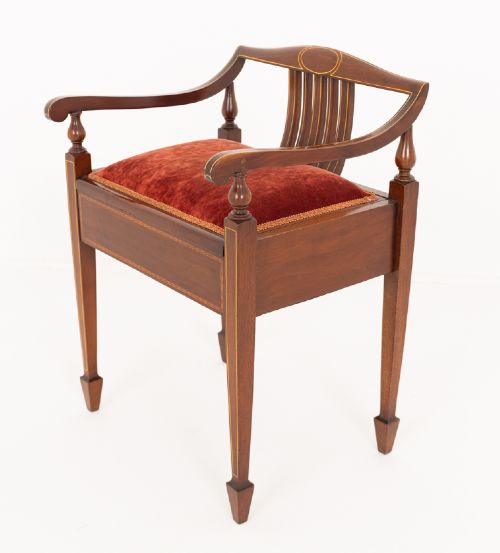
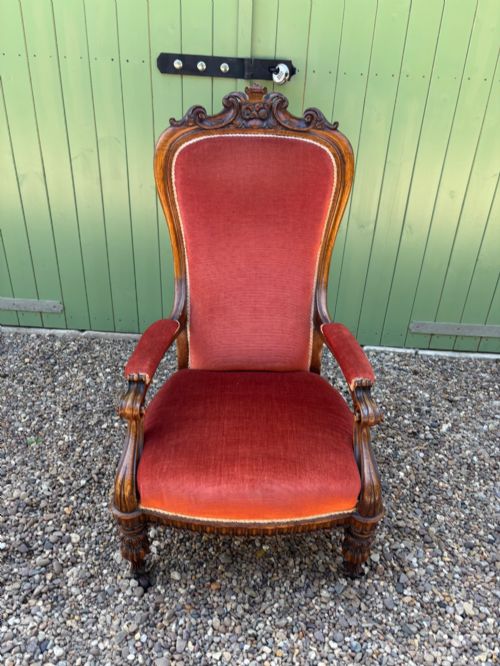
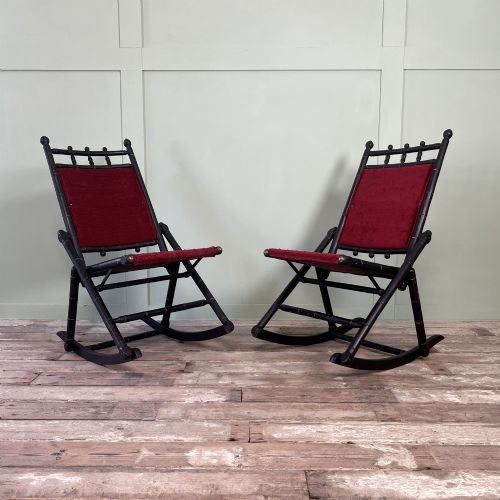
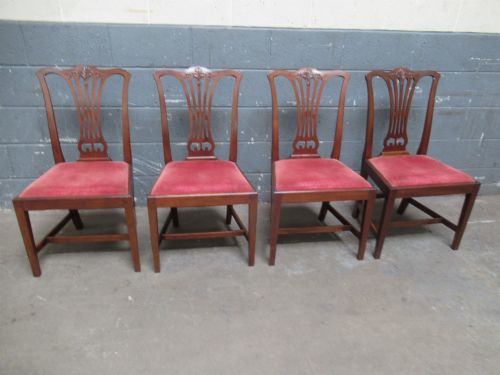
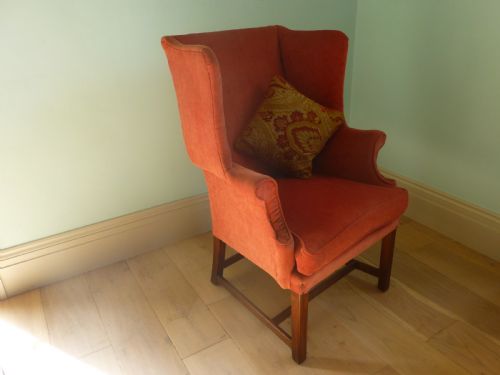
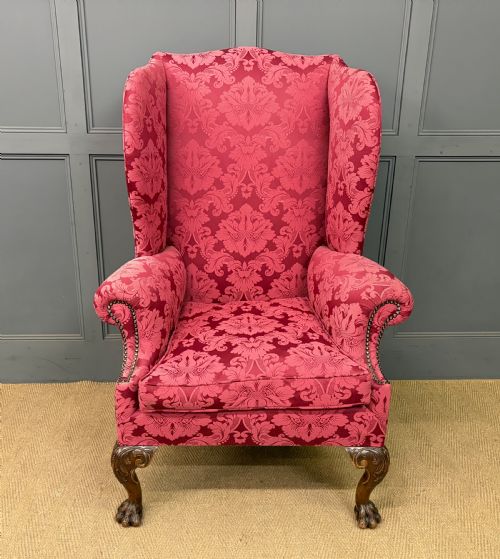
A red velvet seat chair spans multiple centuries and forms, appearing as dining chairs, armchairs, piano stools, and side chairs across the evidence. Buyers seeking this phrase encounter seating shaped by Georgian, Victorian, Regency, and Edwardian hands, alongside Louis XVI and Aesthetic Movement designs.
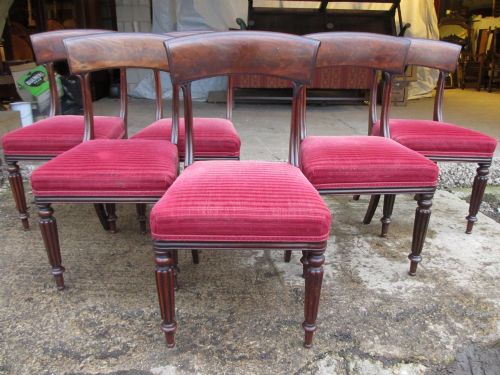
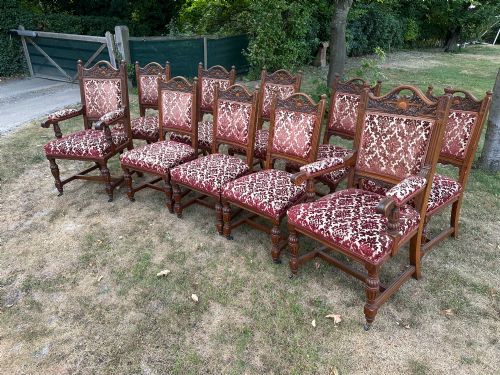
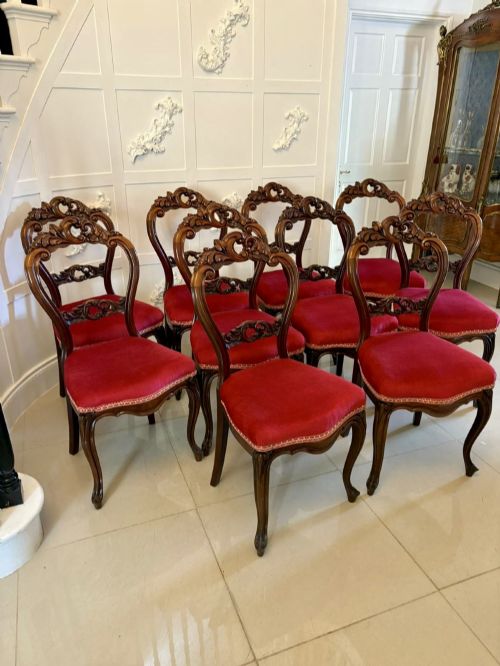
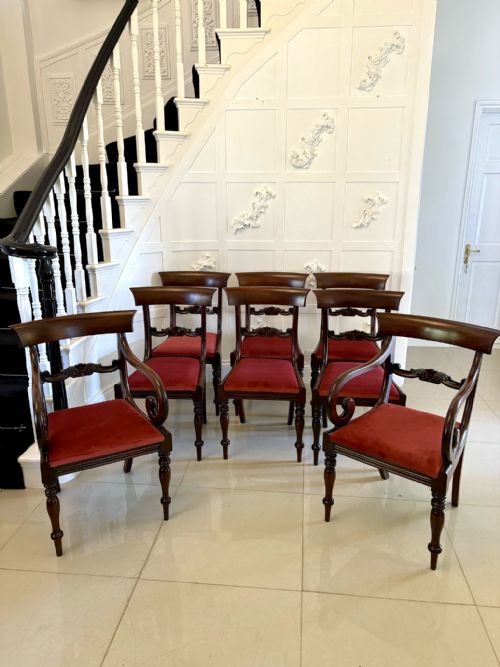
The most frequent iterations on this page are mahogany and walnut dining sets from the nineteenth century, often arranged in groups of six, eight, or ten. Alongside these dining suites sit occasional armchairs, wingbacks, and swivel piano stools upholstered in rich pile fabrics.
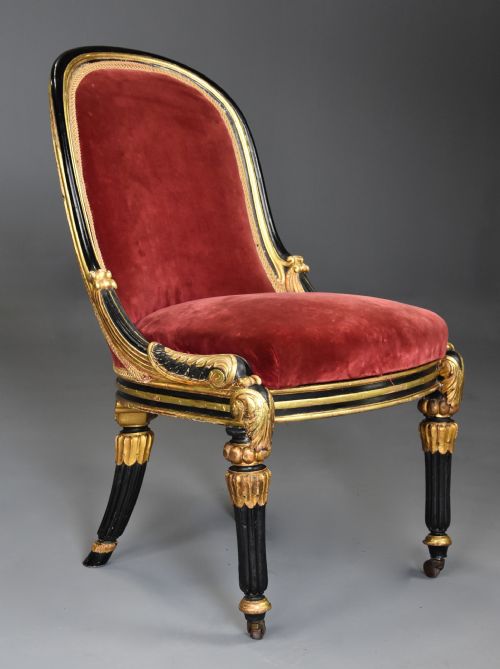
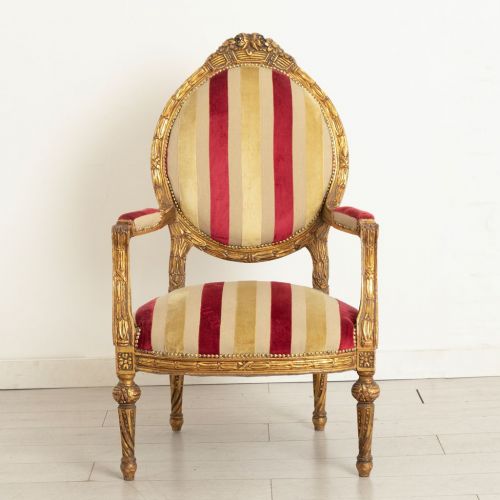
Origins stretch from English workshops to French giltwood salons, Irish red walnut pieces from the seventeen-fifties, and Burmese padouk harpist chairs. Each piece reflects the domestic priorities of its era, whether for formal dining, parlour music, or library desk work.
Materials and Technique
Timbers dominate the construction, with dense hardwoods such as mahogany, walnut, oak, and rosewood forming the structural frames. Cabinet makers utilised these durable woods for both turned legs and intricately carved back splats, whilst specialist gilders applied gold leaf to giltwood and ebonised frames.
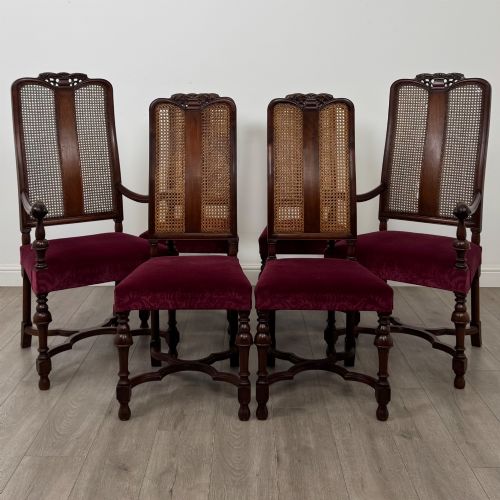
Upholstery relies on supportive internal webbing, springs, or traditional stuffing to carry the weight before the final velvet or fabric top layer is secured. Cane work also appears on specific frames like bergere seats, offering a lighter woven alternative to solid upholstery.
Musicians once relied on adjustable piano stools with revolving rosewood tops to find their ideal pitch before tackling the keys.
Judging the Workmanship
The distinction between standard commercial seating and exceptional cabinet work lies in the depth of timber carving and the integrity of the joinery. Superior examples display crisp hand-carved details on the rails and crests rather than shallow or purely cast ornamentation.
Proportion and wood selection dictate the standing of a piece, with figured grain mahogany or matched walnut veneers commanding attention. The weight and tightness of the frame assembly determine whether a chair survives centuries of daily use without looseness in the joints.
James Shoolbred·Gillows·Holland And Sons
The Red Velvet Seat Chair Glossary
- Fauteuil
- An open-arm armchair originating in France, typically featuring an exposed wooden frame with upholstered arm pads. These chairs reflect courtly elegance from periods such as Louis XVI.
- Bergere
- A closed armchair with stuffed upholstery on a solid back and sides, frequently incorporating woven cane panels into the wooden frame. This design offers a lighter visual weight than traditional upholstered wingbacks.
- Giltwood
- Timber that has been coated with a thin layer of gold leaf or gold paint for decorative effect. It appears predominantly on eighteenth and nineteenth-century formal salon furniture.
- Padouk
- A heavy tropical hardwood valued for its durability and deep reddish-brown tone. Makers utilised this dense material for specialised forms such as harpist chairs.
- Ebonised
- Timber treated with a dark stain or finish to imitate ebony. This technique gained particular popularity during the Regency and Aesthetic Movement periods.
Red Velvet Seat Chair: Frequently Asked Questions
How do I clean a velvet seat?
Velvet requires gentle brushing with the grain to remove surface dust and preserve the pile direction. Avoid harsh rubbing or excessive moisture, which can crush the delicate fibres.
Professional textile cleaning is recommended for deeper stains or older antique upholstery. Keeping the chair away from direct sunlight protects the red dye from fading over time.
Are dining chair sets sturdy enough for daily use?
Nineteenth-century hardwood dining chairs were built using traditional mortise and tenon joinery designed for generations of heavy domestic service. Mahogany and walnut frames provide exceptional structural rigidity.
Regularly checking the joints for any natural loosening ensures the chairs remain safe for daily seating. Most antique dining chairs benefit from occasional professional tightening rather than modern adhesive fixes.
What is the difference between an armchair and a side chair?
Armchairs feature structural armrests designed for relaxed seating in studies, drawing rooms, or at the head of a dining table. They offer a wider stance and a more enclosed posture.
Side chairs are built without arms to allow multiple seats to fit snugly around a dining table or line a hallway wall. They share the same decorative wood and upholstery styles as their armed counterparts.
How do I identify a Regency period chair?
Regency seating draws inspiration from classical Greek and Roman forms, often displaying sabre legs, reeded frames, and brass inlay. Ebonised finishes and gilt highlights frequently define this aesthetic.
Proportions during this era tended to be clean and restrained compared to the heavier carvings of the later Victorian decades. Look for horizontal bar backs and distinctive curved top rails.