
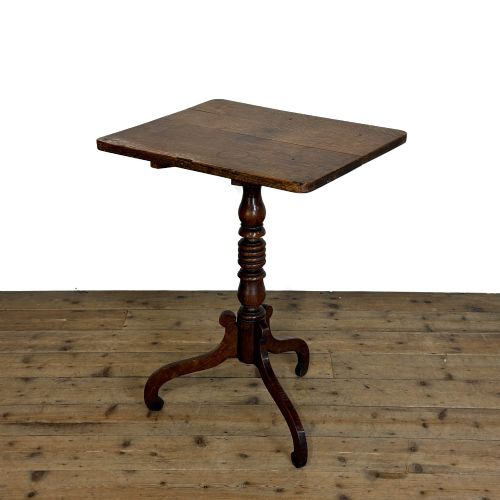

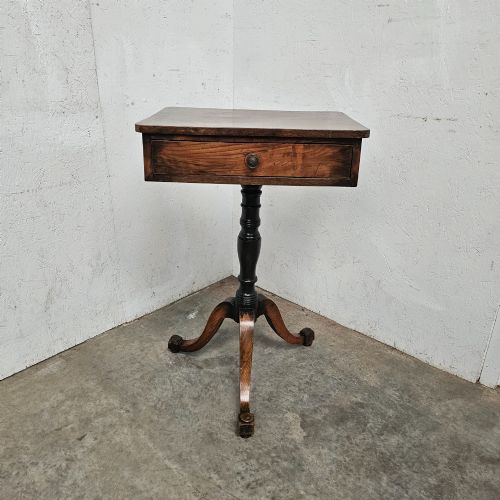
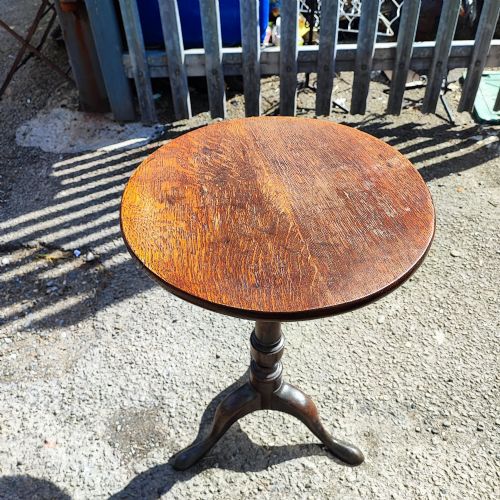
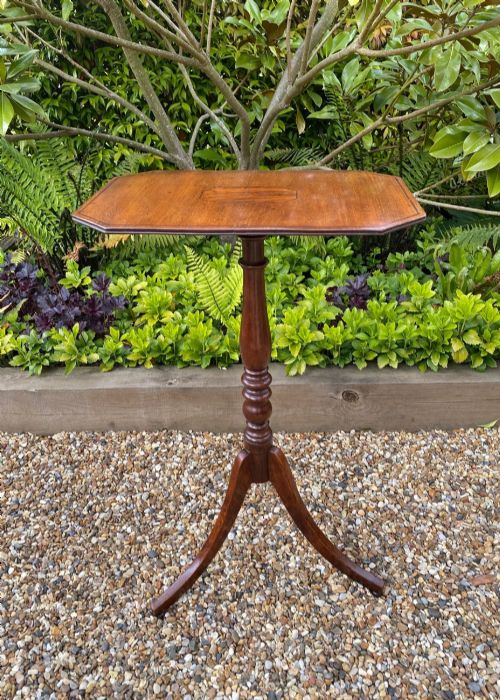
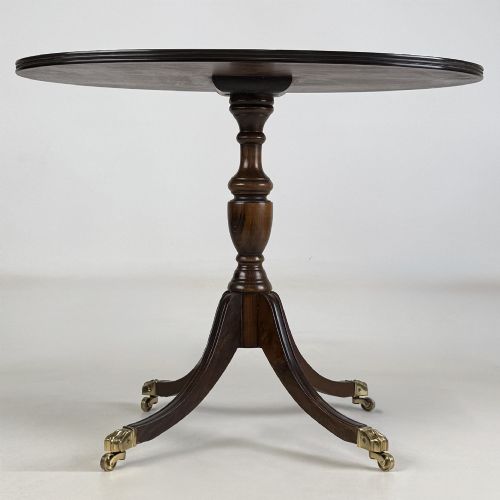
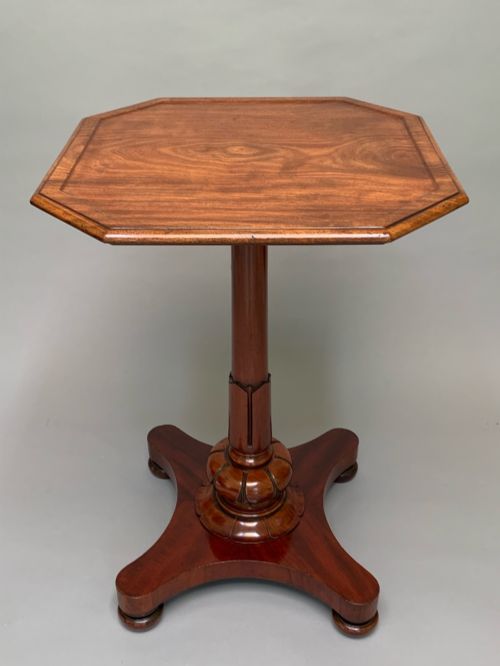
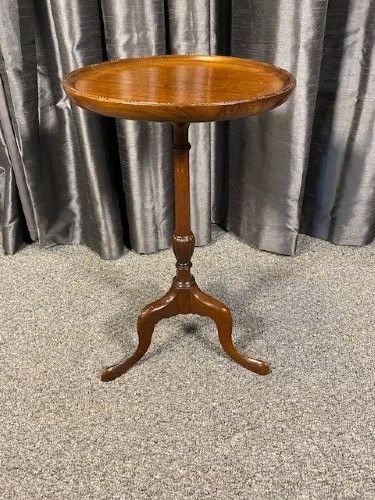
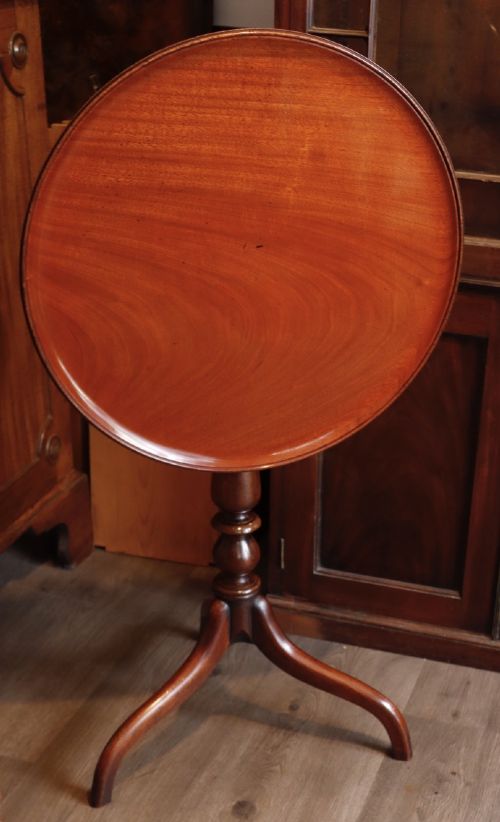
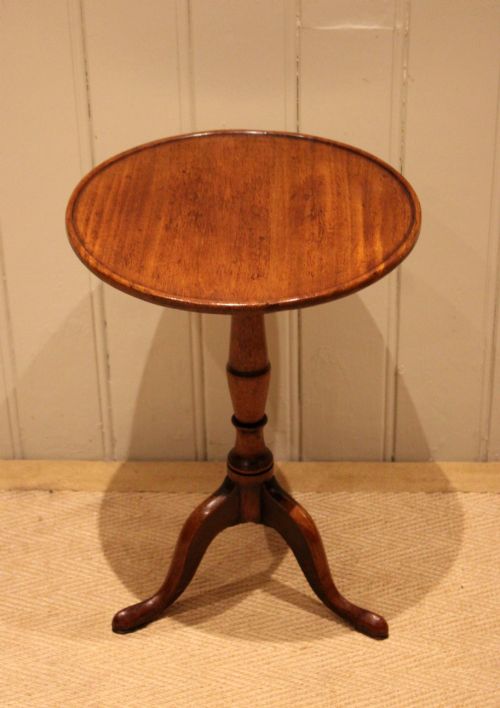
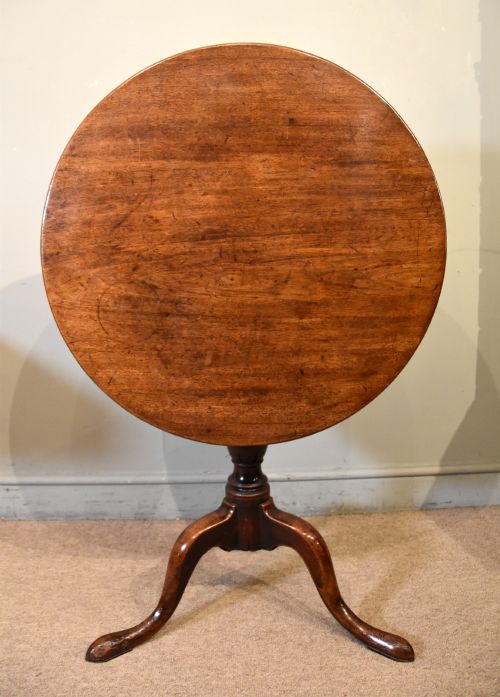
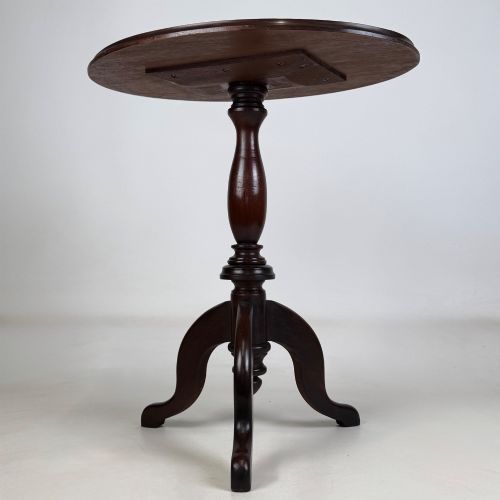
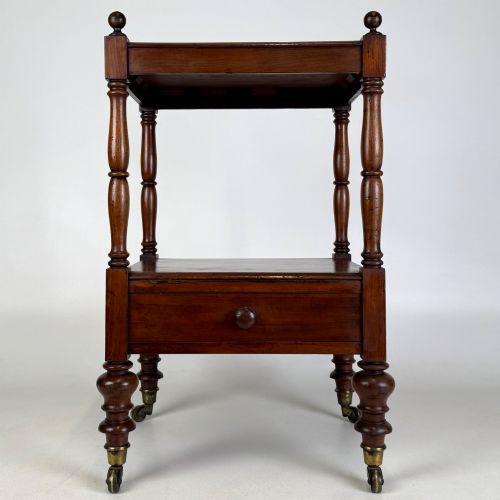
Turned Pedestal Side Table
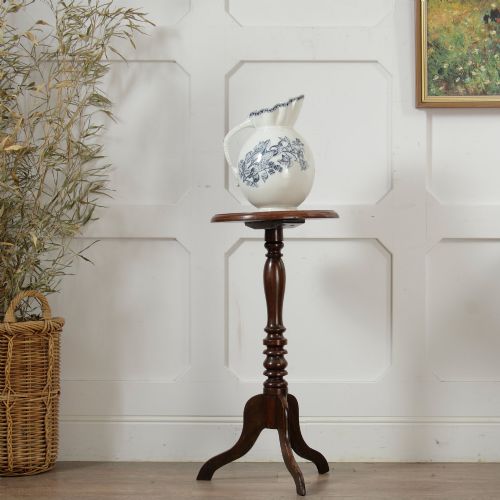
A turned pedestal side table offers a sturdy central pillar and compact surface space, making it a versatile choice for any room.
Turned Pedestal Side Table
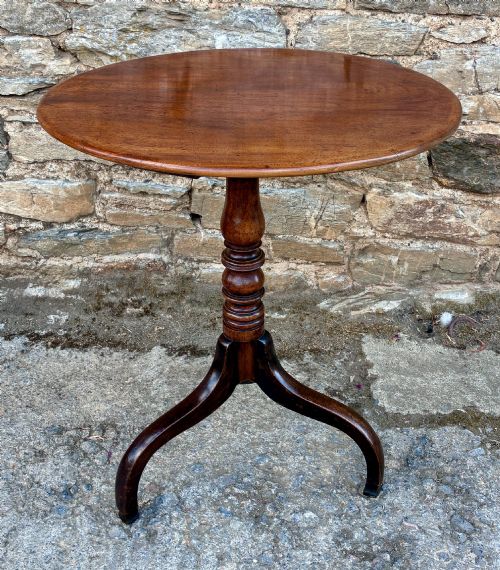
A turned pedestal side table is a compact item raised on a central column, frequently taking the form of a wine table, occasional table, or tripod table. These pieces emerge across Georgian, Regency, Victorian, and Edwardian periods, serving practical domestic uses.
The most common versions on this page span the eighteenth and nineteenth centuries, constructed primarily from mahogany and oak. Many examples feature tilt-top mechanisms or tripod legs designed for easy movement and storage around the home.
How they were made
Cabinetmakers used solid timbers like mahogany, oak, walnut, and rosewood, often pairing them with boxwood stringing, paint, or leather tops. Turning lathes shaped the central pillars into smooth or bobbin profiles to support the top.
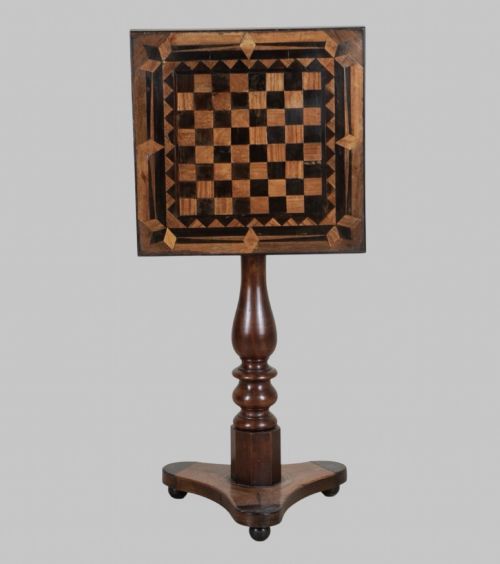
Joinery methods included tripod leg mountings, birdcage mechanisms for tilting surfaces, and pegged joints. Finer examples incorporated intricate inlay work or penwork decoration on the circular or rectangular table surfaces.
Turned Pedestal Side Table Retail Price Guide 2026
Typical asking prices for turned pedestal side table among the pieces listed under this phrase on Sellingantiques today, from the lower quarter to the upper quarter. They describe what is for sale here now, not the wider market.
Materials recorded across the inventory include mahogany, oak, walnut, rosewood, and painted finishes.
What varies in quality
The refinement of the timber and the crispness of the turned pillar distinguish standard pieces from superior examples. Finely figured mahogany or burr oak combined with precise leg joinery indicate careful workshop production.
Mechanical elements such as tilt-top catches and birdcage pivots show varying degrees of ingenuity and wear. Original surfaces and subtle decorative details like satinwood inlay elevate the overall standard of construction.
Gillows·Druce & Co London·Shoolbred
The Turned Pedestal Side Table Glossary
- Tripod table
- A small occasional table supported by three legs radiating from a central turned pedestal. This form gained popularity during the eighteenth century for serving tea or wine.
- Tilt-top action
- A mechanical hinge system beneath the table surface allowing the top to pivot vertically. This enabled the table to stand flat against a wall when not in use.
- Birdcage
- A revolving wooden framework beneath a tilt-top table that allows the top to both rotate and tilt. It represents a sophisticated piece of internal joinery.
- Gueridon
- A small ornamental stand or table, often round and supported by a central pillar. The term originates from French furniture design.
- Penwork
- A decorative technique using fine ink lines on wood to create intricate patterns or pictorial designs. It appears on select tables alongside inlay and paint.
Turned Pedestal Side Table: Frequently Asked Questions
What was a turned pedestal side table used for?
These tables served flexible domestic functions, acting as wine tables, candle stands, or lamp tables in reception rooms.
Their compact footprints allowed them to be easily repositioned beside seating or against walls when not in use.
How do I identify a Georgian tripod table?
Georgian examples typically feature rich mahogany or oak timbers, elegant cabriole or straight tripod legs, and hand-turned central columns.
Many incorporate tilt-top mechanisms or birdcage supports characteristic of mid to late eighteenth-century craftsmanship.
Where should I place a pedestal table at home?
Their small surface areas and central pillars make them ideal as bedside tables, lamp stands, or corner display surfaces.
They fit comfortably beside armchairs or sofas without obstructing walking routes in smaller rooms.