
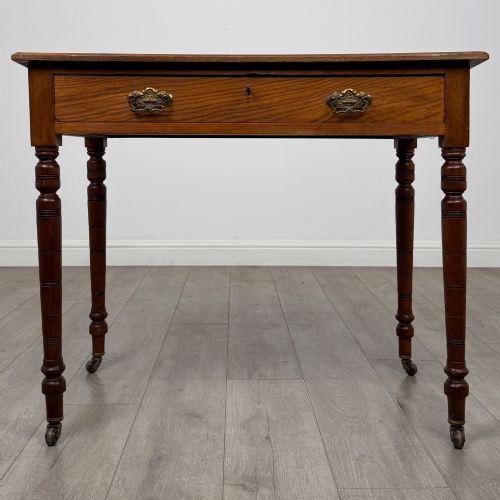
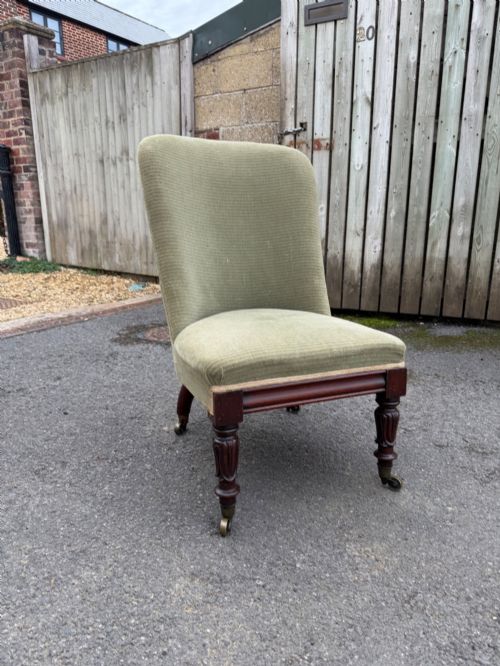
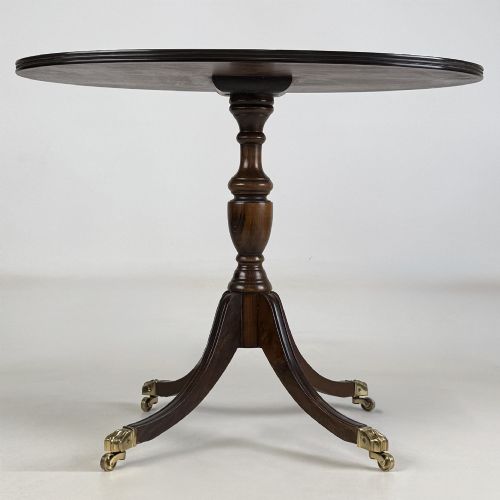
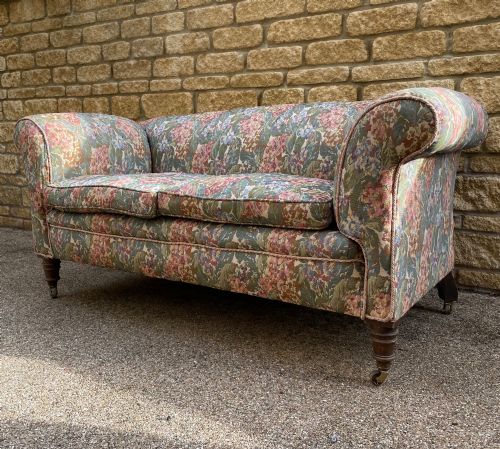
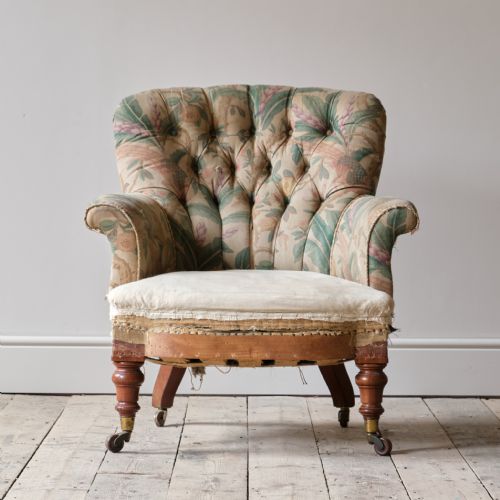
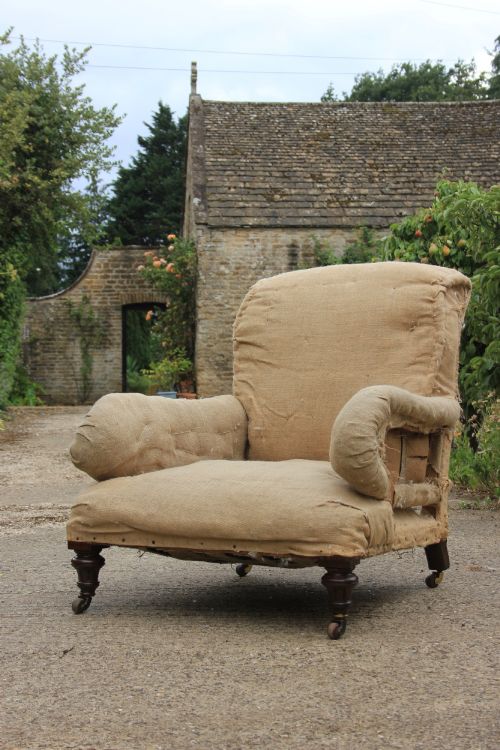
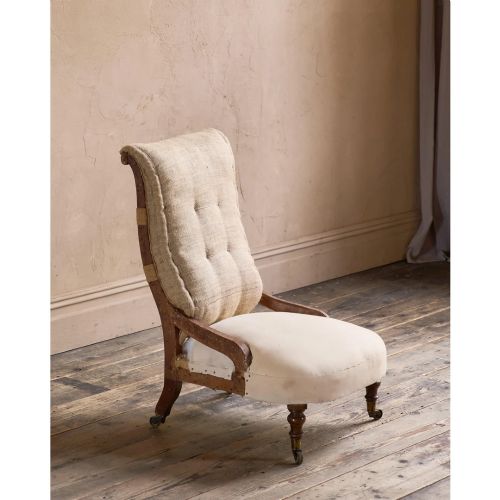
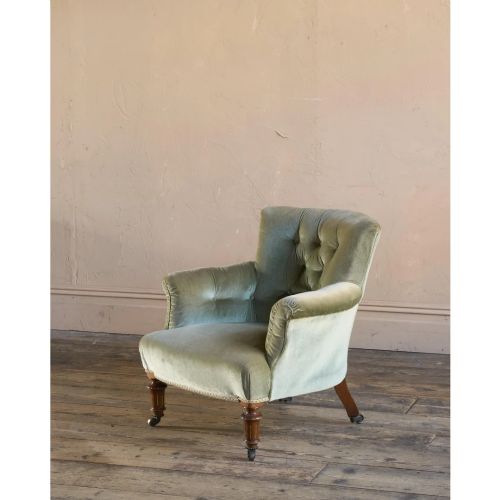
Turned Legs Brass Castors
Turned legs brass castors describe the structural underpinnings of seating and tables from the Georgian period through to the Edwardian era, prized for combining mobility with sturdy timber frames.
Turned Legs Brass Castors
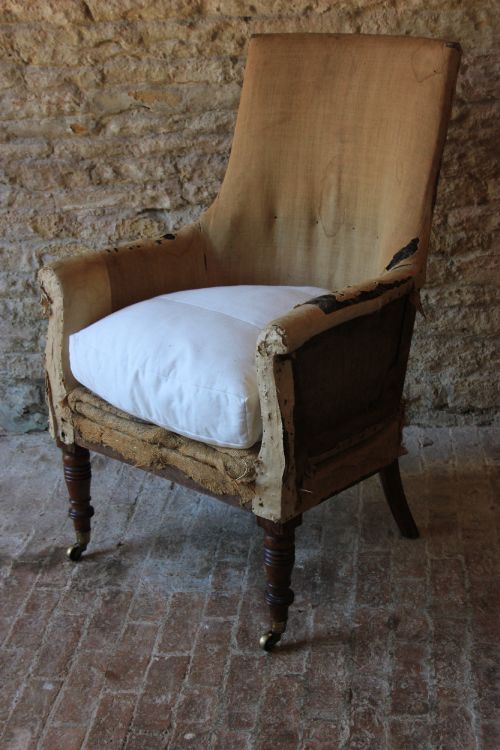
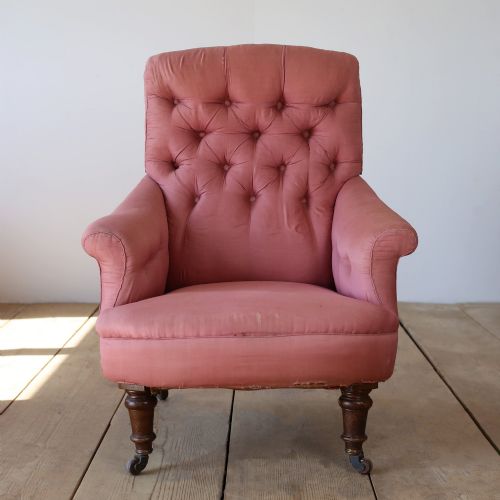
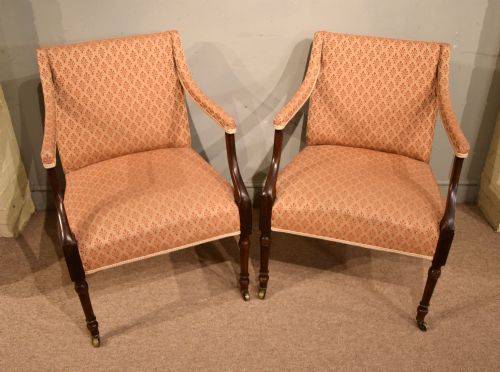
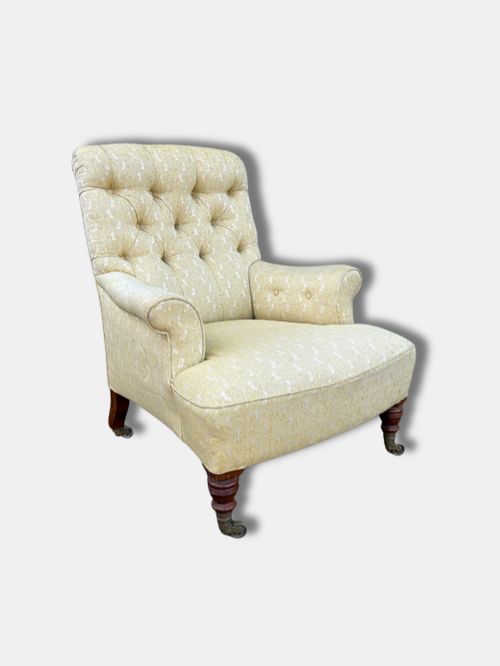
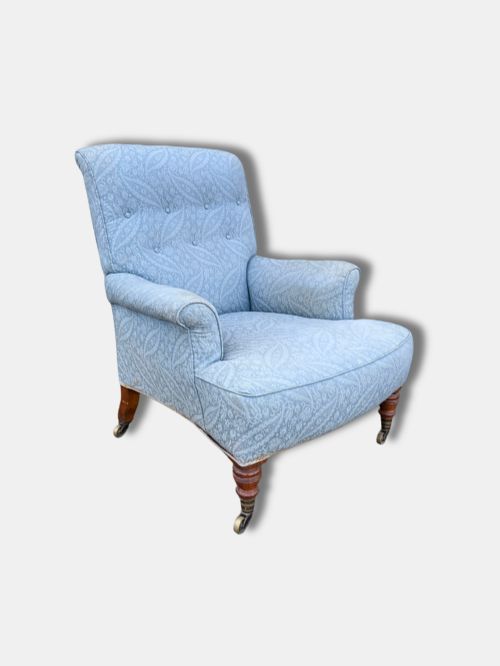
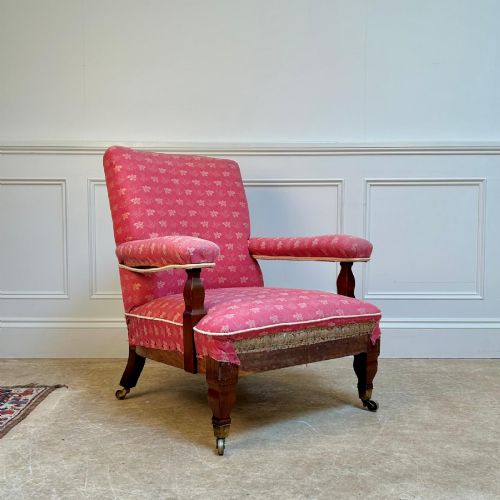
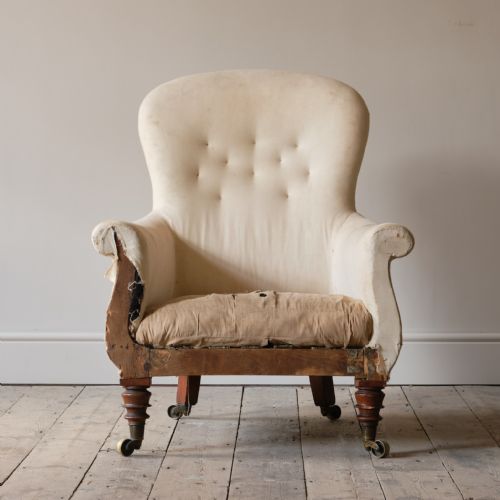
When you search for turned legs brass castors, you find a range of heavy seating and tables originating from the Georgian, Regency, William IV, and Victorian periods. These items include library armchairs, country house armchairs, chaise longues, and various small tables.
The most common items meeting this description on this page are deep-seated armchairs and sofas upholstered in fabric, hessian, calico, or velvet. These pieces rely on solid timber supports to bear the weight of heavy stuffing and springs.
How they were made
Makers shaped the supports from hardwoods like mahogany, oak, and walnut, turning them on a lathe to create cylindrical or reeded profiles. These timber legs were then fitted with cast metal fittings at the base.
Foundry-cast components made of brass were secured to the bottom of the turned wooden posts, often incorporating a small rolling wheel to allow heavy furniture to move smoothly across floor coverings.
Even the lowest footstools demanded rolling brass feet to glide across nineteenth-century carpets.
What varies in quality
The sophistication of the timber turning and the weight of the metal components set the standard for each piece. Heavier gauge metalwork on the terminals and crisper detailing in the lathe work indicate higher production values.
The integrity of the underlying frame and the quality of the timber selection determine the overall substance of the piece. Better examples maintain tight joints and retain their original supporting hardware without replacement.
Howard and Sons·Morris and Co·Gillows·Hampton and Sons·Holland and Sons·William Birch
The Turned Legs Brass Castors Glossary
- Castor
- A small wheel fitted to the base of a leg to allow easy movement of heavy furniture. These wheels were typically held in a metal cup secured to the timber.
- Reeded
- A decorative moulding consisting of parallel convex strips resembling bundled reeds. This technique was frequently applied to the upright supports of Regency furniture.
- Mahogany
- A durable tropical hardwood widely utilised for high-status furniture frames during the Georgian and Victorian eras. Its dense grain made it ideal for detailed turning.
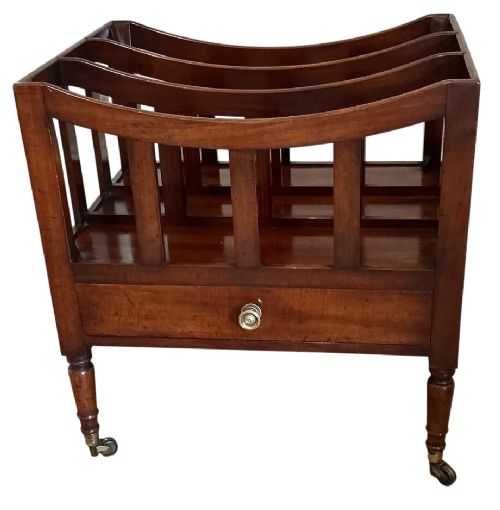
- Canterbury
- A low freestanding rack with divisions, used for holding sheet music or books. These pieces often stood on short turned supports with rolling terminals.
- Chesterfield
- A large upholstered sofa with deep buttoning and rolled arms of equal height to the back. These heavy forms required robust undercarriages for support.
Turned Legs Brass Castors: Frequently Asked Questions
What periods do these pieces come from?
The inventory spans the Georgian, Regency, William IV, and Victorian eras, extending into Edwardian designs.
Most examples date from the nineteenth century, reflecting the heavy seating styles popular during that era.
How do I care for the metal fittings?
Keep the rolling mechanisms free from dust and carpet fibres to ensure smooth movement across floors.
Avoid harsh chemical polishes on the metal cups to preserve the natural ageing of the surface.
Are the wheels original to the furniture?
Many pieces retain their original brass fittings, though some have seen replacements over centuries of domestic use.
Examine the fit of the metal collar around the timber to judge whether the components belong together.
Which woods were used for the supports?
Makers primarily relied on mahogany, walnut, and oak for their strength and ability to hold fine lathe work.
Softer hardwoods also appear on regional pieces and later vernacular furniture.
How do I identify a library armchair?
Library armchairs feature deep seats and robust upholstered frames designed for extended reading.
They frequently stand on heavy turned supports to bear the substantial weight of the stuffed frame.