
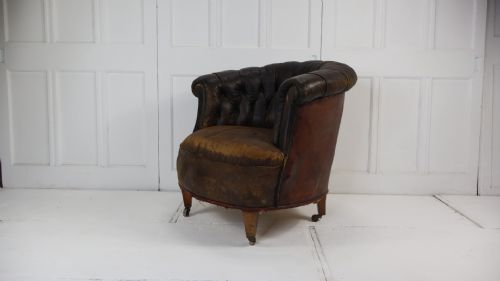
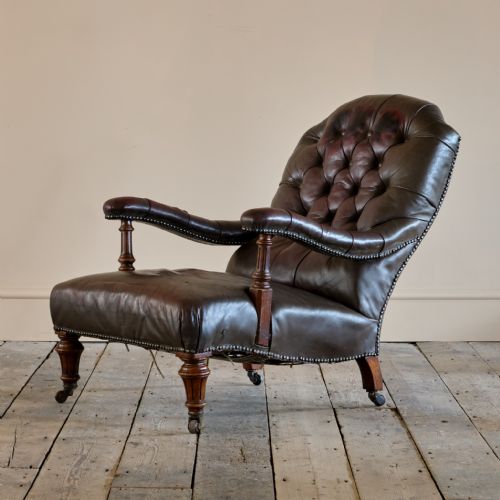
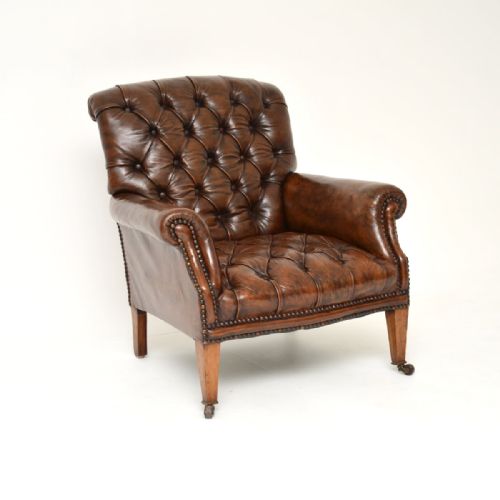


Deep Tufted Arm Chair
A deep tufted arm chair brings immediate comfort and period weight to a room through dense buttoning and generous proportions.
Deep Tufted Arm Chair
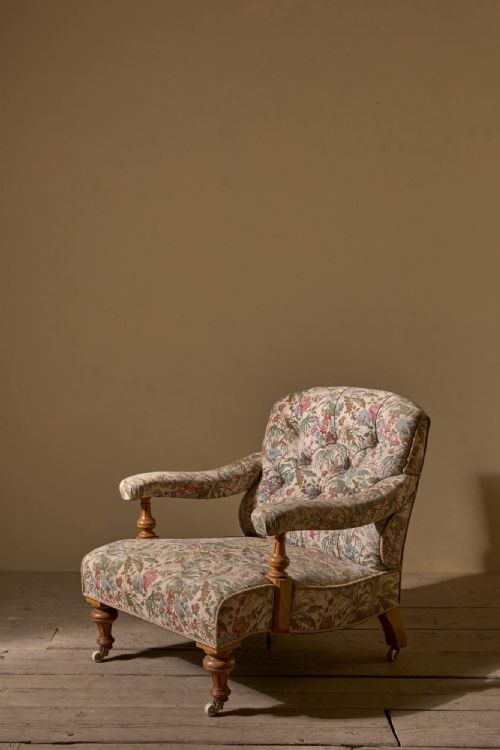
When you search for a deep tufted arm chair, you encounter substantial seating designed primarily for libraries, studies, and drawing rooms. The evidence shows these pieces emerging predominantly from the nineteenth century, including specific Victorian, Regency, and Edwardian examples.
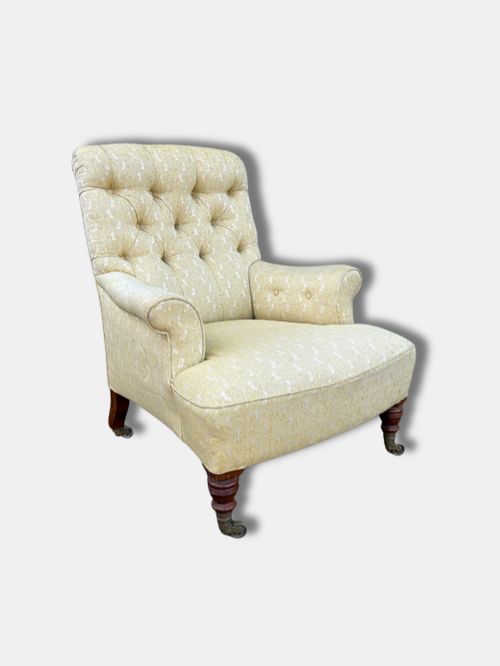
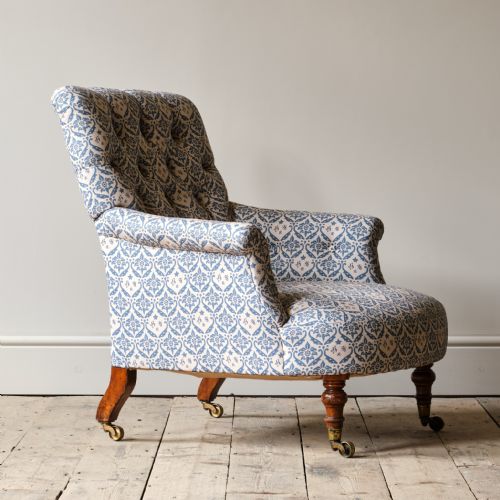
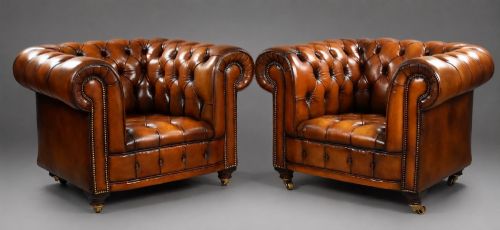
The form relies on deep buttoning across the backrest and often the arms, creating a distinct rhythmic pattern in the upholstery. Library chairs, fireside loungers, and Chesterfield styles dominate the selection.
Makers such as Howard and Sons appear alongside traditional English and French workshop traditions. These seating forms range from compact occasional chairs to large library armchairs framed in mahogany or walnut.
Materials and construction methods
Makers constructed the foundational frames using hardwoods such as mahogany, walnut, and general timber framing, supported occasionally by iron components. These sturdy skeletons provided the necessary rigidity to withstand the heavy tension of deep buttoning.
Upholstery utilised traditional stuffs including leather, velvet, damask, and woven fabric pulled tight over deep padding. Brass tacks frequently secure the edges of the hide or textile covering, adding structural durability and a metallic trim.
Some nineteenth-century library chairs hid brass castors so small they appeared to float across the carpet entirely unassisted.
Distinctions in craftsmanship
The integrity of the internal web and spring system determines how well the seat retains its resilience over decades of use. Finer examples maintain an even, supportive tension across every buttoned diamond without sagging in the centre.
Timber selection and frame joinery separate standard workshop output from premier London makers like Howard and Sons. Superior pieces exhibit hand-carved mahogany or walnut show-wood components that remain entirely firm within the joints.
Howard and Sons
The Deep Tufted Arm Chair Glossary
- Buttoning
- A method of upholstery where twine pulls the fabric deep into the stuffing to secure folds in a geometric diamond pattern. This technique provides both visual depth and structural firmness.
- Show-wood
- Exposed timber framing on an upholstered chair that displays the carved grain of mahogany or walnut. It contrasts with fully upholstered models where fabric covers the entire structure.
- Spoon back
- An oval upholstered backrest shaped distinctly like the bowl of a spoon, popular during the Victorian era. The wooden rim curves gently backward to cradle the sitter.
- Chesterfield
- A heavy, fully upholstered seating form characterised by arms and back of the same height. These deep-seated pieces are traditionally finished in buttoned leather.
Deep Tufted Arm Chair: Frequently Asked Questions
How do I identify a Victorian piece?
Victorian examples typically display dense mahogany or walnut frames, deep buttoning, and turnings characteristic of the mid to late nineteenth century. Look for traditional joinery methods and heavier proportions compared to lighter Edwardian iterations.
Upholstery materials from this period often include heavy leather, velvet, or damask fastened with traditional brass tacks. The presence of specific maker stamps on the castors or webbing can also confirm the era.
Where were these chairs used historically?
These comfortable seats originated in formal libraries, country house drawing rooms, and private studies where long hours of reading or conversation took place. Their substantial padding and ergonomic rake suited them for fireside placement.
Library chairs and club chairs were built to withstand heavy daily use by gentlemen and scholars. Consequently, their robust hardwood frames were engineered for maximum durability.
What distinguishes Howard style seating?
Howard style pieces are recognised for their exceptional comfort, low scrolled arms, and meticulous internal stuffing techniques. Makers during the nineteenth century perfected a sprung edge that set a benchmark for English upholstery.
These chairs often feature tapered wooden legs mounted on original brass castors bearing maker inscriptions. The silhouette remains balanced and understated despite the generous padding.