
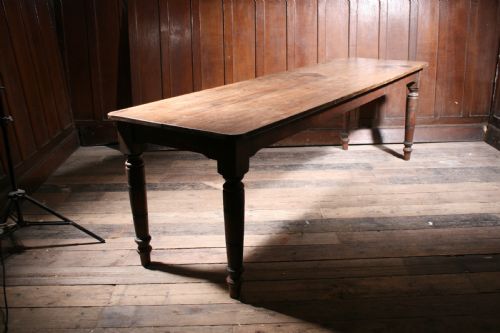
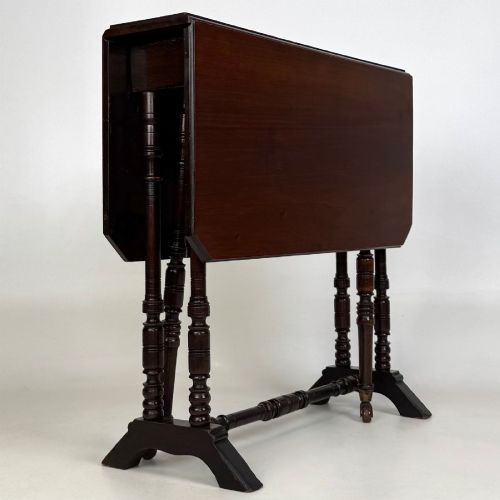
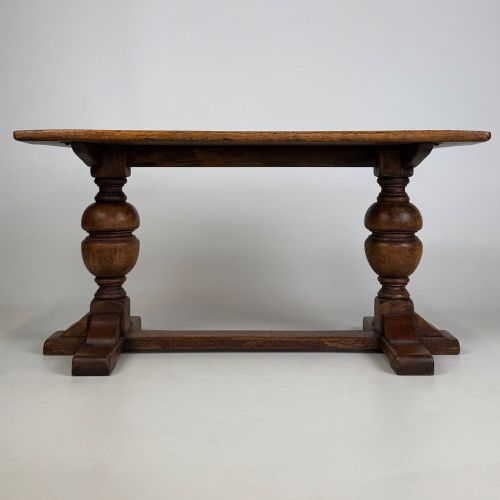
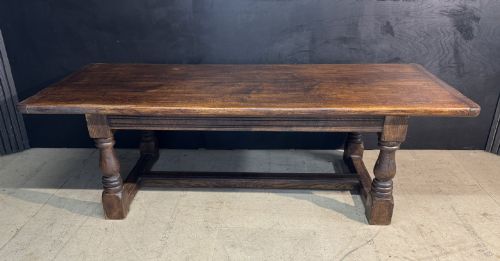
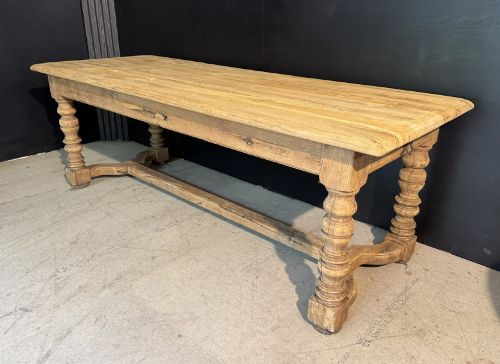
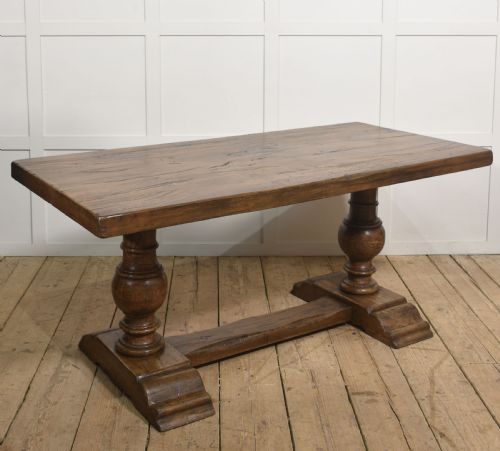


Turned Leg Trestle Table
A turned leg trestle table brings solid timber construction and honest joinery into a room, serving as a dependable surface for dining or work.
Turned Leg Trestle Table
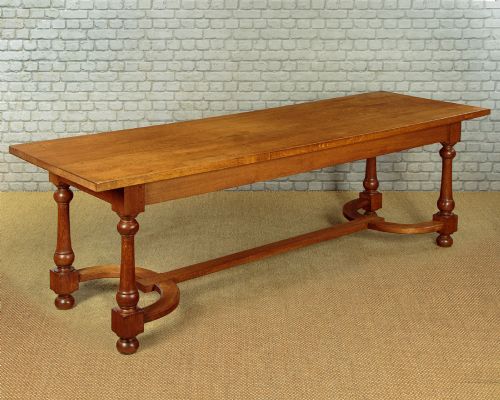
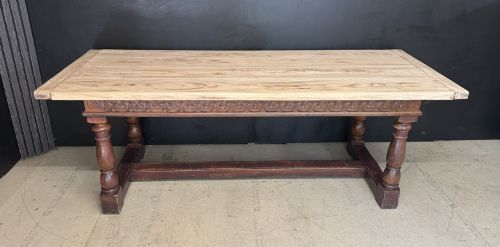
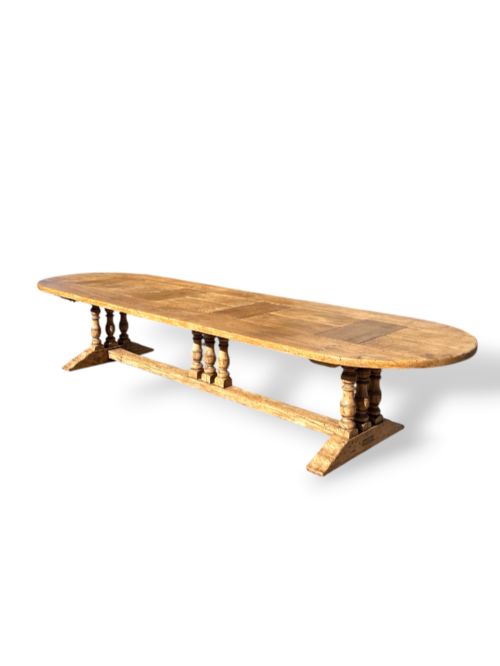
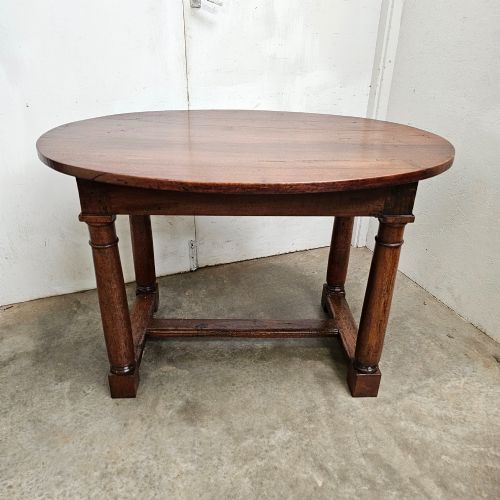
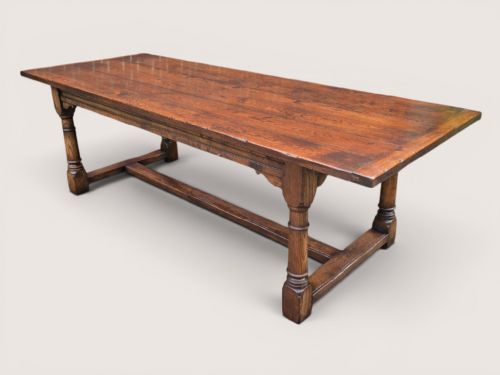
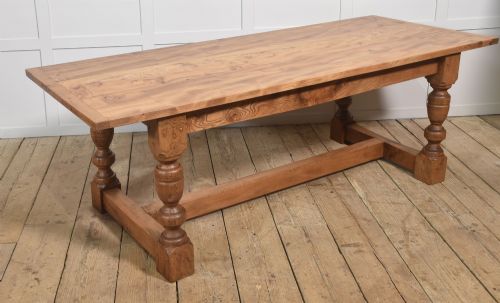
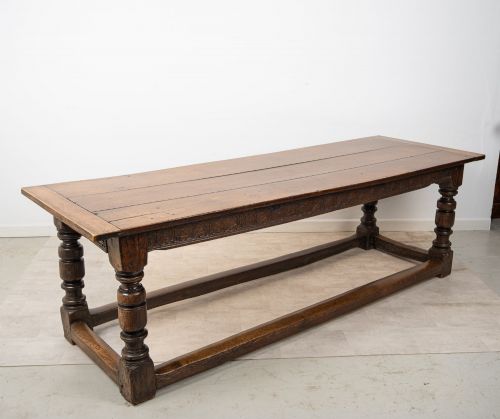
When you search for a turned leg trestle table, you are looking at substantial dining and refectory forms designed for daily utility. These tables originate from various periods including the seventeenth, eighteenth, and nineteenth centuries, as well as later revival eras. You will regularly encounter oak farmhouse and refectory examples featuring sturdy timber tops supported by turned uprights.
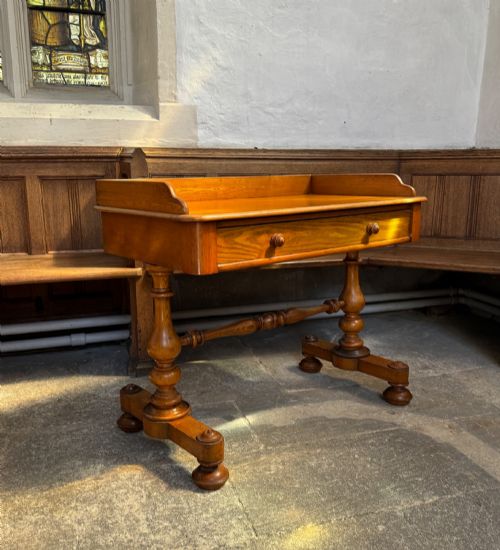
The selection ranges from long kitchen dining tables down to smaller coffee and side formats. Timbers such as oak, elm, walnut, and mahogany dominate the construction across these diverse eras. Stylistic influences span from rustic English country and Jacobean revival to French provincial and Victorian designs.
Materials and construction methods
Carpenters relied primarily on solid hardwoods like oak, walnut, and elm for the structural frames and plank tops. These timbers provided the necessary strength for large refectory and farmhouse tables subjected to heavy daily use. Secondary woods and veneers, including mahogany and burr walnut, appear on smaller occasional and side tables.
Joinery involved traditional pegged mortise and tenon joints to secure the trestle bases and stretcher bars. Lathes shaped the heavy wooden supports into distinct turned profiles, while surface finishes remained relatively simple to highlight the natural grain of the wood.
Several tables show historical ink stains and deep knife scars, proving they worked hard long before becoming antiques.
Assessing quality in construction and material
The integrity of the timber top and the stability of the trestle base dictate the grade of the piece. Tables retaining their original plank tops demonstrate superior authenticity compared to those with later replacements. The crispness and symmetry of the lathe-turned legs also reflect the maker's skill.
The proportion of the timber and the depth of the colour influence the visual appeal. Heavy, well-seasoned oak and figured walnut exhibit better ageing characteristics than softer pine or secondary woods used in lesser examples.
Heal and Son
The Turned Leg Trestle Table Glossary
- Refectory table
- A long dining table traditionally used in monasteries and large halls. These heavy timber pieces typically feature strong stretcher bases.
- Trestle base
- A structural support system consisting of vertical posts connected by a horizontal beam or stretcher. This design provides robust clearance beneath the table top.
- Plank top
- A surface constructed from wide boards of solid timber joined edge to edge. Early examples often display natural shrinkage and patination.
- Turned leg
- A vertical wooden support shaped on a lathe into symmetrical profiles. Craftsmen used various chisel cuts to create rings, coves, and vase shapes.
- Patina
- The surface sheen and colour developed by timber over decades of handling, polishing, and exposure to light. It serves as a key indicator of age.
Turned Leg Trestle Table: Frequently Asked Questions
What is a refectory table?
A refectory table is a long, narrow dining table traditionally built for communal dining in monasteries and large households. They are characterised by sturdy legs joined near the floor by a continuous stretcher.
Over time, these tables moved into domestic dining rooms and kitchens, valued for their generous seating capacity and robust construction.
How do I identify an older oak table?
Older oak tables display distinctive medullary rays in the timber grain, often described as silver figuring. The construction relies on wooden pegs and hand-cut joinery rather than modern metal screws.
Surface wear, pegged joints, and uneven board widths help distinguish authentic period pieces from later revival furniture.
Are trestle tables stable for daily use?
Trestle tables offer excellent stability because the base supports are placed near the ends of the long top. The heavy timber beams prevent wobbling during meals or work.
Their design also allows for flexible seating along the entire length since there are no corner legs obstructing chairs.
How should I care for a solid wood table?
Solid wood tables require regular dusting with a soft, dry cloth and protection from direct heat sources and moisture. Applying natural beeswax periodically nourishes the timber and maintains the surface sheen.
Using coasters and placemats helps prevent water rings and heat damage to the historic finish.