
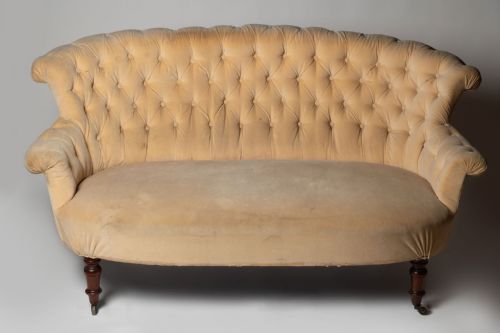
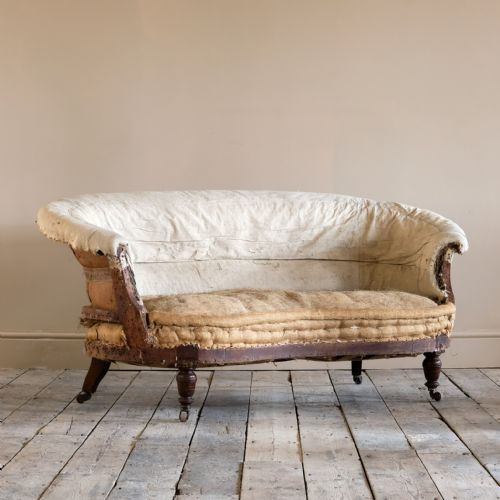


Turned Leg Settee
A turned leg settee brings robust nineteenth-century timber frames and upholstered comfort together for everyday seating.

Turned Leg Settee
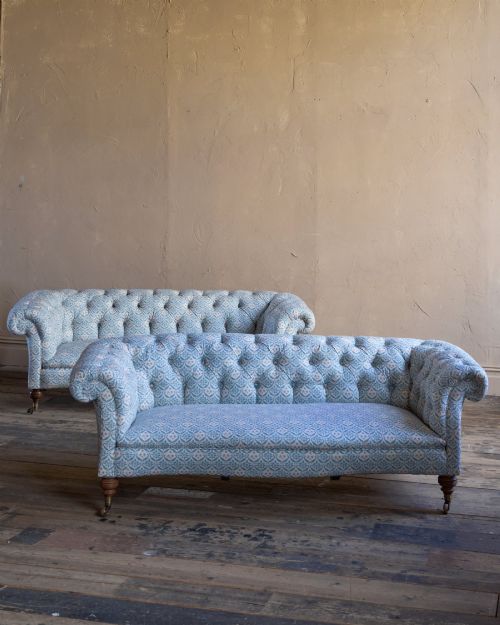
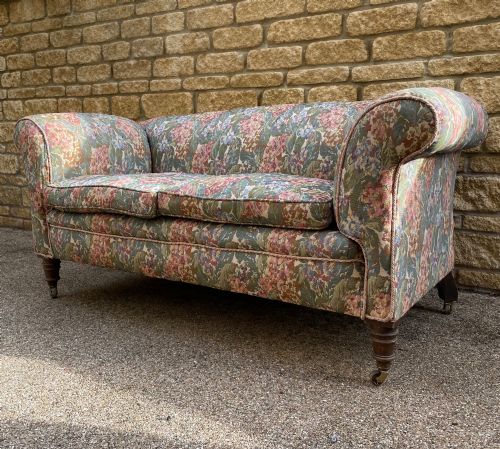
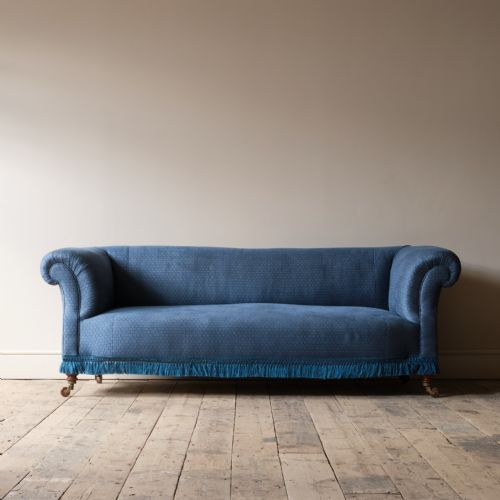
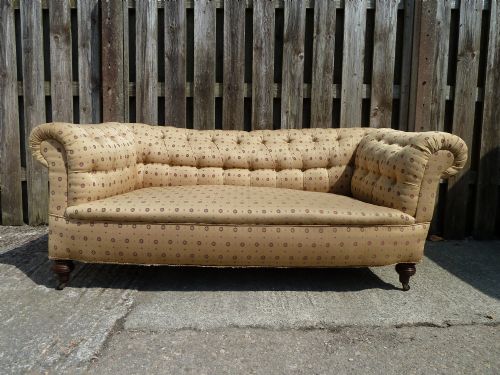
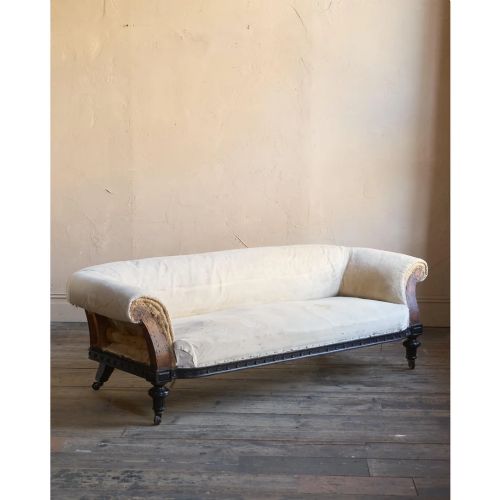
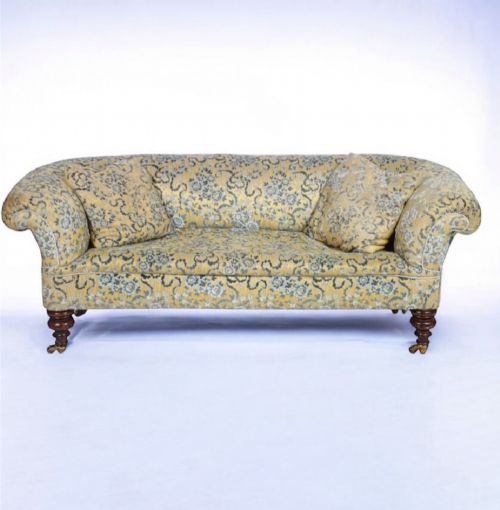
A turned leg settee is a seating form defined by circular lathe-cut wooden supports beneath upholstered frames. Buyers searching this phrase encounter nineteenth-century pieces ranging from Victorian chesterfields and drop-arm sofas to Edwardian walnut designs and earlier regional timber benches.
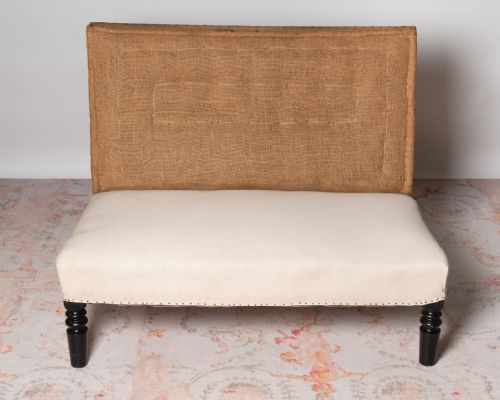
The selection here draws heavily from Victorian and early twentieth-century periods, alongside French banquettes, Napoleon III chaises, and English country house seating. These forms reflect diverse regional tastes in upholstery and timber work while maintaining the characteristic turned undercarriage.
How they were made
Frames rely on solid timbers such as walnut, mahogany, satinwood, and stinkwood, shaped by hand or turned on a lathe to form structural legs and stretchers. Brass components often appear in castors or hardware supporting these heavy wooden bases.
Upholstery techniques utilise traditional fillings and foundations covered in fabric, cotton, velvet, or leather. Many examples incorporate intricate drop-arm mechanisms or spring-loaded padding housed within substantial timber chassis.
Several settees hide clever drop-arm mechanisms designed for a quick afternoon nap without disturbing the parlor decor.
What varies in quality
Quality rests in the precision of the lathe work on the wooden supports and the structural integrity of the timber frame beneath the upholstery. Finer examples display crisply carved or turned details in walnut and mahogany rather than plain utility timber.
The sophistication of the maker's joinery and the selection of covering materials further distinguish standard pieces from high-end workshop productions. Original upholstery schemes and branded maker foundations elevate a piece considerably.
Howard and Sons·Hampton and Sons·Holland and Sons
The Turned Leg Settee Glossary
- Turned leg
- A wooden support shaped on a lathe to create cylindrical, spiral, or bulbous profiles. This technique appears on the forelegs and structural stretchers of nineteenth-century seating.
- Chesterfield
- A deep-buttoned upholstered sofa with rolled arms matching the height of the back. These large pieces frequently feature turned wooden legs below.
- Chaise longue
- An elongated upholstered seat designed for reclining, combining a chair back with an extended footrest. Examples often feature exposed wooden frames and turned supports.
- Stretchers
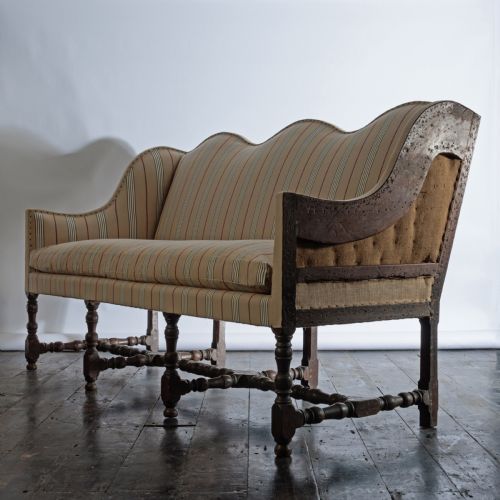
- Horizontal wooden bars connecting the legs of a piece to provide structural stability. They are common in seventeenth-century and revival period frames.
- Drop arm
- A mechanical sofa arm that can be lowered to convert the seating into a daybed. This mechanism relies on internal metal hinges integrated into the timber frame.
Turned Leg Settee: Frequently Asked Questions
What is a turned leg settee?
A turned leg settee is an upholstered seat supported by timber legs shaped on a lathe. These pieces span Victorian, Edwardian, and earlier revival periods.
They combine robust wooden frames with soft textile or leather coverings, offering both formal parlor seating and relaxed country house comfort.
How do I date a turned leg settee?
Dating relies on examining the timber species, upholstery style, and turning profiles of the legs. Walnut and mahogany were favored across the nineteenth century.
Cabinetmaker stamps or traditional materials beneath the fabric often provide more precise chronological markers for workshop attributions.
Where should I place a turned leg settee?
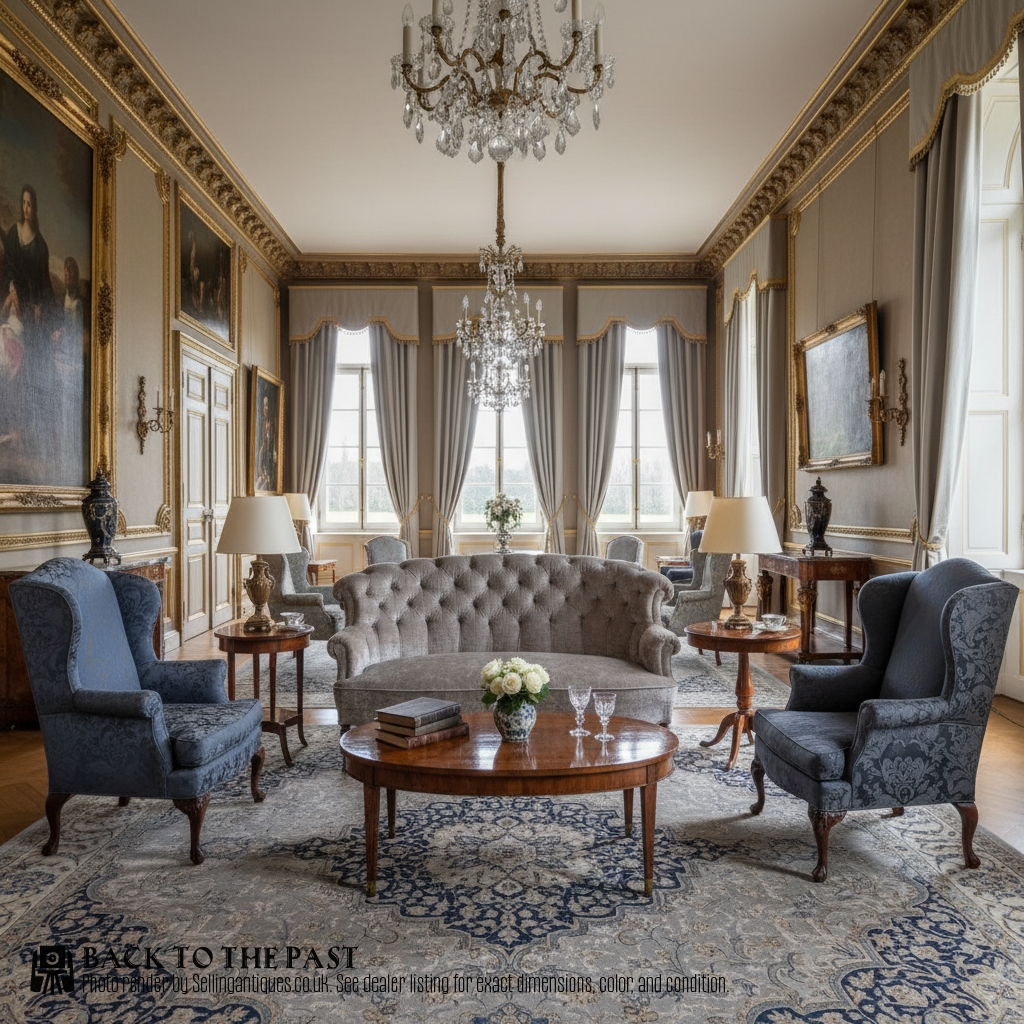
These settees work well in living rooms, hallways, or spacious bedrooms where the turned wooden undercarriage remains visible. Their varied lengths suit placement against walls or floating within large rooms.
Pairing them with period furniture helps anchor their traditional nineteenth-century aesthetic within modern interior layouts.
How do I care for the wooden legs?
Wooden legs require occasional dusting with a dry cloth and treatment with appropriate furniture wax to nourish the timber. Avoid placing them near direct heat sources to prevent the wood from drying out.
Check the stability of the joints periodically to ensure the turned supports remain secure beneath the heavy upholstered frame.