

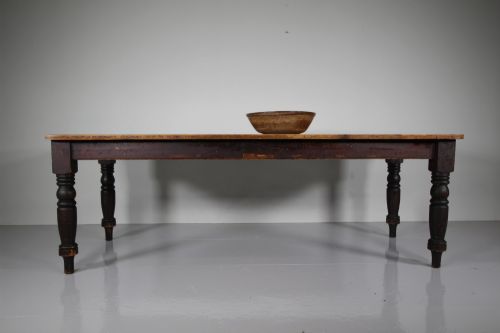
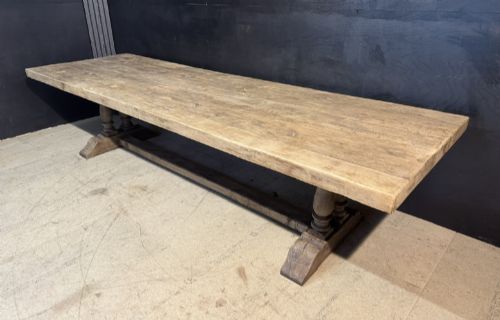
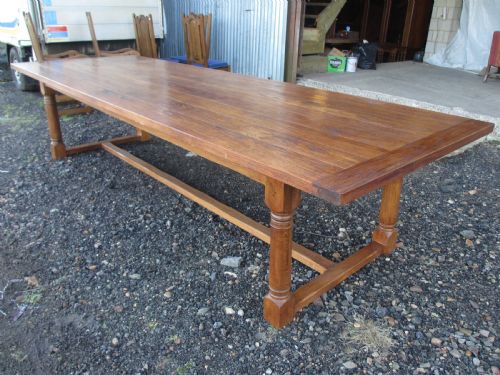
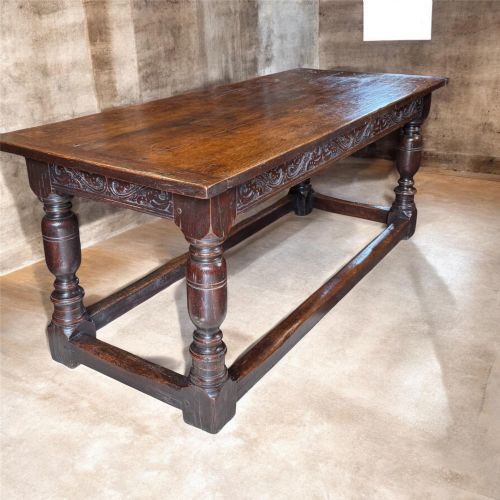
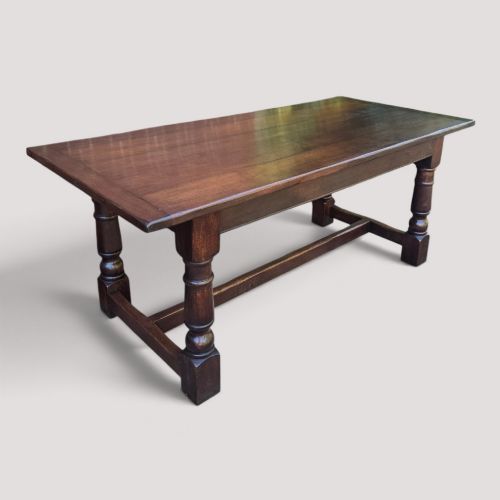
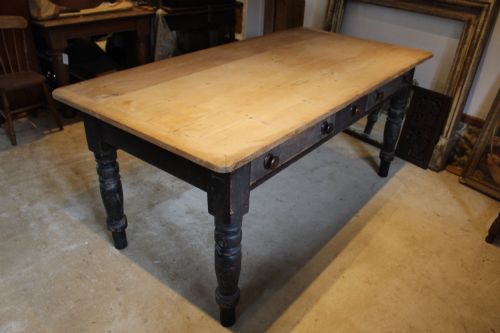
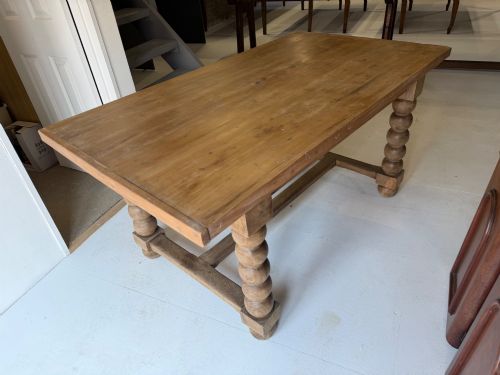
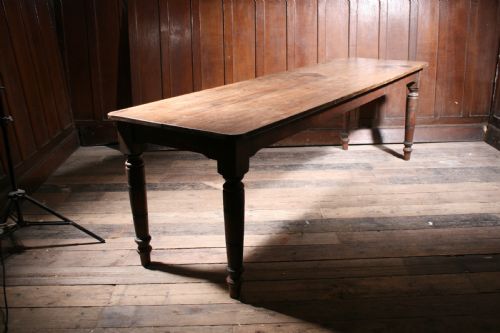
Turned Leg Refectory Table
A turned leg refectory table brings substance to a room, offering generous proportions and sturdy character built for daily gatherings.
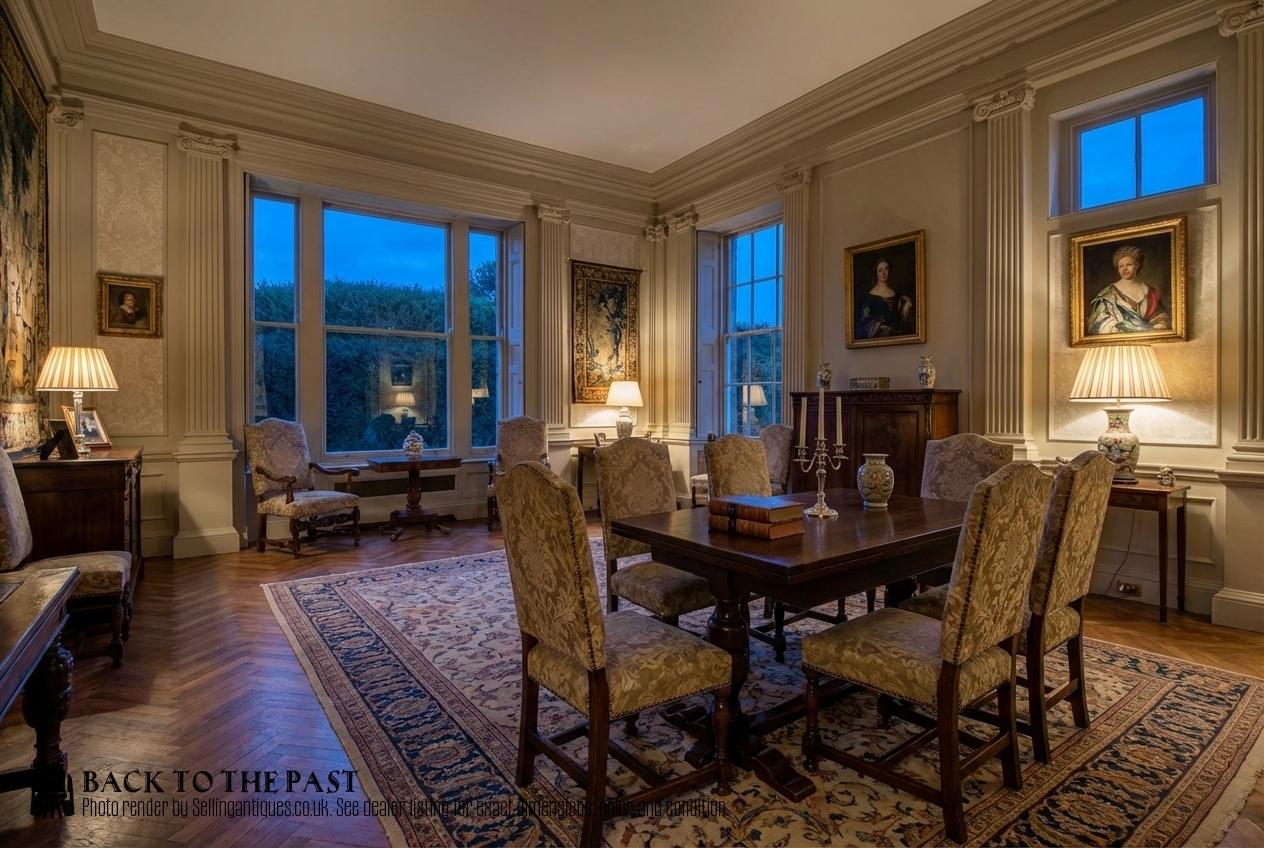
Turned Leg Refectory Table
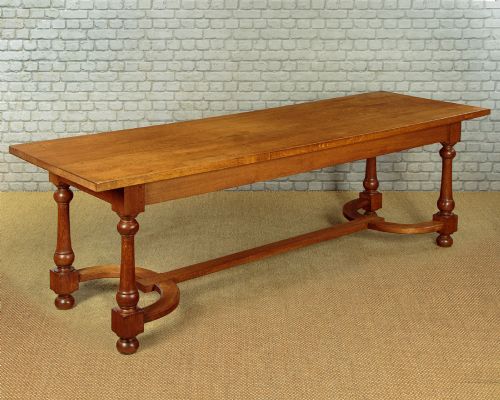
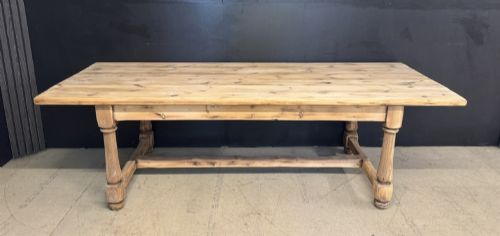
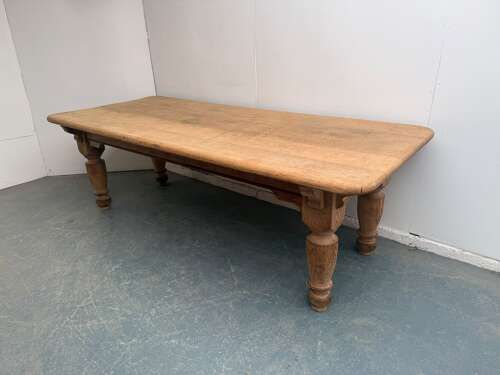
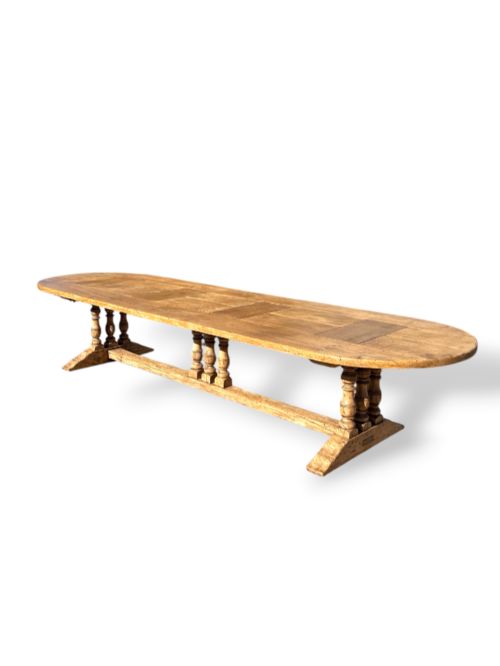
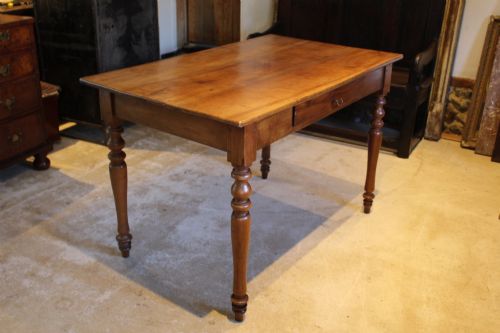
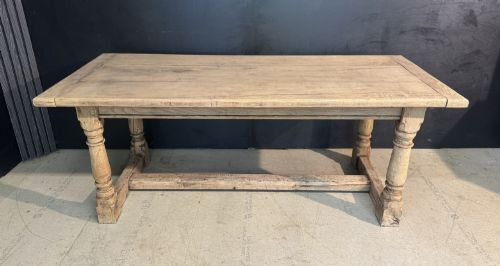
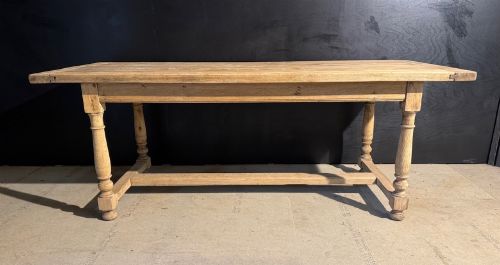
A turned leg refectory table is a long dining or serving surface designed for communal meals, defined by sturdy upright supports shaped on a lathe. When exploring a turned leg refectory table, buyers encounter diverse forms ranging from compact kitchen boards to grand dining pieces spanning several metres.
The selections span centuries of woodworking traditions, drawing heavily from seventeenth-century origins through to nineteenth-century interpretations and twentieth-century revivals. English and French regional examples dominate the selection, frequently carrying labels of rustic farmhouse or Jacobean styles.
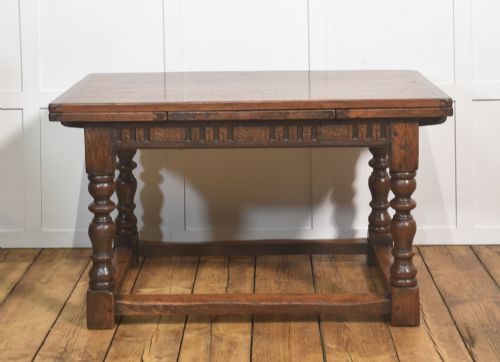
Most pieces function as central dining tables, though narrower serving variations and extendable draw-leaf versions appear across the inventory. The forms serve both everyday family kitchens and formal dining halls with equal presence.
Materials and construction methods
Solid timber forms the foundation of these pieces, with oak appearing most frequently alongside elm, pine, fruitwood, cherry wood, and walnut. Artisans selected these dense domestic woods to withstand heavy daily use while supporting long plank tops.
Joinery techniques rely on traditional pegged mortise and tenon joints to secure the heavy tops to robust undercarraments and H-stretchers. Lathe-turned legs provide structural stability while introducing decorative architectural detail to the vertical supports.
Turned Leg Refectory Table Retail Price Guide 2026
Typical asking prices for turned leg refectory table among the pieces listed under this phrase on Sellingantiques today, from the lower quarter to the upper quarter. They describe what is for sale here now, not the wider market.
Markers of distinction and craftsmanship
Quality rests in the integrity of the timber selection and the precision of the turning work on the legs. Uniform grain patterns and solid plank construction without excessive modern intervention distinguish superior examples from simpler utilitarian boards.
The harmony between the top and the base dictates the overall character. Tables retaining their original stretchers, patination, and proportional balance demonstrate the highest grade of period craftsmanship.
The Turned Leg Refectory Table Glossary
- Refectory table
- A long, narrow dining table originally built for monastic dining halls. These pieces evolved into staple furniture for large domestic kitchens and dining rooms.
- Turned leg
- A wooden support shaped by rotating it on a lathe against carving tools. This process creates cylindrical patterns such as bobbin, spiral, or baluster shapes.
- Draw-leaf
- An extending table mechanism featuring two hidden leaves stored beneath the main top. These pull out from the ends to quickly lengthen the surface.
- H-stretcher
- A horizontal wooden brace shaped like the letter H that connects the legs of a table. It adds essential rigidity to long underframes.
- Plank top
- A table surface constructed from wide boards joined side by side. This method allows the wood to expand and contract naturally with seasonal humidity changes.
Turned Leg Refectory Table: Frequently Asked Questions
How do I clean a wooden dining table?
Maintain the surface by wiping it down with a damp cloth and drying it immediately with a soft towel. Avoid harsh chemical cleaners that strip the historic finish.
Period timber benefits from occasional applications of natural wax to nourish the grain and protect against moisture. Regular polishing preserves the historic patination accumulated over generations of use.
Can I use a refectory table every day?
These tables were built for heavy daily use in communal dining spaces and kitchens. Their robust construction handles regular family meals and gatherings with ease.
Protect the historic timber from excessive heat and standing liquids by using placemats and coasters. Normal daily activity only enhances the character of the wood over time.
How do I identify seventeenth century oak?
Seventeenth-century oak exhibits distinct medullary rays, often called silver grain, visible across the surface. The timber shows deep patination and hand-adzed tool marks from period conversion methods.
Construction details such as pegged joinery and hand-cut joints confirm the early date. Later revivals copy these motifs but lack the authentic wear patterns of actual period pieces.
What is an H stretcher used for?
The H stretcher provides critical structural support by locking the four legs together near the floor. This prevents the heavy underframe from bowing outward under weight.
In addition to stability, the stretcher prevents the legs from twisting over decades of daily use. It also served historically as a rest to keep feet off cold stone floors.