
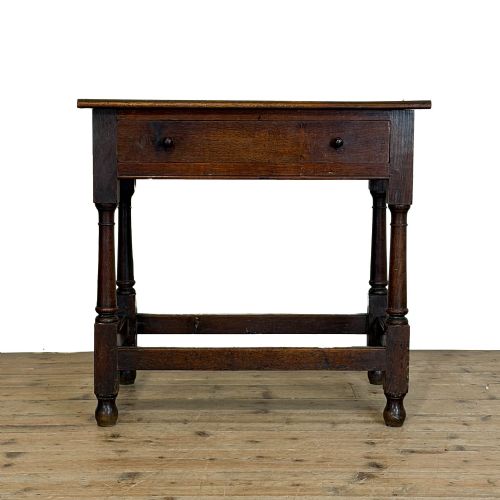
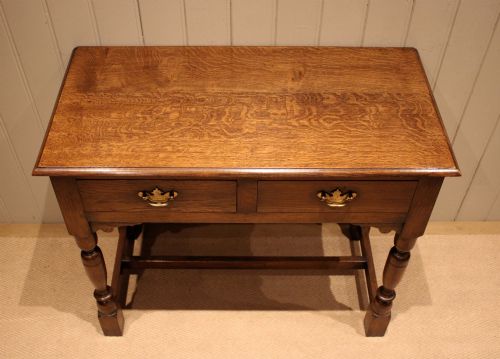

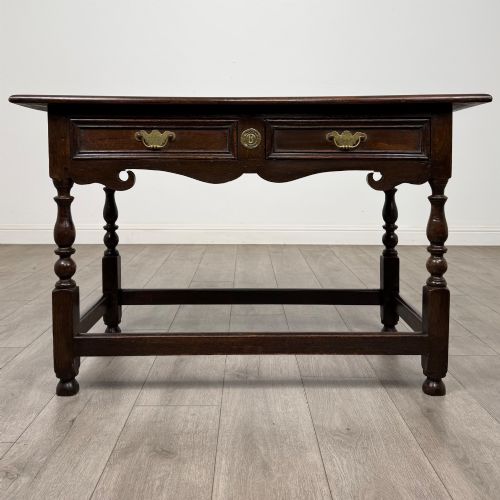
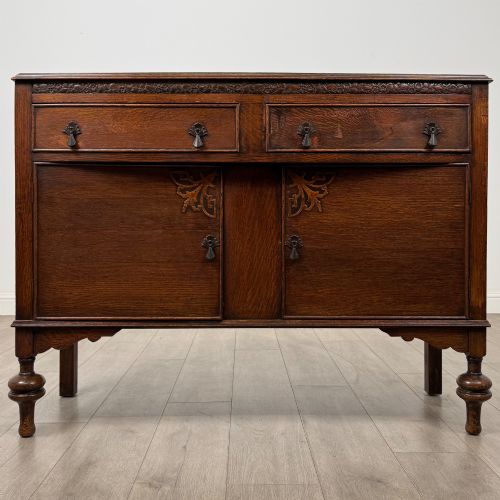
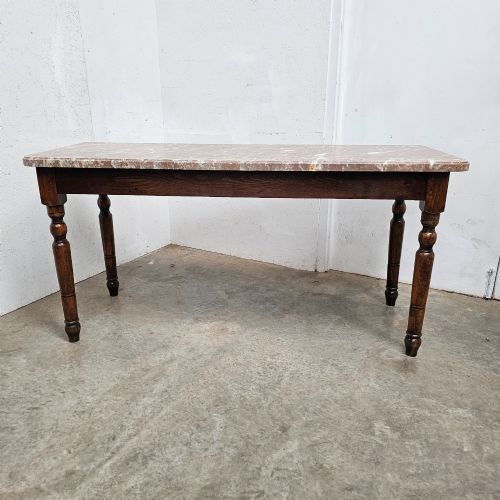
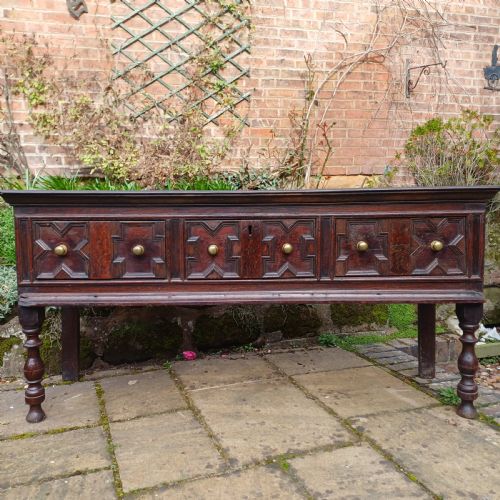

Turned Leg Oak Server
A turned leg oak server provides sturdy surface space and storage, combining practical utility with centuries of traditional woodworking.
Turned Leg Oak Server
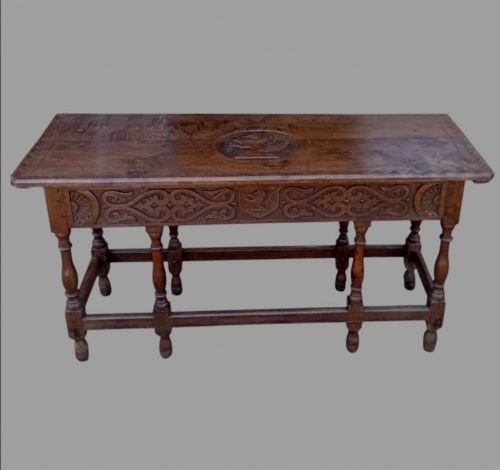
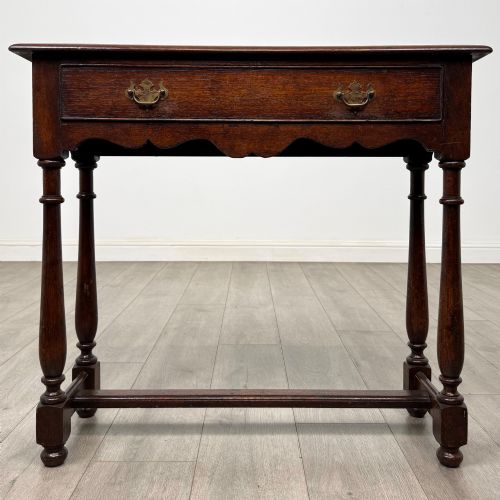
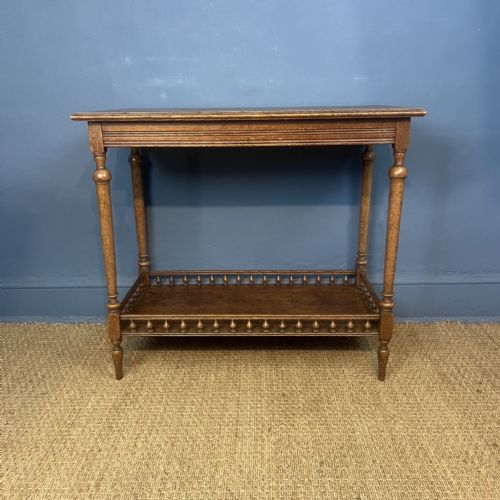
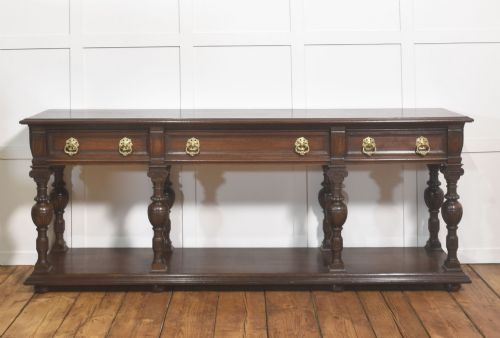
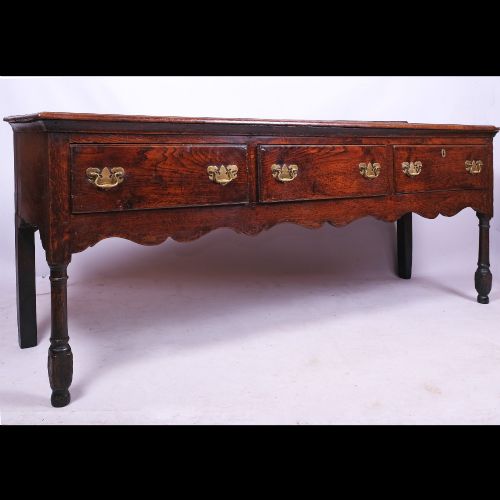
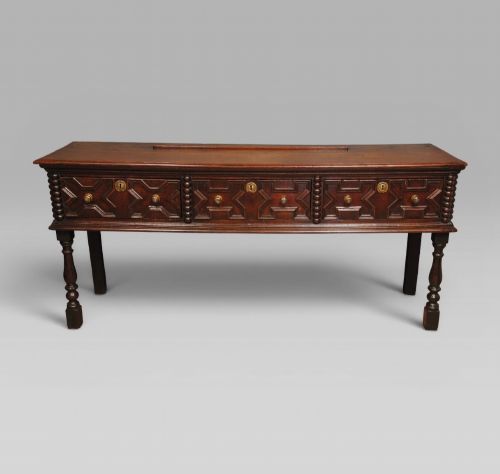
When you search for a turned leg oak server, you encounter forms that span several centuries, including side tables, dresser bases, and hall tables. These pieces serve as practical surface furniture for dining rooms, hallways, and living spaces.
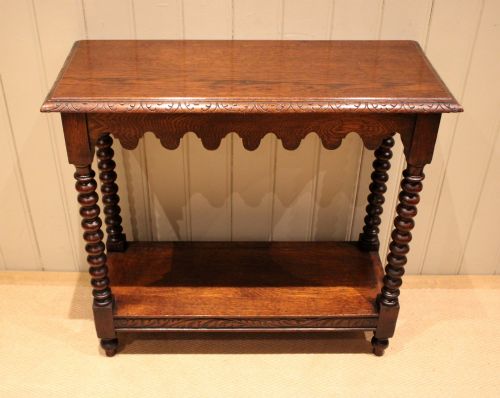
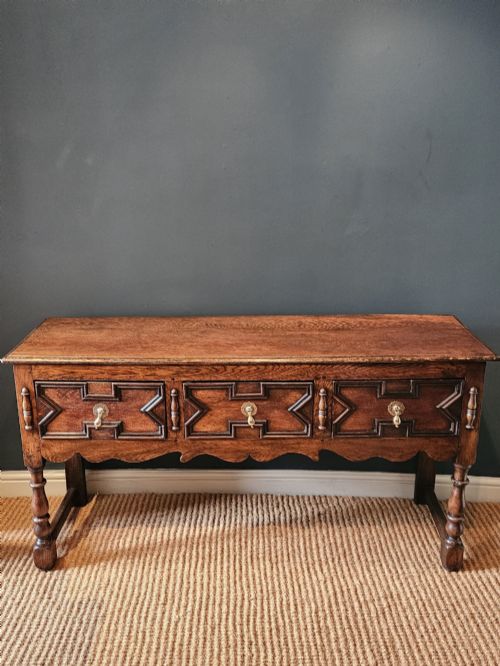
The selections on this page are dominated by oak construction, featuring turned supports from the seventeenth century through to the early twentieth century. You will find variants ranging from early block front dresser bases to later revival side tables and console tables.
Early periods provide substantial timber frameworks with pot boards and drawers, while later nineteenth and twentieth-century interpretations adopt lighter proportions and decorative carving. Each form retains the fundamental character of sturdy timber construction and turned leg supports.
What varies in quality
Quality rests in the proportion of the timber, the crispness of the turned legs, and the integrity of the original construction rather than surface condition alone. Superior pieces exhibit well-figured oak with deep, natural patination developed over generations of use.
Mastery is evident in the precision of the joinery, such as tightly fitted drawers and balanced proportions between the top surface and the supporting framework. Later alterations or replaced timber elements distinguish utilitarian workshop repairs from untouched period examples.
Current listings feature solid oak, fruitwood, walnut, and burr walnut veneer across various centuries.
The Turned Leg Oak Server Glossary
- Dresser base
- A low wooden storage unit featuring drawers and sometimes an open pot board beneath, used historically for food preparation and serving. These pieces form a primary category of oak servers.
- Pot board
- A low intermediate shelf fitted between the legs of a dresser base, traditionally used for storing pots and domestic utensils. This structural element provides additional stability to the turned legs.
- Bobbin leg
- A turned furniture support shaped on a lathe to resemble a series of rounded wooden beads or bobbins threaded together. This decorative turning appears frequently on seventeenth and nineteenth-century tables.
- Lowboy
- A small oak or walnut side table fitted with one or more rows of drawers, standing on relatively tall legs. They functioned as dressing tables or small serving surfaces.
- Refectory table
- A long, narrow dining or serving table built with substantial timber legs often connected by low stretchers. These heavy tables provide the foundational form for many large oak servers.
Turned Leg Oak Server: Frequently Asked Questions
How do I identify a seventeenth-century piece?
Seventeenth-century servers display pegged frame construction, hand-carved details, and thick oak boards with distinct patination.
Look for signs of early hand tool use, such as pit-sawn marks and irregular timber thicknesses beneath the top boards.
Where should I place a server?
These tables suit dining rooms as functional serving surfaces or hallways as practical console tables for dropping keys and post.
Ensure you measure the depth and height carefully, as older dresser bases can be deeper than modern sideboards.
What is a pot board base?
A pot board base is an open lower shelf built directly above the floor runners between the legs.
Cabinetmakers integrated this shelf to add rigidity to the turned legs while offering open display space.
How do I care for oak furniture?
Maintain oak surfaces by applying natural beeswax periodically to nourish the dry timber and preserve the historic finish.
Keep these tables away from direct heat sources and radiators to prevent the solid oak panels from splitting.