


Turned Leg Brass Castor Sofa
A turned leg brass castor sofa combines nineteenth-century timber frames with rolling metal feet, offering a sturdy yet mobile seat for period interiors.
Turned Leg Brass Castor Sofa
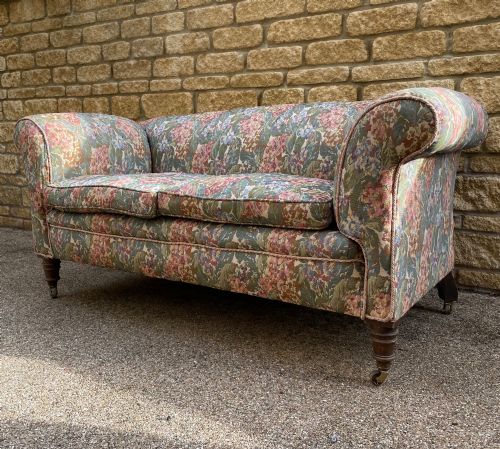
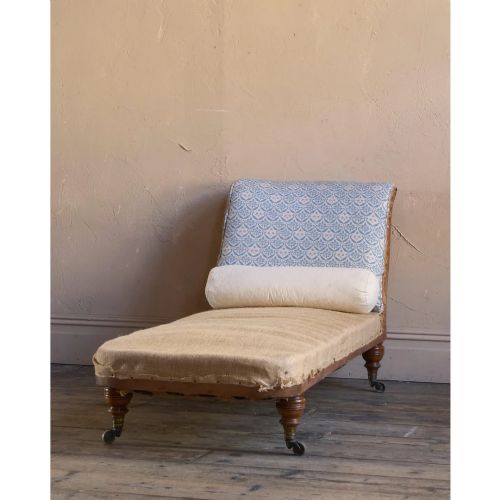
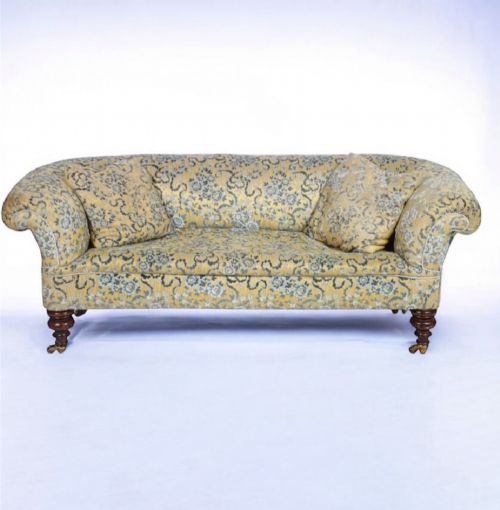
A turned leg brass castor sofa brings together nineteenth-century seating forms such as Chesterfields, drop-arm settees, and chaise longues supported by timber legs and metal wheel fittings. Buyers searching for a turned leg brass castor sofa encounter pieces originating from the Regency and Victorian eras, alongside related tables that share similar woodwork.
The selection ranges from grand button-backed Chesterfield designs upholstered in velvet or fabric to simpler day beds and drop-arm sofas. Many pieces demonstrate classic nineteenth-century proportions, relying on mahogany or general hardwood frames built for domestic parlours and drawing rooms.
Construction and materials
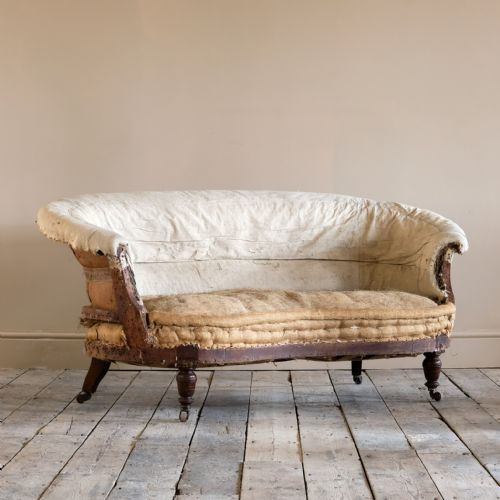
Frames rely on solid mahogany and mixed hardwoods, shaped by hand to form the structural skeleton before receiving textile coverings. Upholstery layers typically involve hessian and calico foundations beneath top fabrics like velvet.
Metal components play a structural role, with brass castors fitted to the base of turned timber supports to allow smooth movement across carpets and wooden floors. Woodturning techniques create the characteristic profile of the legs, finished with metal cappings to secure the wheel mechanisms.
Brass castors let nineteenth-century aristocracy glide across the parlour without scuffing the floorboards.
Assessing quality in period seating
Quality rests upon the integrity of the timber frame and the precision of the woodturning beneath the upholstery. Finer examples retain original brass castors and uncompromised hardwood structures that withstand daily use.
The standard of the underlying upholstery build, from the webbing to the springs and stuffing, distinguishes superior workshop production from more basic regional output.
Howard and Sons·Hampton & Sons·Holland & Sons·Gillows
The Turned Leg Brass Castor Sofa Glossary
- Castor
- A small wheel mounted on a swivel attached to the bottom of a leg, allowing furniture to be moved easily. Brass versions are common on nineteenth-century seating.
- Chesterfield
- A deep-buttoned upholstered sofa traditionally featuring arms and back of the same height. This form appears frequently in nineteenth-century rooms.
- Pembroke table
- A small drop-leaf table with hinged flaps on either side, often featuring turned legs and castors. Examples in mahogany date to the Regency period.
- Chaise longue
- An upholstered long chair or day bed designed for reclining, featuring a raised headrest. Nineteenth-century versions often incorporate turned wooden supports.
Turned Leg Brass Castor Sofa: Frequently Asked Questions
How do I care for velvet upholstery?
Velvet surfaces require gentle brushing to maintain the nap and prevent flattening over time. Keep upholstered seating away from direct sunlight to preserve the colour.
Professional cleaning is recommended for deep marks or accumulated dust within the pile. Avoid harsh chemical sprays on nineteenth-century textile coverings.
Can these sofas fit modern rooms?
Nineteenth-century proportions vary, so measuring clearance space for arms and castors is essential before placement. Many period designs suit contemporary living spaces as statement seating.
Consider doorway widths when moving large Chesterfield or chaise longue forms into position. The brass castors assist with minor adjustments in room layout.
What defines a Regency piece?
Regency items date from the early nineteenth century and often feature classical influences in their timber frames. Mahogany is the predominant wood seen in these tables and seating.
Design elements include clean lines, lyre shapes, and precise turning on leg supports. Brass details are frequently integrated into the feet.
How do I identify a Victorian sofa?
Victorian examples span the mid to late nineteenth century and frequently showcase button-backed padding or drop-arm mechanisms. Hardwood frames are typically concealed beneath heavy upholstery.
Turned mahogany legs fitted with brass castors remain a standard support method across this period. The overall aesthetic leans towards heavy comfort and formal reception room styles.