
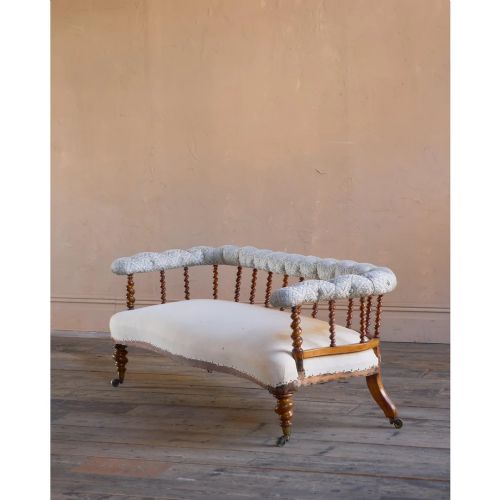
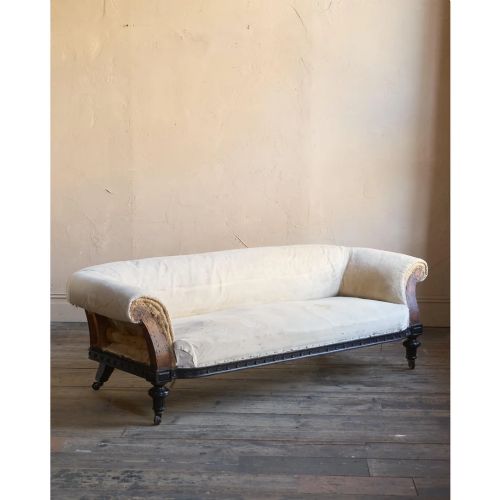
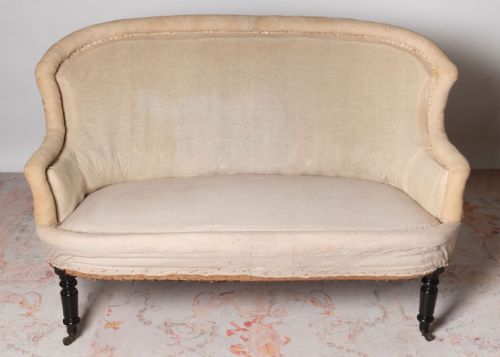
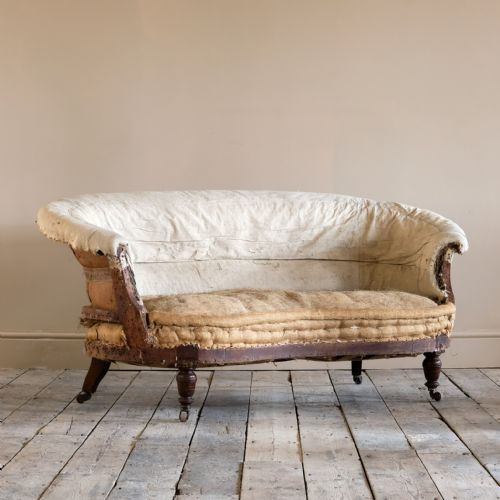





19th Century Curved Sofa
These 19th century curved sofa examples bring sweeping lines and deep upholstery to a room, offering both seating and strong silhouette.
19th Century Curved Sofa
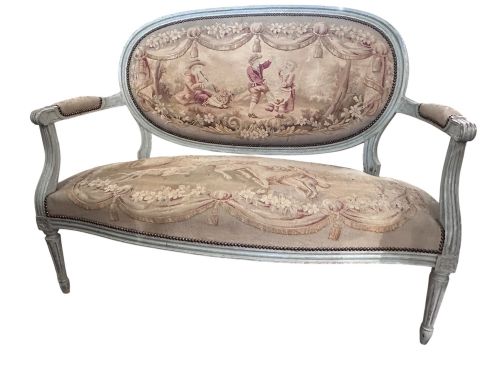
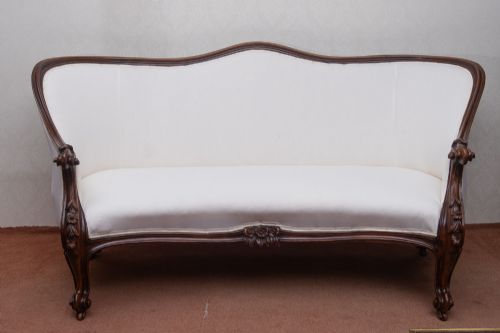
A 19th century curved sofa provides an organic silhouette designed to soften rectangular rooms and accommodate social grouping. These pieces span compact salon seating and grand French canapés with elaborate carved frames.
The options here include English Chesterfield designs alongside French Louis XV and Louis XVI revival pieces. Biedermeier and Aesthetic Movement examples also appear, showing how makers adapted the curved form across different European traditions.
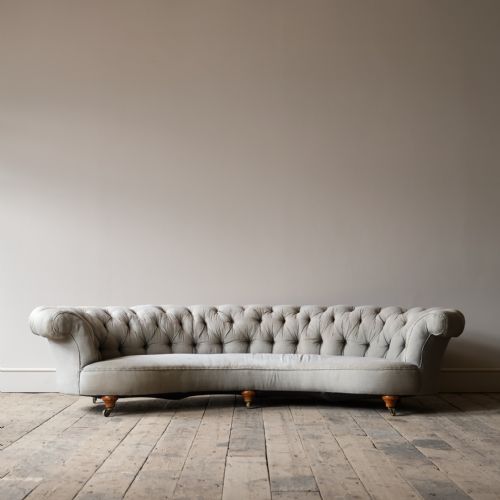
Most entries belong to the Victorian era or mid-century French workshops, featuring rounded backs and serpentine frames. Buyers often encounter kidney shapes or continuous crescent profiles alongside traditional settee forms.
How they were made
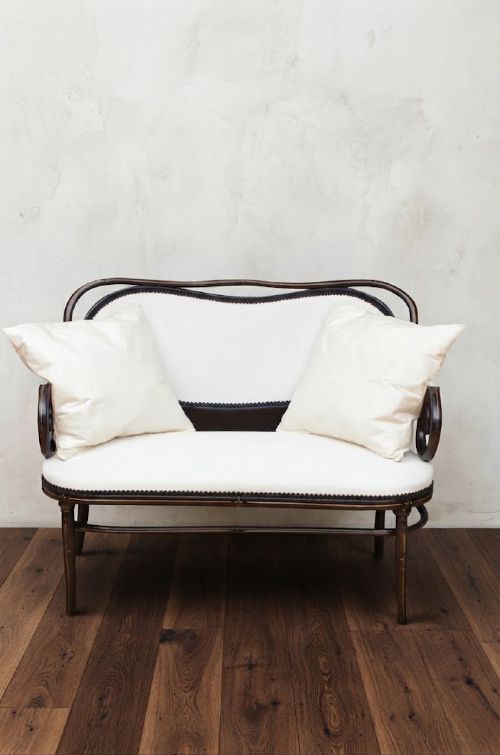
Frames rely on sturdy timbers such as mahogany, walnut, rosewood, and hardwood, providing the structural strength needed to hold tension against curved springs. Bentwood techniques also appear in specific makers' work.
Upholstery relies on traditional stuffing secured with deep buttoning and tight springs. Fabrics range from patterned velvet and silk to modern replacement upholstery fabrics over original horsehair or stuffing layers.
The documented pieces span the Victorian period, Regency elegance, and French revival styles from the nineteenth century.
What varies in quality
The calibre of the timber frame and the precision of the joinery dictate the baseline integrity of each piece. Carved details on French revival frames show varying levels of hand execution by makers.
The grace of the curve and the balance of the proportions separate master workshops from standard production. Interior spring work and frame rigidity also determine how well the piece holds its shape over decades of use.
Thonet Bentwood·Howard & Sons·C. Hindley & Sons·Hampton & Sons
The 19th Century Curved Sofa Glossary
- Canapé
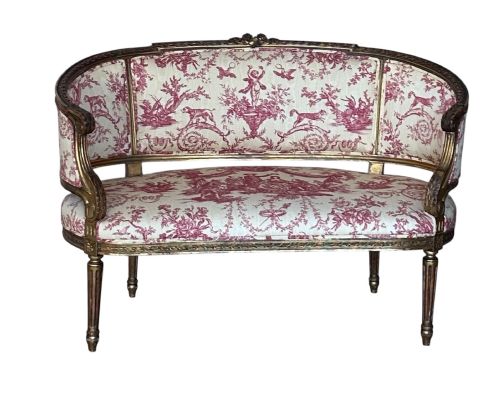
- An upholstered French sofa featuring an exposed wooden frame and decorative carved details. These typically reflect Louis XV or Louis XVI revival styles.
- Chesterfield
- A deep buttoned sofa design characterised by rolled arms and a back of the same height. Nineteenth-century versions often feature curved or crescent footprints.
- Bentwood
- Wood softened through steaming and bent into curved structural forms. This technique created lightweight yet resilient frames.
- Biedermeier
- A Central European style from the first half of the nineteenth century prioritising clean lines and warm wood grains over heavy ornamentation.
19th Century Curved Sofa: Frequently Asked Questions
How do I place a curved sofa in a room?
A curved profile allows these pieces to sit away from walls, floating gracefully in the middle of a large drawing room or salon. They work effectively to define conversation areas in open spaces.
Position the sofa to complement existing architectural curves or to soften angular furniture arrangements. Ensure sufficient clearance around the perimeter so the sweep of the back remains fully visible.
Are these sofas comfortable for daily use?
Nineteenth-century seating focuses on deep upholstery and supportive spring systems designed for formal or relaxed entertaining. The depth and rake of the back vary significantly between French salon pieces and English Chesterfields.
Many examples feature traditional buttoning that creates a firm sit. Buyers should check the internal padding style to match their preference for firm or plush support.
How do I distinguish French and English styles?
French pieces often display exposed carved woodwork, cabriole legs, and revival styles influenced by court aesthetics. The frames lean towards giltwood, walnut, or painted finishes with decorative floral motifs.
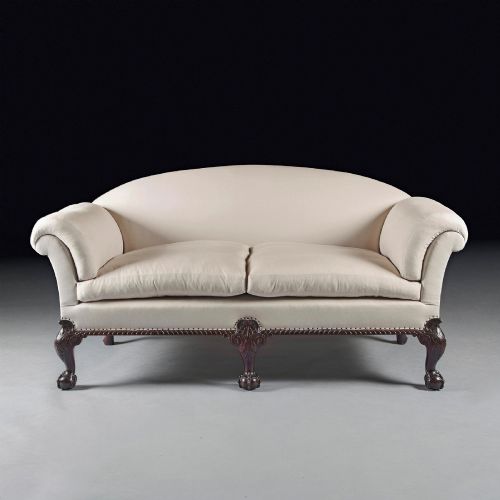
English variants tend to prioritise heavy upholstery, turned mahogany legs, or structural discipline such as Chesterfield or Aesthetic Movement designs. The emphasis rests on tailored fabric and robust frame construction rather than overt carving.
What maintenance do antique upholstered sofas need?
Regular vacuuming using a soft brush attachment keeps delicate velvet and woven textiles free from dust accumulation. Professional cleaning is recommended for antique fabrics to protect fragile fibres.
Inspect the underside webbing and frame stability periodically. Keeping pieces away from direct sunlight prevents fading on exposed velvet and silk upholstery.