
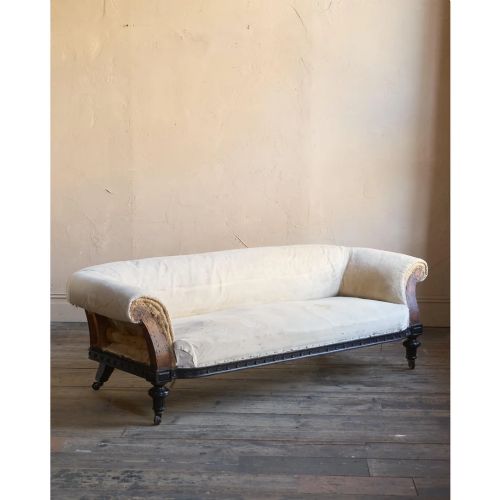
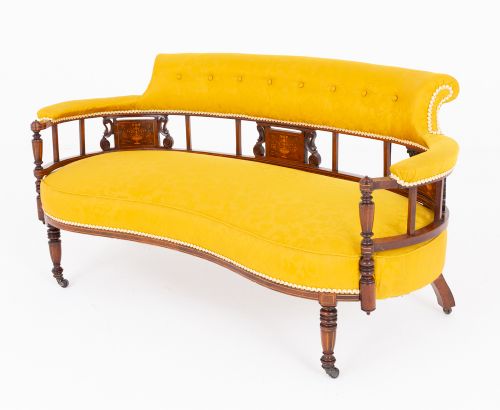
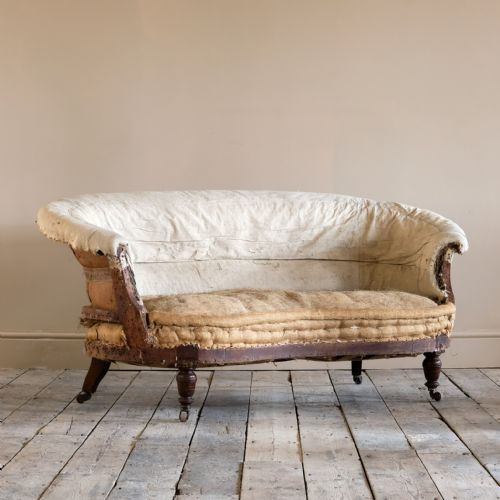


Vintage Curved Back Settee
A vintage curved back settee brings an enveloping sweep of period seating to a room, offering generous lounge comfort wrapped in classic French or English design.
Vintage Curved Back Settee
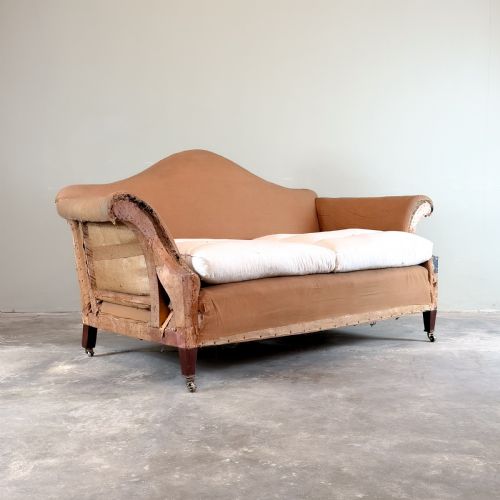
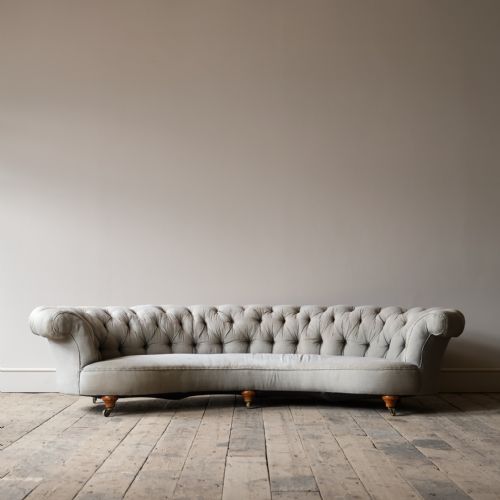
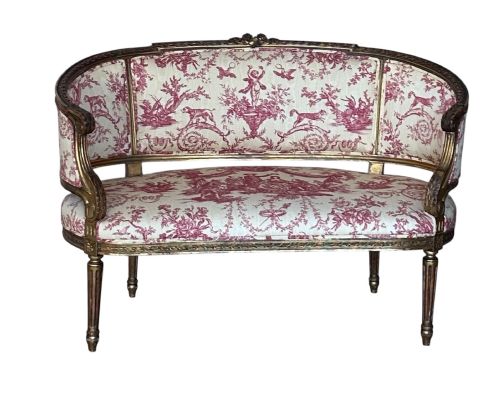
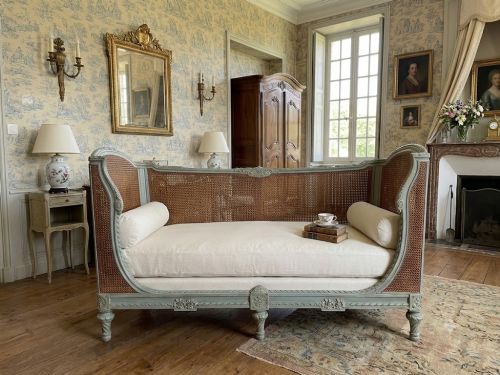
A vintage curved back settee takes various forms across this selection, ranging from nineteenth century French canapés and Louis XV or XVI style daybeds to English Victorian and Edwardian chesterfields and camel back sofas. These pieces provide graceful seating through sweeping contours, rounded backs, and scroll arms that define period upholstery.
The most common versions met here span Victorian and Edwardian decades alongside continental French styles, often featuring exposed wooden frames in walnut, mahogany, or painted finishes paired with button-backed or cane detailing. Buyers seek these settees to anchor a drawing room or study with distinct nineteenth and early twentieth century character.
How they were made
Frames rely upon hardwoods such as mahogany, walnut, beech, and rosewood, frequently shaped with hand-carved details or painted surfaces. Iron and brass also appear in specific garden or framed iterations.
Upholstery techniques involve traditional stuffing secured with cotton fabrics, leather, and occasional cane work integrated directly into the wooden framework.
Thonet bench loveseats bring steam-bent industrial curves into polite conversation with Victorian upholstery.
What varies in quality
The refinement of the wooden framework separates standard joinery from superior cabinetmaking, visible in the depth of hand-carved motifs and the integrity of steam-bent or curved structural elements. Superior examples maintain tight joints and substantial hardwood framing without structural compromise.
Upholstery execution dictates daily comfort and longevity, distinguishing simple recovered pieces from masterwork buttoning, correct spring tie-downs, and authentic leather or textile integration.
Howard and Sons·Hampton and Sons·Thonet
The Vintage Curved Back Settee Glossary
- Canapé
- An upholstered French sofa or settee, typically featuring an exposed carved wood frame and an open back design. These pieces often reflect specific royal revival styles.
- Chesterfield
- A deep-buttoned upholstered sofa featuring arms and back of the same height. This traditional form utilises rolled upholstery and leather or fabric coverings.
- Camel back
- A sofa or settee style characterised by a distinctive humped contour along the upper back rail, rising gracefully toward the centre. This silhouette originates in eighteenth century cabinetmaking.
- Cane
- Woven rattan strips utilised for seat and back panels on light framed seating. This material provides breathable and flexible support.
- Fluted
- Decorative vertical channeling carved into wooden furniture legs or columns. This classical architectural detail appears frequently on revival seating.
Vintage Curved Back Settee: Frequently Asked Questions
Where do I place a curved back settee?
These settees fit well floating in the middle of a spacious drawing room or positioned against a principal wall where their sweeping contours remain visible. Their rounded profiles also suit bay windows or large bedrooms.
Ensure adequate clearance around the piece so the curved wooden frame or scroll arms can be appreciated from multiple angles within the room.
How do I care for leather upholstery?
Leather surfaces on vintage chesterfields require regular dusting with a dry cloth and occasional treatment with appropriate conditioners to prevent drying. Keep these pieces away from direct heat sources and strong sunlight.
Avoid chemical cleaning sprays that strip natural oils from nineteenth century hides, opting instead for professional conservation methods when deep cleaning is necessary.
Can I use these settees daily?
Most antique settees are built on robust hardwood frames intended for regular sitting, provided the internal webbing and springs remain stable. Lighter decorative French pieces require more mindful use compared to heavy leather chesterfields.
Check that the internal support structure is sound before adopting a delicate caned or painted settee into a high traffic family space.
How do I identify French revival styles?
French revival settees typically exhibit exposed carved walnut or painted beech frames, cabriole legs, and floral motifs drawn from Louis XV and XVI periods. Caned panels and curved canapé backs are common indicators.
Look closely at the joinery and carving execution, as nineteenth century revival pieces often employ traditional hand techniques that mimic eighteenth century workshops.