

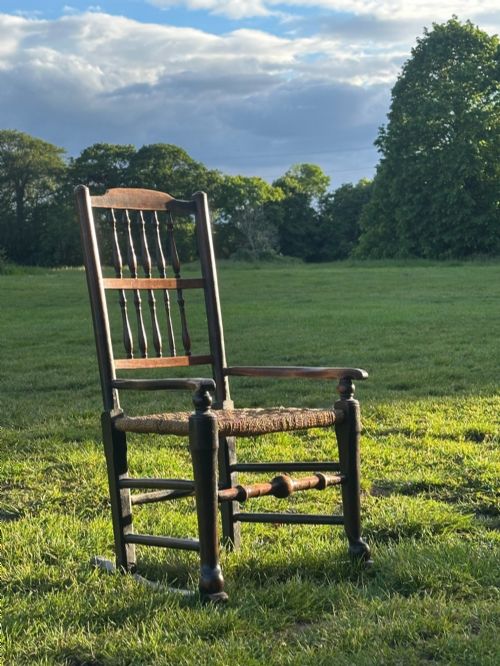
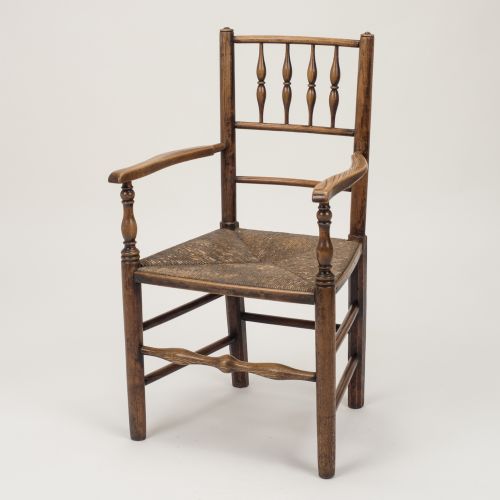

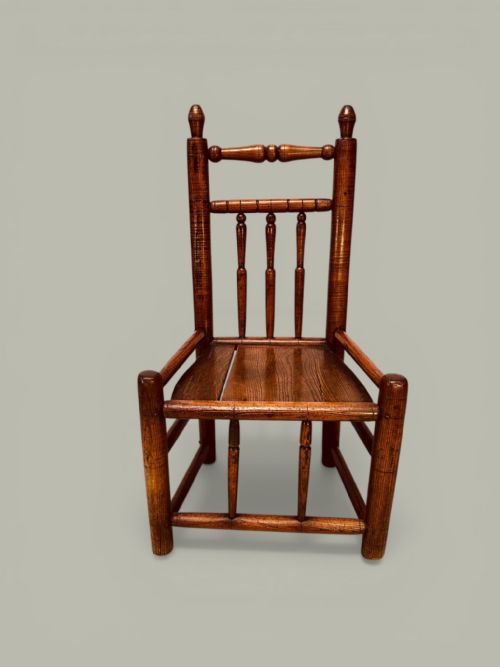


Turned Ash Chair
A turned ash chair brings honest country craftsmanship and robust organic curves into a modern interior.
Turned Ash Chair
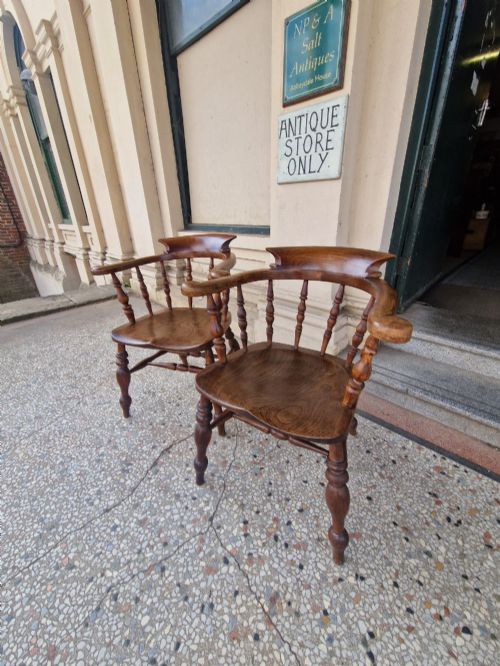
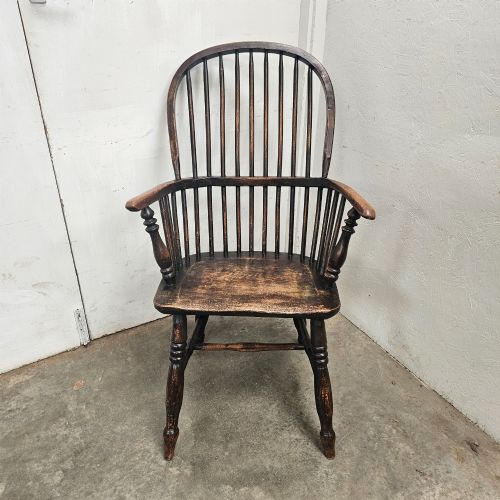
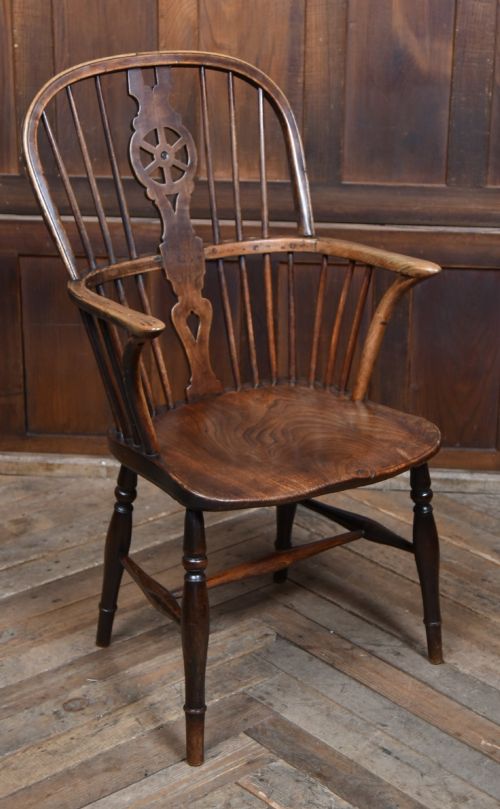
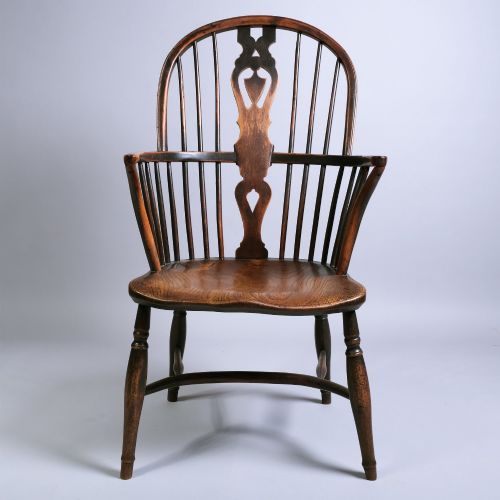
A turned ash chair represents the practical domestic seating produced by regional vernacular makers from the seventeenth century through the Victorian era. When you search for a turned ash chair, you encounter robust seating forms built for daily utility in farmhouses, cottages, and provincial workshops.
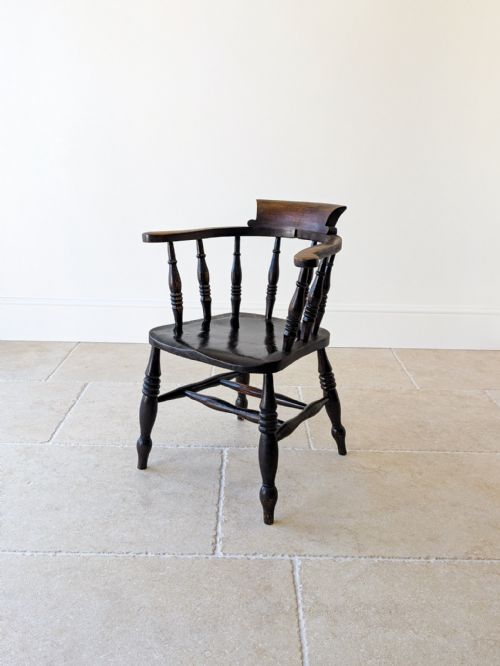
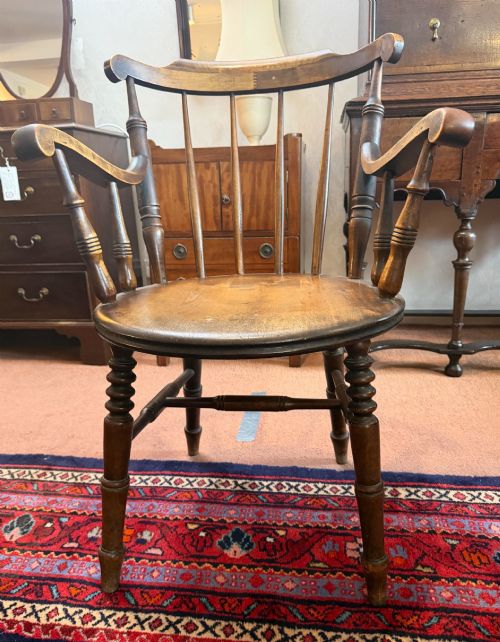
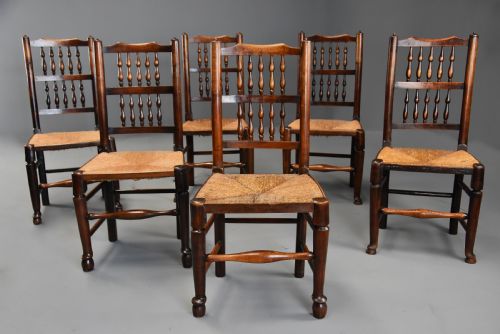
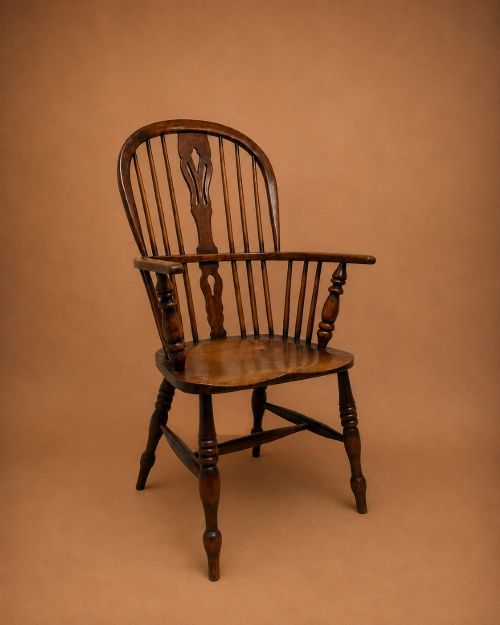
The versions most frequently met on this page span the eighteenth and nineteenth centuries, including Windsor armchairs, spindle-backs, ladder-backs, and captain's chairs. These seating options emerge from English country traditions alongside occasional Dutch provincial and continental examples.
Makers shaped these utilitarian seats using locally sourced timber, combining turned structural posts with shaped solid wood seats. The resulting forms range from low-back and high-back Windsors to children's rocking chairs and sets of dining side chairs.
How they were made
Makers utilised green woodworking techniques, turning ash on a pole lathe to create resilient spindles and upright posts that seasoned securely around rigid components. This method exploited the natural tensile strength and flexibility of ash for the turned structural elements.
Solid elm and occasionally beech or alder provided stable, unyielding seats that resisted splitting under the stress of heavy spindle joints and bodily weight. Turners paired these woods with woven rush for seating surfaces on specific ladder-back and provincial chair types.
Component parts were assembled using socket-and-tenon construction, often secured with wooden wedges to lock spindles and legs tightly into bored seats without metal fixings.
Makers occasionally utilised junior-scale ash chairs as apprentice pieces to practice intricate spindle turnings.
What varies in quality
The calibre of a turned ash chair depends upon the crispness of the original turning and the harmonious balance of its proportions. Pieces displaying deeply cut mouldings on the spindles and well-defined arm scrolls demonstrate superior workshop skill.
The integrity of the timber selection dictates longevity, with tight-grained ash and richly figured elm seats holding higher regard than replacement components or heavily weathered replacements. Original surface patination, developed through centuries of handling, distinguishes exceptional examples from heavily restored ones.
Fred Walker
The Turned Ash Chair Glossary
- Ash
- A tough, pale hardwood valued for its elasticity and strength, used extensively for turned chair spindles and structural framing. It bends well under steam and resists splitting.
- Windsor chair
- A vernacular seating form featuring a solid wooden saddle-shaped seat into which the legs and back spindles are directly inserted. These chairs often incorporate bentwood hoops and comb-back crests.
- Spindle back
- A chair back constructed from numerous thin, turned wooden uprights fitted between a top rail and seat. This lightweight construction maximises structural strength while saving material.
- Rush seat
- A seating surface woven from dried marsh reeds around a wooden frame. This technique creates a resilient, textured pad common on vernacular ladder-back chairs.
- Smokers bow
- A low-backed Windsor armchair featuring a continuous bent rail resting on short turned spindles above the arms. These chairs served as comfortable smoking or tavern seating.
Turned Ash Chair: Frequently Asked Questions
How do I date a turned ash chair?
Dating relies on observing construction methods, turning profiles, and wood combinations across different eras. Eighteenth-century examples often feature heavier proportions and distinct regional turning styles, whereas nineteenth-century pieces display standardised spindle turning.
Secondary wood choices and wear patterns around the foot rails also help narrow the period of manufacture when documentary evidence is absent.
Were these chairs used at dining tables?
Many turned ash chairs served primary roles around farmhouse and cottage dining tables, often sold in matched sets of side or armchair configurations. Lighter spindle-back and ladder-back forms were easily pulled up for meals and moved aside afterward.
Robust Windsor and captain's chair variants also functioned as desk or parlour seating depending on the household.
How do I care for an antique ash chair?
Maintain stable indoor humidity levels to prevent the ash and elm components from drying out or shrinking, which loosens mortise joints. Avoid placing antique seating near direct heat sources or in strong sunlight.
Apply a microcrystalline wax sparingly to nourish the wood surface and preserve the historic patina without sealing the pores.
What is the difference between a Windsor and a spindle back?
A Windsor chair builds its structure around a thick, solid wood seat that anchors both the legs below and the back components above. The back often incorporates a bentwood hoop or comb rail.
A spindle-back chair typically relies on a framed construction or a rush seat, featuring vertical turned members spanning directly between horizontal rails.