



Turkmenistan Woven Rug
These pieces of turkmenistan woven rug span the tribal traditions of Central Asia, offering rich reds and geometric mastery for the collector.
Turkmenistan Woven Rug
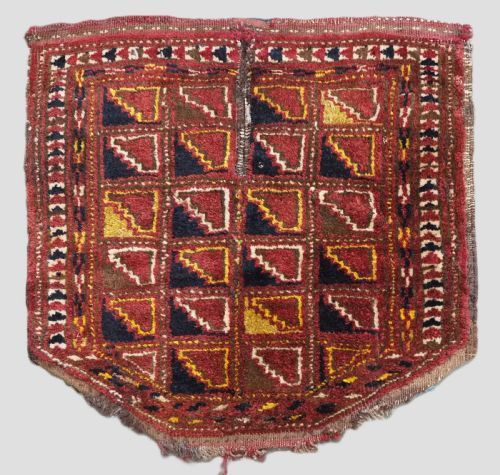
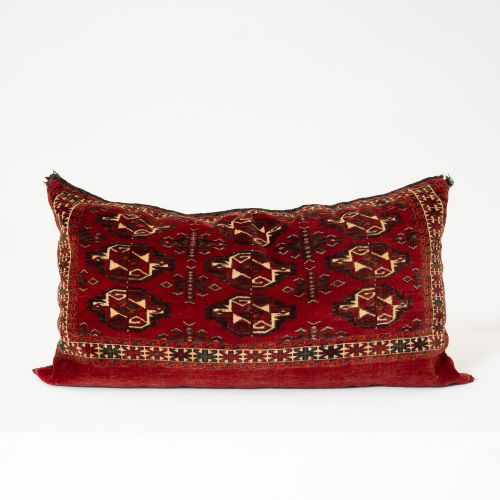
A turkmenistan woven rug encompasses a rich variety of tribal textiles, ranging from storage bags and tent trappings to wedding rugs and wall hangings. These items originate primarily from nomadic and semi-nomadic groups across the Central Asian steppes and oases.
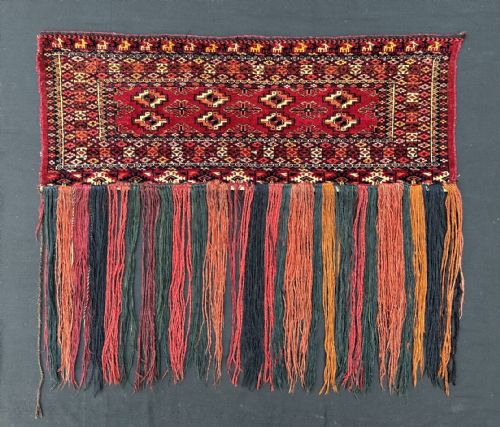
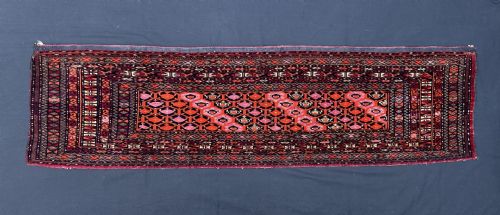
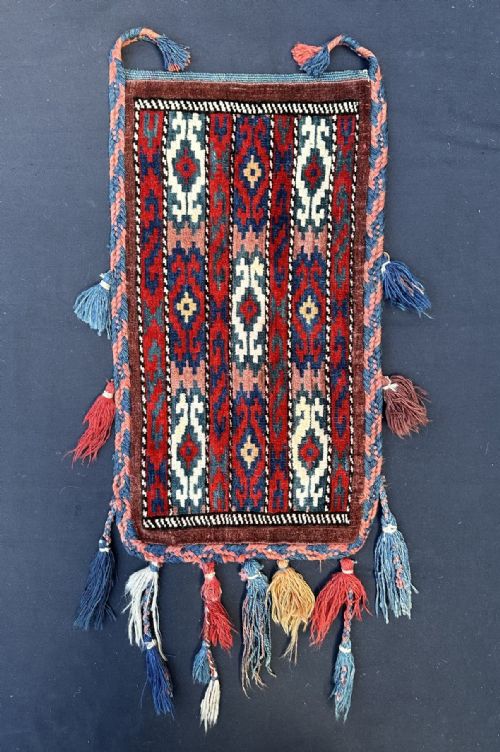
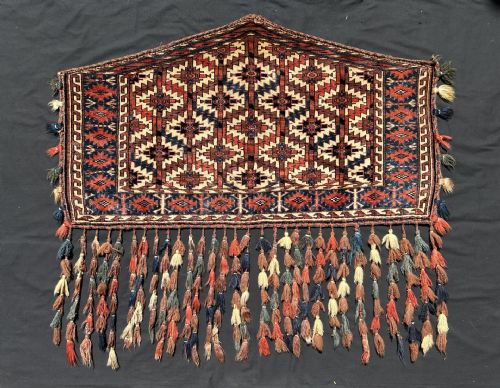
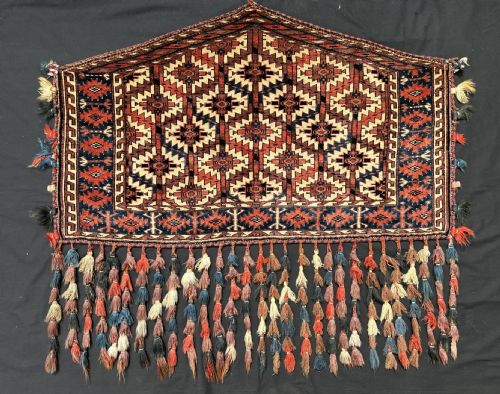
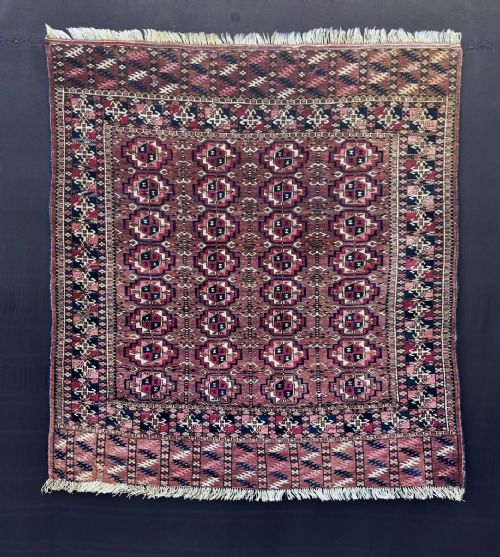
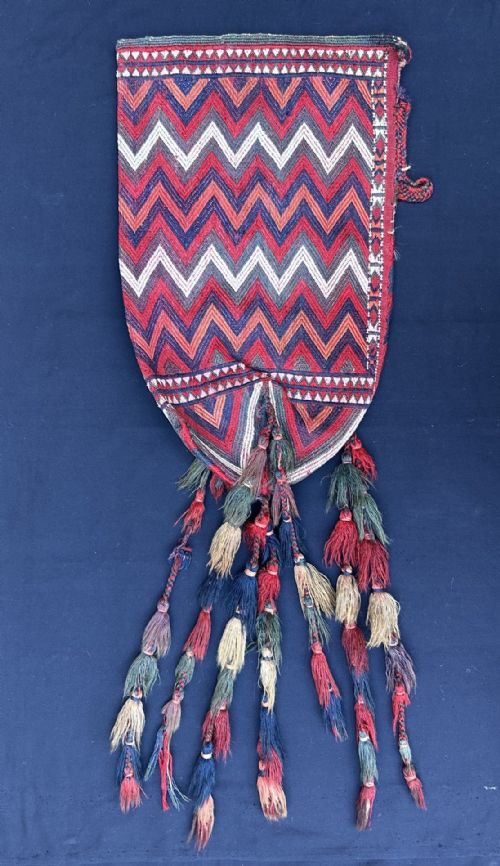
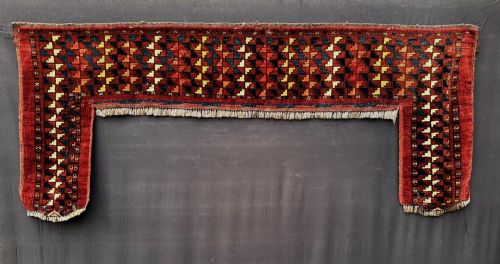
The selection on this page is dominated by nineteenth-century examples created by specific tribes such as the Yomut, Teke, and Ersary. Buyers encounter specialised forms like asmalyks, torbas, and chuvals alongside larger carpets and flat weaves.
Rooted in the domestic and ceremonial life of Central Asian tribes, these textiles served practical functions within yurt dwellings as well as ornamental roles during weddings and celebrations.
How they were made
Makers utilised hand-spun wool and natural dyes to build deep, saturated palettes dominated by madder reds, complemented by cotton and linen for foundations and details. The manipulation of these traditional materials produced dense, durable piles and crisp flat-weave structures.
Weaving techniques vary across tribal groups, incorporating knotted pile alongside flat-weave structures such as soumak, cicim, and plain weave palas. Each method reflects specific regional traditions handed down through generations of tribal artisans.
Listings feature pieces spanning from the eighteenth century through the early twentieth century, utilising hand-spun wool and natural dyes.
What varies in quality
The refinement of the wool and the precision of the knotting or weaving technique distinguish finer examples from standard work. Superior pieces demonstrate exceptional handling of natural dyes, resulting in luminous colour depth and harmonious tonal balance.
Design complexity and the integrity of traditional tribal motifs further separate standard nomadic items from masterworks. The retention of original finishes, such as tassels and backs, contributes significantly to the standing of a textile.
The Turkmenistan Woven Rug Glossary
- Asmalyk
- A large, polygon-shaped trapping traditionally hung on the flank of a bride's camel during wedding processions. These pieces often display elaborate geometric symbolism.
- Chuval
- A large tent storage bag used by nomadic families for domestic belongings. They frequently feature rows of gul motifs.
- Torba
- A smaller storage bag hung inside the yurt for household items. They display intricate border designs and tribal emblems.
- Engsi
- A tribal door rug designed to hang over the entrance of a yurt. These feature a distinctive quartered field design.
- Soumak
- A flat-weave technique where coloured weft threads are wrapped around the warp threads in various patterns. This creates a textured surface resembling embroidery.
Turkmenistan Woven Rug: Frequently Asked Questions
What is a turkmenistan woven rug used for?
These textiles served diverse roles in nomadic life, functioning as storage sacks, tent door coverings, and animal trappings for weddings.
Today, collectors appreciate them primarily as wall hangings or floor coverings that bring rich Central Asian heritage into domestic interiors.
How do I identify different tribal groups?
Tribal attributions rely heavily on specific colour palettes, structural formats, and characteristic secondary motifs used by weavers.
Groups such as the Yomut, Teke, and Ersary each developed distinct variations of geometric guls and border patterns.
How should I care for these textiles?
Protect antique wool and natural dyes by keeping them out of direct sunlight to prevent fading over time.
Gentle vacuuming without a beater bar helps remove dust while preserving the delicate structure of the weave.