


Turkmen Woven Carpet
A turkmen woven carpet brings deep madder reds and geometric tribal symmetry into an interior, offering centuries of Central Asian nomadic heritage.
Turkmen Woven Carpet
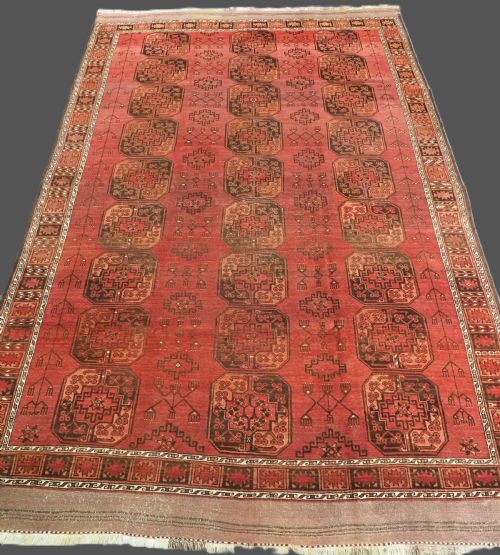
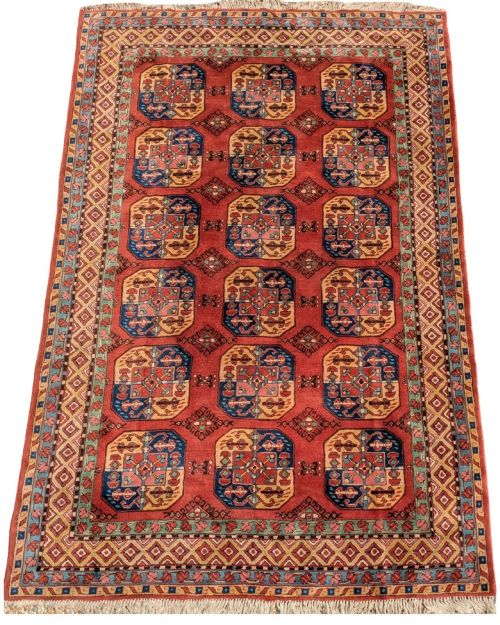
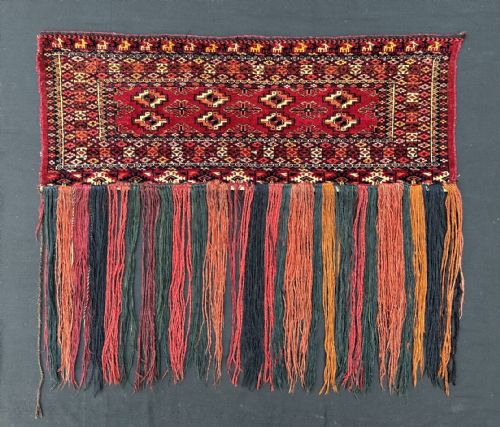
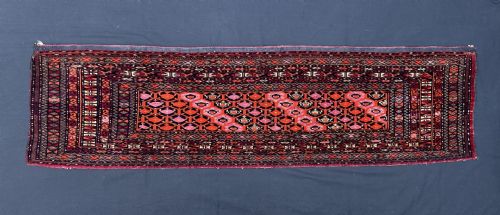
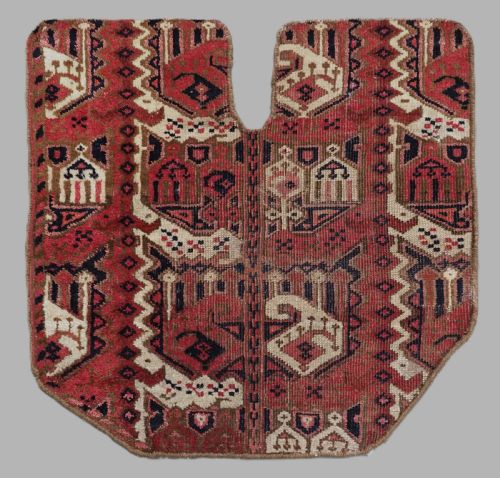
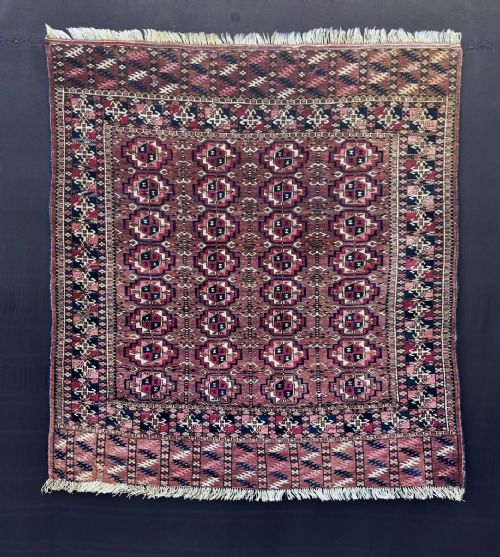
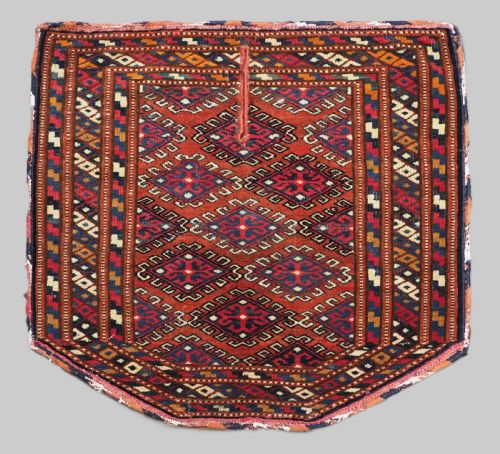
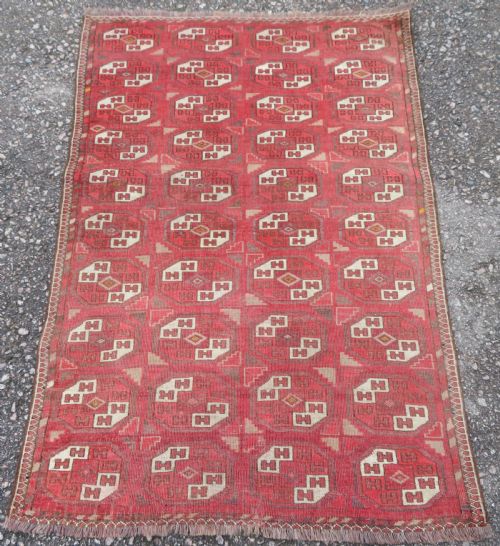
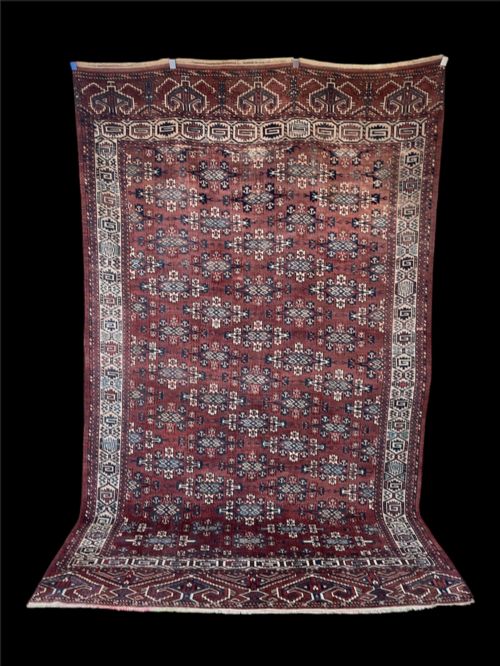
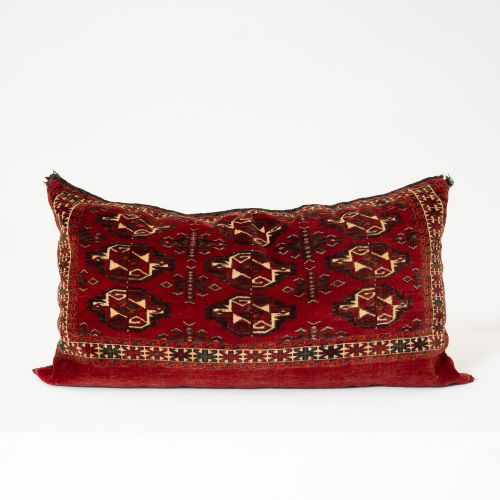
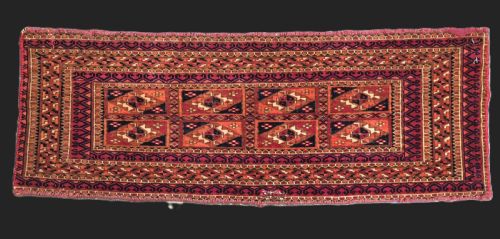
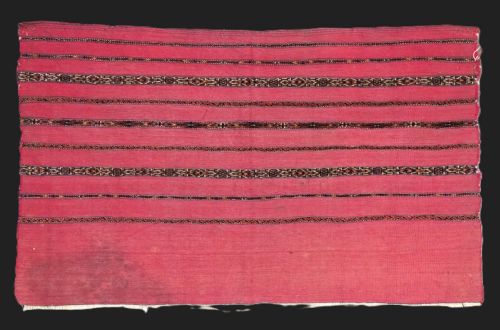
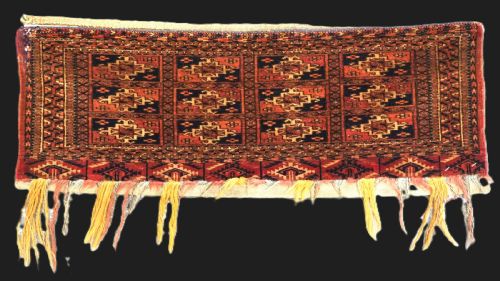
A turkmen woven carpet encompasses both large floor coverings and smaller tribal utilitarian items such as torbas, chuvals, and asmalyks originating from Central Asia. These pieces are defined by distinct tribal motifs, including repetitive guls and structured geometric borders.
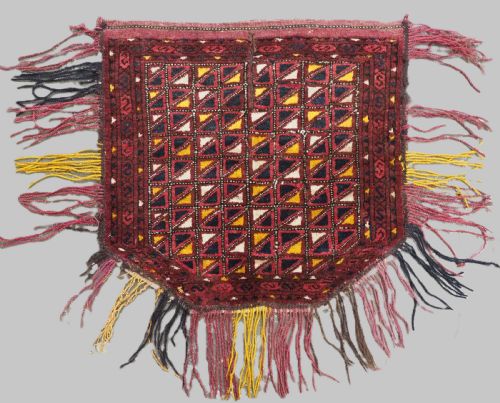
Buyers browsing this selection encounter nineteenth-century main carpets alongside functional tent trappings and dowry pieces created by tribal groups like the Tekke, Ersari, and Yomut. The smaller bag faces and saddle covers frequently appear with complete plain weave backs or original tassels.
Most examples hail from the nineteenth and early twentieth centuries, reflecting the traditional nomadic lifestyle across the Trans-Caspian steppes and river oases. These textiles served practical roles in domestic life before entering the decorative sphere.
Materials and Construction
Weavers utilised hand-spun wool for the foundational pile and structural warps, occasionally incorporating cotton or silk highlights for contrast. Natural dyes derived from local plants and minerals produced the characteristic deep red, madder, and ivory palettes seen across the pieces.
The construction relies on dense knotting techniques executed on vertical looms within nomadic and village environments. Artisans finished edges with sturdy side cords and retained backings on utility bags to withstand heavy daily use in portable dwellings.
Materials recorded across the archive include hand-spun wool, cotton foundations, and occasional silk highlights.
Judging Quality and Execution
Knot density and structural tightness dictate the refinement of the pile, with finer examples displaying exceptional precision in complex geometric drawing. The choice of materials influences the handle, where superior hand-spun wool yields a more resilient and luminous surface.
Proportion and clarity of the primary guls separate standard items from superior works of tribal art. Original elements like complete borders, surviving tassels, and intact flatweave backs preserve the integrity of the piece.
Ersari Tribe·Tekke Tribe·Yomut Tribe·Saryk Tribe·Karadashli Tribe
The Turkmen Woven Carpet Glossary
- Gul
- A primary repeating medallion or motif specific to Central Asian tribal weaving. These octagonal or gabled designs identify the particular tribe responsible for the carpet.
- Torba
- A small storage bag used inside a nomadic tent, typically wider than it is tall. Collectors prize surviving torba faces for their concentrated detail and intricate borders.
- Chuval
- A large tent bag utilised for domestic storage by nomadic families. These pieces often display multiple rows of guls executed in rich wool pile.
- Asmalyk
- A pentagonal trapping hung on the flanks of a camel during wedding processions. These ceremonial items represent some of the most decorative tribal textiles.
- Engsi
- A rug designed to hang over the doorway inside a yurt, featuring a cross-panel layout dividing the field into four sections. They served as protective thresholds for the dwelling.
Turkmen Woven Carpet: Frequently Asked Questions
What is a gul on these carpets?
A gul is the distinctive octagonal medallion that repeats across the field of a turkmen woven carpet. Each tribal group utilised specific variations of these motifs to signal their lineage and heritage.
These repeated forms create the hypnotic, structured symmetry that defines Central Asian weaving traditions. Variations in the drawing of the gul help identify whether a piece originates from the Tekke, Yomut, or Ersari tribes.
How were these bags originally used?
Items like torbas and chuvals functioned as practical storage containers inside traditional portable tents. Families used them to store bedding, clothing, and household provisions off the damp ground.
Over time, these utilitarian pieces became expressions of tribal identity and status, often created specifically for dowry displays. Their survival with original backs and tassels shows they were valued possessions.
How do I care for an antique wool carpet?
Protect antique textiles by placing them in low-traffic areas away from direct sunlight to preserve the natural dyes. Regular gentle vacuuming without a rotating brush bar keeps dust from settling into the wool pile.
Professional cleaning tailored to antique vegetable-dyed wool ensures the fibres remain supple. Proper underlays prevent sliding and reduce friction against hard floors.
How can I tell different tribal designs apart?
Distinguishing between tribes involves examining the primary guls, secondary motifs, and overall colour palettes. Tekke pieces frequently display dense rows of stepped octagons, whereas Ersari examples often incorporate larger, more spaced floral or gul layouts.
Border patterns and minor motifs like the 'aina gul' or 'kepsed' designs further clarify the origin. Yomut weaving tends to favour hooked motifs and banded flatweave transitions.