



Turkmen Torba Face
When you search for turkmen torba face, you enter the world of tribal storage bags woven across the steppes of Central Asia.
Turkmen Torba Face
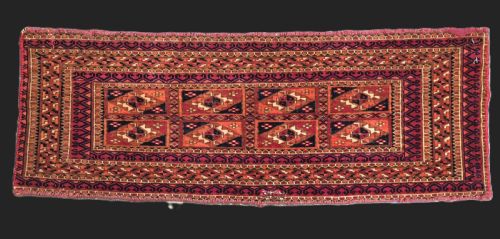
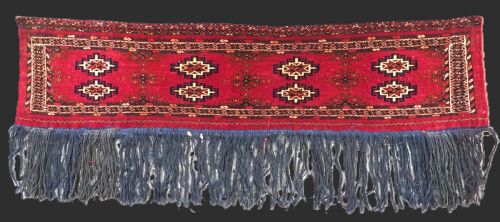
A turkmen torba face is the decorative front portion of a traditional nomadic storage bag used within tribal households. These pieces originate from various tribal groups across Central Asia, including the Yomut, Tekke, Saryk, and Ersari peoples.
Most examples found on this page date from the nineteenth century, spanning from the 1850s through to the early decades of the twentieth century. They display distinctive tribal guls, or main motifs, such as the kepse, salor, and curled leaf designs.
Collectors encounter these items primarily as individual bag faces separated from their original backs, though complete bags and fragments also appear. They serve as rich textile records of tribal identity and nomadic craftsmanship.
Materials and Construction
Weavers constructed these textiles predominantly using hand-spun wool for the foundational pile and structure, frequently incorporating cotton and silk highlights for contrast and detail. Natural dyes provided the deep reds, ivory grounds, and secondary palette characteristic of these regional pieces.
The density of the knotting varies, with certain examples exhibiting a very fine weave that allows for precise execution of intricate geometric motifs and borders. Artisans completed the edges and structures using traditional flatweave techniques alongside pile construction.
Nomadic weavers occasionally inserted deliberate design irregularities into their repeating motifs, playfully challenging perfection in the wool.
Evaluating Quality and Detail
The visual impact of a piece relies heavily on the crispness of the drawing and the saturation of the natural dyes used in the wool. Superior examples display balanced proportions within the guls and a harmonious relationship between the central field and the borders.
The handle and suppleness of the textile reflect the grade of the wool and the tightness of the weave. Pieces with exceptionally fine knotting demonstrate a high level of weaver skill, particularly when paired with scarce or unusual design layouts.
Yomut Tribes·Tekke Turkmen·Saryk Turkmen·Ersari Turkmen·Chodor Turkmen
The Turkmen Torba Face Glossary
- Torba
- A small tent-hanging or storage bag produced by Turkmen tribes. These were traditionally used inside the yurt for storing household goods and belongings.
- Gul
- A primary medallion or repeating motif found in Turkmen rugs and tribal textiles. Each tribal group typically utilised its own distinct forms and variations.
- Mafrash
- A rectangular storage bag or bedding bag face from the same tribal traditions. These often share structural similarities with torbas.
- Kedjebe
- A camel wedding trapping design frequently adapted for use on torba faces. It represents the decorated carrier used during bridal processions.
- Flatweave
- A textile constructed without pile by interlacing warp and weft threads. Examples often feature banded geometric patterns.
Turkmen Torba Face: Frequently Asked Questions
What was a turkmen torba used for?
These bags served as practical storage containers inside nomadic tents, holding smaller possessions, clothing, or household goods. They were often hung against the lattice walls of the yurt.
Over time, specific designs also took on ceremonial or decorative functions within the family, marking tribal alliances and heritage.
How can I tell which tribe made a piece?
Attribution relies primarily on the specific guls, secondary motifs, and overall colour palette employed in the wool. Each tribal group, such as the Yomut or Tekke, utilised characteristic drawing styles and structural formats.
Familiarity with these regional patterns allows collectors to distinguish between the various weaving traditions of the steppes.
Why are most pieces offered as faces?
The original storage bags experienced heavy wear along the base and the plain-woven back portions during their nomadic working life. When the back sections wore out, the durable decorative faces were frequently preserved as independent items.
This accounts for the frequency with which surviving examples appear without their original backing material.
How should I display a textile piece at home?
Many collectors mount these bag faces onto a neutral backing fabric or attach them to a concealed batten for wall display. This method supports the weight evenly across the wool structure without damaging the fibres.
Keeping them away from direct sunlight preserves the natural dyes and prevents the wool from fading over time.