

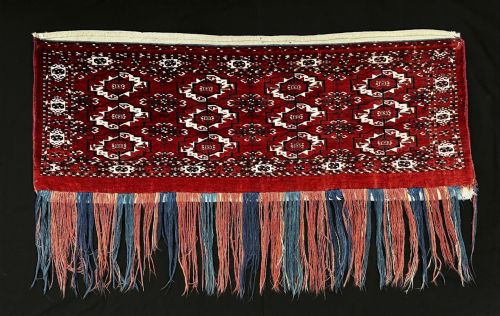


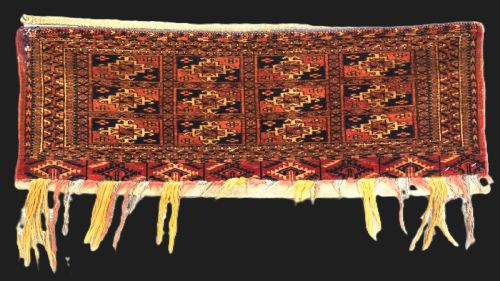


Turkmen Torba Bag
When you search for a turkmen torba bag, you are looking at nineteenth-century tribal weaving used for domestic storage in Central Asia.
Turkmen Torba Bag
A turkmen torba bag is a nomadic storage hanging created by tribes across the Trans-Caspian steppes and oases during the nineteenth century. These utilitarian pieces served specific functions inside the yurt, holding household items, bedding, or personal belongings as part of traditional dowry furnishings.
Most examples found here are either complete bags retaining their plain weave backs or surviving bag faces detached from their original structures. The designs reflect distinct tribal identities through specific medallion layouts, proportions, and border arrangements.
The formats range from smaller square storage pieces to wider formats shared with mafrash containers. Buyers encounter variations tied to specific tribal groups including Tekke, Yomut, Saryk, Ersari, and Chodor weavers.
Materials and construction methods
These textiles rely primarily on wool foundations and pile, often utilising hand-spun wool combined with natural dyes to achieve deep red grounds and contrasting accents. Cotton finds occasional use in the foundations or highlights, while select examples incorporate silk highlights for added texture.
Weavers knotted the pile tightly onto wool warps and wefts, occasionally employing flatweave techniques or embroidery for specific surface effects. Surviving pieces demonstrate structural integrity through dense knotting, flatweave backs, and robust selvedges designed to withstand active nomadic use.
Turkmen Torba Bag Retail Price Guide 2026
Typical asking prices for turkmen torba bag among the pieces listed under this phrase on Sellingantiques today, from the lower quarter to the upper quarter. They describe what is for sale here now, not the wider market.
Nomadic weavers occasionally slipped small intentional errors into repeated tribal patterns to ward off the evil eye.
What separates examples
Quality rests heavily on the fineness of the weave and the clarity of the drawing within the primary motifs. Tighter knot counts and precise execution of tribal guls distinguish master workshops from standard domestic output.
The depth and vitality of the natural dyes dictate the visual impact of the piece, alongside the preservation of original dimensions and complete backs. Surviving examples that retain their crisp geometry and balanced colour palettes represent the upper tier of tribal weaving.
The Turkmen Torba Bag Glossary
- Torba
- A small Turkmen storage bag traditionally hung in the tent or used as part of a bride's dowry. These pieces were woven in various formats by different tribal groups.
- Gul
- The primary repeating medallion motif used in Turkmen carpets and bag faces. Each major tribe utilised distinct gul designs to signal identity.
- Mafrash
- A rectangular storage container or bag used for bedding and household goods during nomadic migrations. They share structural characteristics with torbas.
- Kap
- A general term for a bag or container in Turkmen weaving. These textiles often functioned as utilitarian storage in the nomadic household.
- Aina Gul
- A specific mirror-shaped gul pattern found on tribal bag faces. This design holds symbolic meaning within the weaving tradition.
- Asmalyk
- A large pentagonal trapping associated with camel decorations during wedding processions. Elements of this style occasionally appear in smaller torba designs.
Turkmen Torba Bag: Frequently Asked Questions
What was a turkmen torba bag used for?
These bags served practical storage functions inside traditional nomadic dwellings, holding bedding, clothing, or household goods. They also formed an essential part of a bride's dowry.
Hung against the lattice walls of the yurt, the bags kept contents organised and protected from damp ground. Their decorative faces displayed tribal identity and weaving skill to visitors.
How do I identify different tribal designs?
Tribal attribution relies on the specific gul motifs, border patterns, and overall colour palette employed by the weaver. Tekke, Yomut, Saryk, Ersari, and Chodor pieces each display distinct structural traits.
For instance, Yomut pieces frequently utilise kepse or aishk guls, while Tekke examples often feature multiple rows of primary guls on ivory or red grounds.
Are these pieces complete with backs?
Listings include both complete torbas with their original plain weave backs intact and standalone bag faces. Complete pieces retain their functional integrity as closed containers.
Many surviving examples exist solely as faces because the utilitarian backs wore out faster or were separated during past trade and collection.
How should I care for a textile hanging?
Display these textiles away from direct sunlight to protect natural dyes from fading over time. Gentle vacuuming through a mesh screen helps remove dust without damaging the wool pile.
Mounting the bag face onto a padded support board distributes weight evenly if hung on a wall. Professional textile conservationists can advise on appropriate mounting materials.