

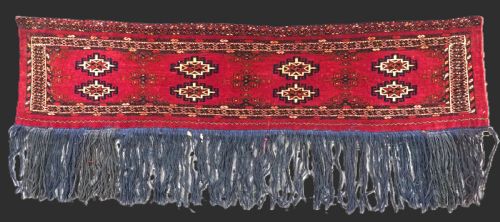


Turkmen Tent Hanging
When you search for a turkmen tent hanging, you enter the rich world of Central Asian nomadic tribal weaving.
Turkmen Tent Hanging
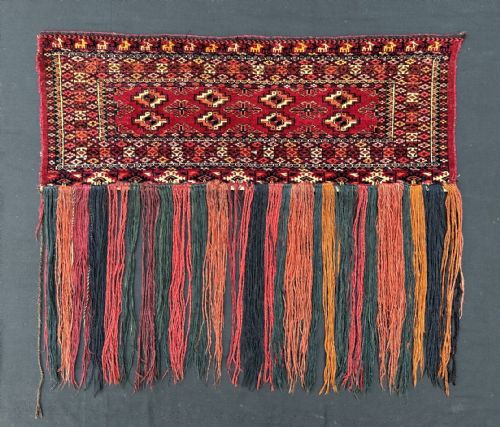
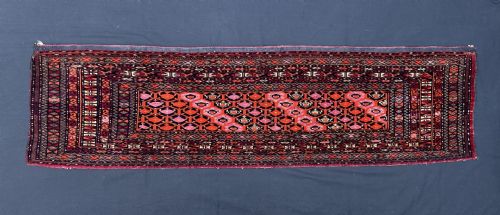
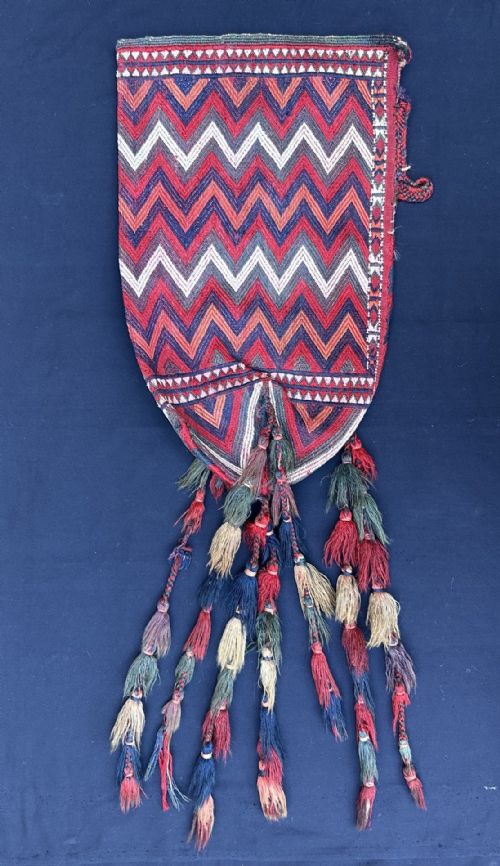
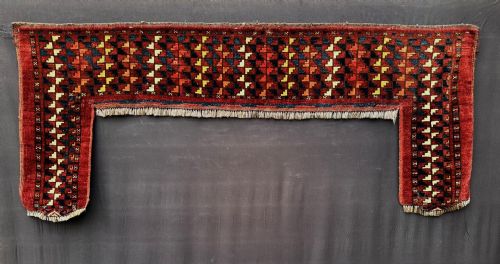
A turkmen tent hanging encompasses various functional tribal trappings such as torbas, chuvals, kapunuks, and tent bands produced by nomadic groups in Central Asia. These textiles originally served practical purposes inside and outside the felt tents of tribes like the Tekke, Yomut, Ersari, Saryk, and Chodor.
Buyers encountering this category will frequently find torba faces and chuval storage bag fragments dating from the mid-nineteenth century to the early twentieth century. These pieces display traditional tribal designs and structures that reflect the distinct heritage of their makers across the trans-Caspian steppes and river oases.
How They Were Made
Weavers utilised hand-spun wool foundations combined with natural dyes to create deep red and crimson palettes characteristic of these tribal works. Cotton and silk highlights often appear alongside glass beads to accent specific motifs and enrich the overall texture.
The construction relies on tight knotting techniques that produce dense, durable surfaces capable of withstanding nomadic life. Many surviving examples retain their intricate structural geometry through careful hand-weaving passed down across generations.
Turkmen Tent Hanging Retail Price Guide 2026
Typical asking prices for turkmen tent hanging among the pieces listed under this phrase on Sellingantiques today, from the lower quarter to the upper quarter. They describe what is for sale here now, not the wider market.
Listings feature wool, cotton, silk, and natural dyes across pieces dated from 1850 to 1930.
What Varies in Quality
The fineness of the weave and the precision of the tribal guls distinguish masterworks from standard utilitarian items. Superior pieces exhibit exceptional knot density and crisp delineation of complex geometric patterns.
The vibrancy and depth of the natural dyes play a crucial role in aesthetic distinction. Examples retaining complete backs, original borders, and silk highlights command greater attention from collectors who value structural integrity.
The Turkmen Tent Hanging Glossary
- Gul
- A primary octagonal medallion motif repeated across Turkmen carpets and tent trappings. Each tribe utilised distinct versions to signal identity and lineage.
- Torba
- A small horizontal storage bag used inside nomadic dwellings for domestic items. These frequently survive as highly decorative wall pieces.
- Chuval
- A large tent storage bag designed for bedding and household goods. Surviving faces often display rows of major guls.
- Okbash
- An ornamental tent pole bag placed over the ends of roof struts inside the yurt. They feature narrow tapered shapes and dense tribal patterns.
Turkmen Tent Hanging: Frequently Asked Questions
What is a turkmen tent hanging?
A turkmen tent hanging is a woven textile created by nomadic tribes of Central Asia for domestic use within traditional felt tents.
These pieces include storage bags, door surrounds, and structural bands displaying symbolic tribal designs.
How were these textiles used?
Nomadic families utilised these woven trappings to store household belongings, decorate tent interiors, and mark significant life events like weddings.
They functioned as practical containers as well as expressions of tribal identity and status.
How should I care for a textile?
Protect antique wool and silk textiles from direct sunlight to prevent natural dye fading and fibre degradation.
Gentle vacuuming with mesh protection and professional mounting will preserve the physical structure over time.